
How to Tell if Your Brooch Is Valuable: A Step-by-Step Guide
To know if your brooch is valuable, you must conduct a systematic inspection. Look for clear hallmarks or maker’s marks, assess the quality of materials like solid gold or genuine gemstones, evaluate the craftsmanship for handwork, identify its historical style, and document its condition with brutal honesty. A professional appraisal provides the final, definitive answer.
I’ll never forget the Georg Jensen pin I found at a flea market. The silver was tarnished, but the swirling Art Nouveau design was stunning. I was so excited by the front that I barely glanced at the back. The catch felt a bit stiff, but I paid $800, convinced I’d found a steal. When I took it to a specialist, her loupe revealed the truth in thirty seconds. The elegant ‘C’ catch was a replacement, a modern, machine-made part crudely soldered on. For a serious collector, that single anachronistic repair slashed the value to under $300. The front tells a story, but the back holds the facts.
Let’s turn your brooch over and start looking.
Key Takeaways
- Authenticity lives on the back. Hallmarks, maker’s marks, and the construction of the clasp and pin are your primary clues to age and precious metals.
- Condition dictates market. A professional, invisible repair preserves value; a clumsy repair or missing stone can reduce value by 50% or more. Never clean a piece before assessment.
- Craftsmanship often trumps materials. A hand-fabricated sterling silver brooch from a noted Art Deco designer can be worth far more than a mass-produced 14k gold piece.
- Fakes betray themselves through perfection. Be wary of uniform artificial patina, visible casting seams on pre-20th century styles, and overly crisp machine finishes on “antique” items.
- An appraisal is a document for action. Use a written appraisal from a qualified specialist to secure proper insurance coverage or to establish a credible asking price for sale.
What Should I Look for on the Back of My Brooch?
Forget the sparkle for a minute. The real investigation starts when you flip the piece over. This is where jewelers and appraisers look first.
Initial inspection requires neutral, bright light and a quality 10x loupe such as a BelOMO triplet loupe. Examine the reverse for stamps, solder joints, and clasp mechanism. Tool marks, file lines, and uneven solder indicate hand fabrication, while perfectly uniform surfaces suggest modern casting.
Start with the right tools. I use a BelOMO 10x triplet loupe because its distortion-free optics are crucial for spotting tiny file marks or inconsistencies in a hallmark. Under good light, methodically scan the entire back. You’re looking for three things:
- Stamps and Marks: These are your most direct clues. “925” is sterling silver. “14K” or “585” is 14-karat gold. “750” is 18-karat. A maker’s name or symbol (like a cursive “C” for Cartier) can skyrocket value. Remember, many truly antique pieces, especially Georgian or early Victorian, were never marked at all.
- The Pin and Clasp Assembly: How is it attached? An antique brooch typically has a pin made from a separate piece of wire, hand-soldered into a hinge tube. The catch is usually a simple, hand-formed “C.” I now prefer seeing these slight imperfections, tiny file marks, a slightly uneven solder blob, over a perfectly uniform, spring-loaded safety clasp on any piece made before 1950.
- Surface Texture: Run your fingertip over the metal. A hand-fabricated piece has a subtle, gritty texture from soldering and filing. A modern cast reproduction feels slick and featureless, like a bar of soap.
TL;DR: The back reveals authenticity through stamps, handmade construction, and surface texture. A perfect, featureless back on an “antique” is a major red flag.
How Can I Tell if the Materials Are Genuine?
Trust your senses, but verify with tools. Weight, temperature, and visual inspection under magnification separate precious from plated.
First, feel the heft. Precious metals are dense. A brooch made of solid gold or silver will feel surprisingly heavy for its size. Base metal or plated pieces feel light and hollow. Notice the temperature; silver and gold stay cooler to the touch longer than cheaper metals.
Next, examine the stones. Under your loupe, look for the natural fingerprints of real gemstones: tiny inclusions, color zoning, or wear on facet edges. Perfect, bubble-like inclusions or a too-bright, uniform color often indicate glass or synthetic material. Prong settings generally secure genuine stones, while glued settings or closed-back foiled settings are hallmarks of costume jewelry.
For a definitive metal test, you can use a basic acid test kit from a reputable supplier like Jewelry Tools Direct. File a tiny notch in an inconspicuous spot (like the tip of the pin) and apply the testing acid. This is more reliable than generic electronic testers sold online.
Common mistake: Polishing a tarnished silver brooch aggressively before identification, this can remove the original surface and a desirable antique patina, reducing its value to a collector by 20-40%.
| Material Clue | Indicates | Quick Test |
|---|---|---|
| Heavy weight, cool feel | Likely solid precious metal | Compare heft to a known piece. |
| “925”, “Sterling” stamp | Sterling Silver | Look for stamp on clasp or pin stem. |
| “14K”, “18K”, “750” stamp | Gold (various karats) | Acid test confirms if stamp is genuine. |
| Prong-set, included stones | Probable genuine gemstones | Inspect with 10x loupe for natural flaws. |
| Glued stones, foil backing | Costume or paste jewelry | Often feels lighter; stones may be plastic. |
What Are the Signs of High-Quality Craftsmanship?
This is where sentiment must leave the room. Beautiful design is one thing; the skill of execution is what collectors pay for. High-value brooches show evidence of the human hand.
Look at the solder joins. They should be nearly invisible, with no globby excess. Examine decorative lines, are they sharp and deep from hand-engraving, or soft and shallow from machine stamping? Filigree work should have slight, charming asymmetries, not robotic perfection. The underside of the piece, even areas never seen when worn, should be finished smoothly. A maker who cared about the back cared about the piece.
I keep a “Georgian” mourning brooch in my teaching drawer. It felt wrong. The black enamel was glossy, like nail polish, not the soft, dull finish of true Georgian enamel. That gut feeling is a tool. If the craftsmanship feels off for the purported era, it probably is.
Here are the specific red flags that signal lower quality or outright fakes, drawn directly from expert sources:
- Casting Seams: A visible raised line running around the edge of the piece. Antique jewelry was fabricated from sheet metal or die-struck, not cast in molds. This is a hallmark of modern reproduction.
- Artificially Uniform Patina: Chemical aging creates a flat, often orange-ish film. Real antique gold develops a soft, mellow patina that concentrates naturally in recessed areas from decades of polishing.
- Incongruent Finishes: A piece styled as hand-wrought Georgian should not have the perfectly uniform, brushed finish of a modern machine.
TL;DR: Value is in the details: invisible solder, hand-engraving, and finished backs. Casting seams and perfect, uniform aging are signs of a modern fake.
When Do I Need a Professional Jewelry Appraisal?
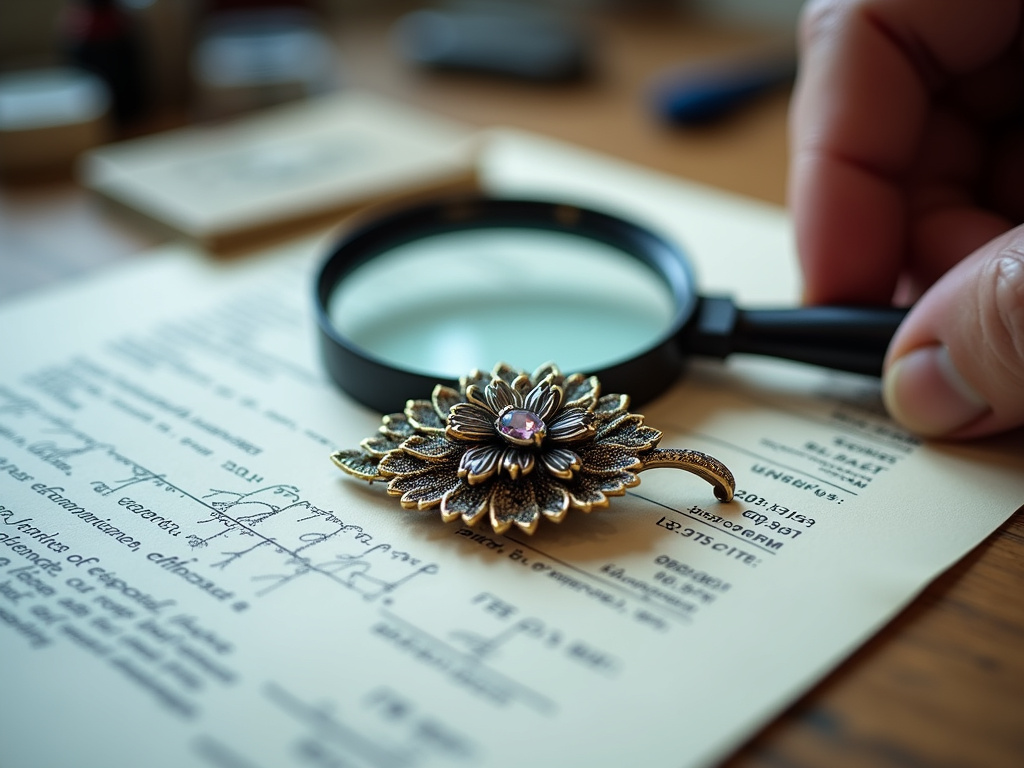
You’ve done your homework. The piece has promising marks, shows hand craftsmanship, and you see no glaring red flags. Now you need authority.
Before you start: Never attempt to clean, polish, or repair a brooch before appraisal. Dirt and tarnish help experts date it. A well-intentioned cleaning with commercial dip can strip original finish and dissolve antique adhesive, causing stone loss and permanently devaluing the piece within minutes.
You need a formal, written appraisal for two concrete reasons: insurance and sale. A verbal “ballpark” from a friendly jeweler is a free and useful first step, but it’s not a document. An insurance company requires a detailed appraisal report to establish replacement value. A serious buyer or auction house will want one to verify your asking price.
Choosing the right appraiser is critical. Look for accredited professionals (ASA or ISA credentials) who specialize in jewelry, not general antiques. Their fee should be hourly or a flat rate per item, never a percentage of the appraised value, which is a conflict of interest. A proper appraisal includes high-resolution photos, meticulous descriptions, measurements, and a clear statement of the value’s purpose (e.g., “retail replacement value”).
Once you have that document, act on it. Standard renters insurance jewelry coverage has low limits, often $1,500 for all jewelry. You’ll need to “schedule” the brooch for its full appraised value. This process, detailed in our guide on how to insure valuable jewelry, is the final step in protecting your find.
How Should I Care for a Potentially Valuable Brooch?
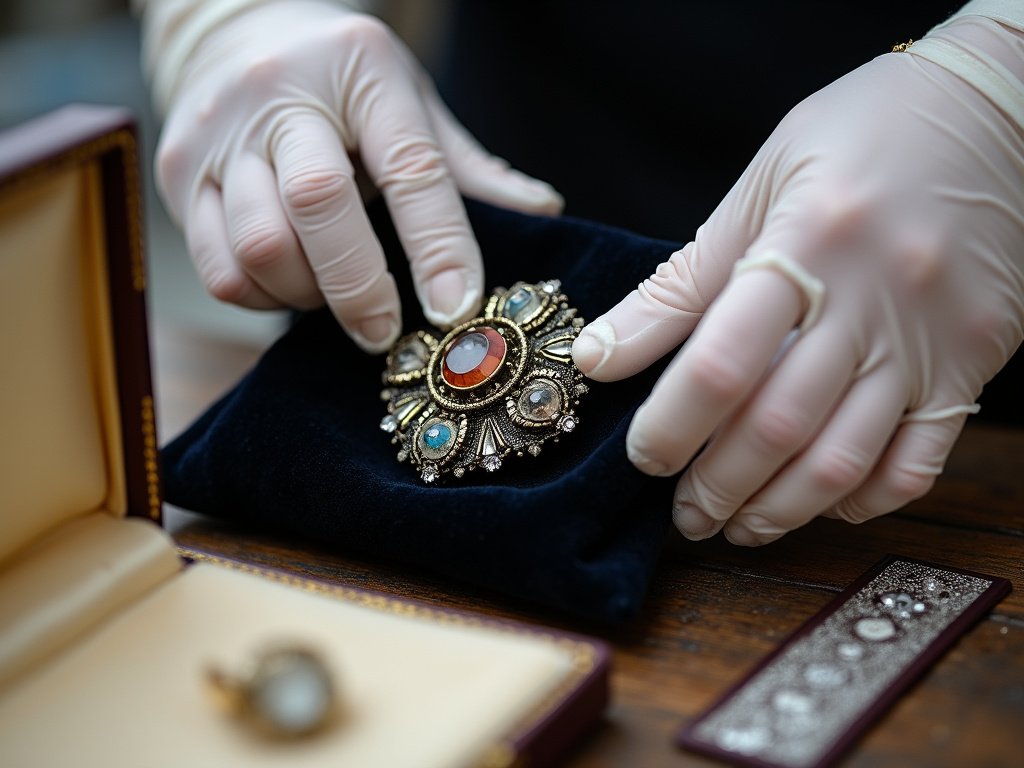
Your role shifts from detective to guardian. Proper care preserves the value you’ve identified.
- Store it immediately. Stop keeping it loose in a box. Place it in an individual soft pouch or a compartment in an acid-free, lined jewelry box. For long-term storage for preservation, consider adding anti-tarnish strips. Never use standard felt-lined boxes, as the felt can contain acids that promote corrosion.
- Clean it minimally and correctly. When in doubt, don’t. A soft, dry microfiber cloth is safest for dust. For specific materials, use targeted guides: cleaning vintage jewelry for antiques, costume jewelry care for plated pieces, and gemstone maintenance for brooches with stones. The goal is preservation, not making it look new.
- Decide its future. This dictates your next steps. The table below outlines the priorities for different paths.
| If You Plan To… | Immediate Priority | Key Risk to Mitigate |
|---|---|---|
| Wear and Enjoy It | Secure a jewelry insurance policy and inspect the clasp before each wear. | Snagging and bending the pin. Always put it on last and remove it first. |
| Sell It | Obtain a recent appraisal from a recognized specialist and research comparable sales at auction houses like Sotheby’s or Christie’s. | Selling for mere melt weight to a generic buyer, losing all historical and artistic value. |
| Preserve as an Heirloom | Document its provenance (how you got it, what you know) and store it with anti-tarnish storage methods. | Letting it sit forgotten in a bank safety deposit box with uncontrolled humidity, which can damage enamel and pearls. |
Frequently Asked Questions
How much does a professional jewelry appraisal cost?
Fees vary by location and the appraiser’s credentials. For a single brooch, expect a flat fee starting around $100 to $200, or an hourly rate of $150 to $300. Always get a written estimate upfront, and ensure the fee is not based on a percentage of the item’s value.
What if my brooch has no hallmarks at all?
This is very common, especially for pieces made before 1900 or outside major commercial centers. Do not assume it’s worthless. Focus on craftsmanship, style, and material quality. An appraiser can perform an acid test to determine metal content, which is a standard part of the jewelry appraisal process.
Can a bent pin be fixed without ruining the value?
Yes, but only by a specialist. A proper repair uses historically appropriate materials and techniques, like soldering with the same karat gold, leaving no visible trace. A clumsy repair with epoxy or mismatched solder will permanently diminish value. For a rare piece, the cost of a expert repair is a wise investment.
What’s the difference between valuable vintage and collectible costume jewelry?
Vintage/antique jewelry is valued for its precious materials (gold, silver, gemstones), age, and artistry. Collectible costume jewelry, like signed pieces from Miriam Haskell or Trifari, is valued for its design, brand, and craftsmanship, despite being made from base metals and imitation stones. The markets are different but both can be valuable.
Should I get my brooch appraised for insurance even if I don’t plan to sell it?
Absolutely. An appraisal for a ring or brooch provides the documentation needed to ensure it’s fully covered in case of loss, theft, or damage. Without it, you may only receive a minimal payout from your insurer.
Before You Go
Determining your brooch’s value is a journey from curiosity to certainty. It begins with a magnifying glass and a skeptical eye, learning to read the subtle language of hallmarks, handwork, and honest wear. Your research builds a compelling case, but the final word, and the necessary document, comes from a qualified professional appraiser.
That document unlocks the practical step of scheduling jewelry items on your insurance, transforming a pretty heirloom into a protected asset. From there, whether you choose to wear it, sell it, or save it, you do so from a place of knowledge. The piece in your drawer isn’t just an accessory; it’s a story of materials, artistry, and time. Now you know how to read it.
