
When Does a Man Wear an Engagement Ring? A Modern Guide
This post contains affiliate links. As an Amazon Associate, we earn from qualifying purchases.
A man typically wears an engagement ring on the fourth finger of his left hand in Western cultures from the proposal until the wedding. After marriage, he may move it to his right hand, stack it with his wedding band, or stop wearing it. However, traditions in countries like Germany, Russia, and Brazil dictate different hands, and personal safety or preference always comes first.
My grandmother’s jewelry box held more than trinkets; it held stories. One of my favorites was about her brother, who returned from World War II with a simple gold band on his right hand, a promise to a girl back in Italy. To his American neighbors, it looked like a wedding band. To him, it was a vow waiting for a ceremony. That small, silent misunderstanding taught me early that a ring’s placement is a language all its own.
Today, as more men embrace wearing an engagement ring, sometimes called a “mangagement” ring, that language is getting a new dialect. It’s not just about following an old map, but about drawing your own. Let’s translate the traditions, decode the modern rules, and find where your ring belongs.
Key Takeaways
- In the US, UK, and similar cultures, the left ring finger is standard from proposal to wedding, but a global tapestry of traditions, like wearing it on the right hand in Russia or moving it post-ceremony in Germany, complicates the simple answer.
- Your job can veto tradition entirely: if you work with machinery, electricity, or chemicals, the ring must come off to prevent catastrophic injuries like degloving.
- After “I do,” you have options: move the ring to your right hand, stack it with your wedding band on the left, or retire it as a keepsake. There’s no single right path.
- The modern trend toward male engagement rings emphasizes equal partnership, but the wearing customs remain a blend of heritage, safety, and personal comfort.
- Choosing a ring isn’t just about style; it’s about lifestyle. A titanium band from Manly Bands or a silicone ring from QALO can be a safer, more practical choice for active lives than a traditional polished design.
Where is a man supposed to wear his engagement ring?
In Western nations such as the United States, Canada, the United Kingdom, and France, a man’s engagement ring is customarily worn on the fourth finger of the left hand from the time of the proposal until the wedding day. This practice stems from the ancient Roman belief in the vena amoris, or “vein of love,” thought to run directly from this finger to the heart.
That’s the textbook answer, and it’s a perfectly good starting point. It sets a clear, recognizable signal. But if you only learn one thing today, let it be this: the moment you step outside a handful of countries, that rule dissolves. The historical engagement ring traditions documented by historians show a world of variation that makes our local custom feel almost provincial.
I learned this the hard way with a client, Alex. He proudly wore his new ring on his left hand to a family gathering, only to have his Polish grandmother gently take his hand and move it to his right, explaining it was their way. His story isn’t unique. Your family’s heritage or your partner’s might already be whispering a different instruction.
TL;DR: Start with the left ring finger if you’re in a typical Western country, but treat it as a default setting, not a law.
How do cultural traditions change the rules?
If you think ring placement is straightforward, you haven’t looked at a world map. National customs create a patchwork so varied that assuming your local practice is universal is the quickest way to misread someone’s relationship status.
| Country/Region | Engagement Ring Hand | Wedding Ring Hand | Key Cultural Note |
|---|---|---|---|
| USA, UK, Canada, France | Left | Left | The most commonly referenced “standard.” |
| Germany, Austria | Left | Right | The ring is moved to the right hand during the wedding ceremony. |
| Russia, Poland, Greece, India | Right | Right | The ring stays on the right hand for both engagement and marriage. |
| Brazil | Right | Left | A plain band is worn on the right during engagement, then moved to the left. |
| Nordic Countries | Varies | Varies | Often a single plain gold band serves as both engagement and wedding ring. |
The logic behind these traditions is fascinating. In Germany, the move from left to right symbolizes the transition from betrothal to marriage. In Brazil, the right-to-left shift is a public, physical marker of the new marital status. And in many Nordic countries, the minimalist approach, one plain band for everything, sidesteps the “when to wear” question almost entirely.
Common mistake: Assuming a ring on a man’s right hand is a wedding band. In much of Eastern Europe and South America, that’s where an engagement ring lives. Misreading this can lead to awkward social assumptions.
These traditions matter immensely if you have family abroad, are planning a destination wedding, or simply want to honor your heritage. Having this conversation with your partner is as crucial as the later step of appraising a ring’s value, both require specific knowledge to get right.
What about the modern “mangagement” ring trend?
The “mangagement” ring, yes, the word is a bit clunky, but it’s stuck. Why now? I think it’s less about fashion and more about a quiet rebellion against the old assumption that only one party needs to be ‘marked.’ (My grandmother, bless her, would have called it nonsense. But her engagement ring was so thin it left a permanent dent.) The point is, this trend makes the old rules more visible, not obsolete.
Brands are catching on. Retailers like Manly Bands and King Will now offer collections specifically labeled as male engagement rings, featuring designs that prioritize durability and subtlety over bling. You’ll see:
– Matte-finish tungsten carbide bands that hide scratches from daily wear.
– Brushed titanium rings, prized for being lightweight and hypoallergenic.
– Black zirconium or cobalt chrome for a modern, industrial look.
– Simple bands with a single, embedded black diamond or sapphire for a touch of personality.
This trend hasn’t invented new rules for when to wear the ring. A man with a mangagement ring from Manly Bands follows the same cultural and safety guidelines as anyone else. What it has done is normalize the conversation, making it easier for every couple to decide what works for them. And part of that decision must involve protecting your engagement ring from the very first day.
When does safety override tradition?
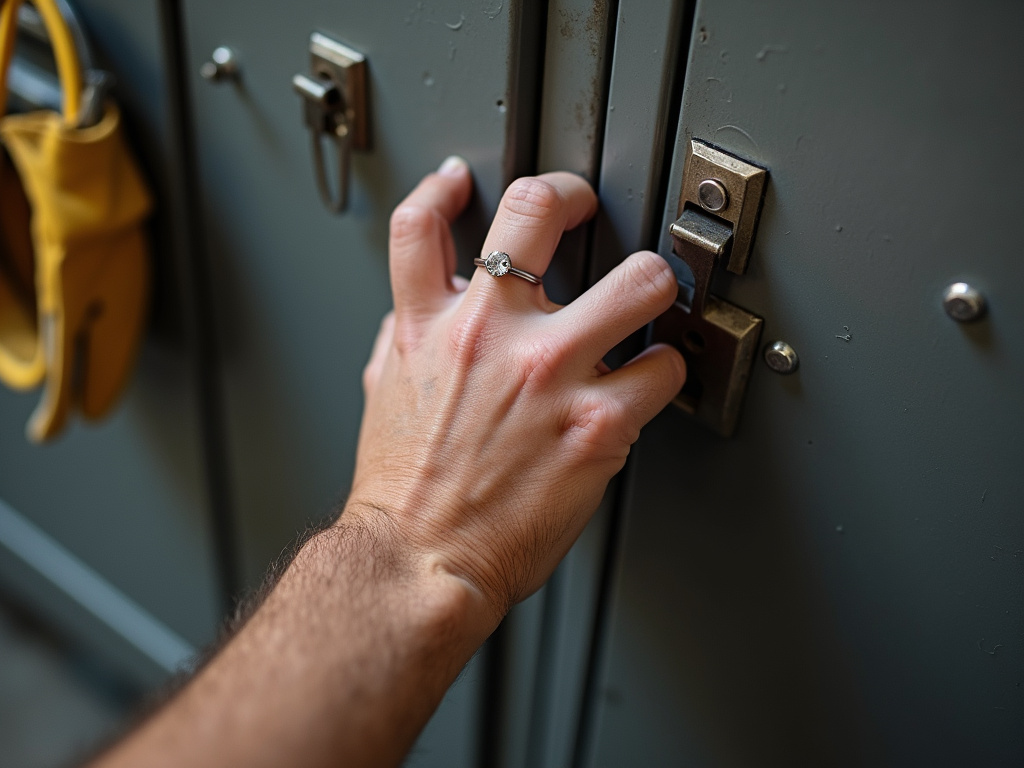
This is the non-negotiable part. For men in trades, the “when” is dictated by the job site clock, not romance. The risk is degloving, a word that still makes me wince after the one time a local jeweler showed me a ring he’d had to cut off. The metal was cold and crimped, the story behind it too grim for this page. Trust me, the sound of a ring catching on a ladder rung is a sound you don’t forget.
Before you start: If your work involves machinery, electricity, or chemicals, wearing a metal ring introduces severe hazards. The immediate consequence of catching a ring is a traumatic degloving injury, requiring emergency surgery. The long-term timeline can include permanent disfigurement, loss of the finger, or electrical shock. Mitigation is simple: remove the ring before starting work.
For electricians, mechanics, machinists, or anyone working with their hands, the rule is absolute: the ring comes off. Here’s a practical, numbered routine I recommend to my clients:
- Designate a Safe Spot: At work, this is a locked locker or a dedicated, non-conductive hook away from your workspace. At home, use a dedicated dish or a proper jewelry storage box.
- Use a Safer Alternative: For those who want a constant symbol, a silicone band from QALO or Enso Rings is a fantastic $25 solution to a $25,000 surgical problem. Their ‘Elements’ collection has matte finishes that don’t scream “gym wear.”
- Make it a Ritual: Put your metal ring on your keychain or necklace when you park at work. Putting it back on when you get in your car to leave creates a powerful bookend to your day.
This routine becomes the answer to “when does he wear it?” For a welder or a carpenter, he wears it when he’s not on the clock. Period. And that ring will need regular cleaning a diamond ring or moissanite ring cleaning to combat the grime of everyday life.
What are the options after the wedding ceremony?
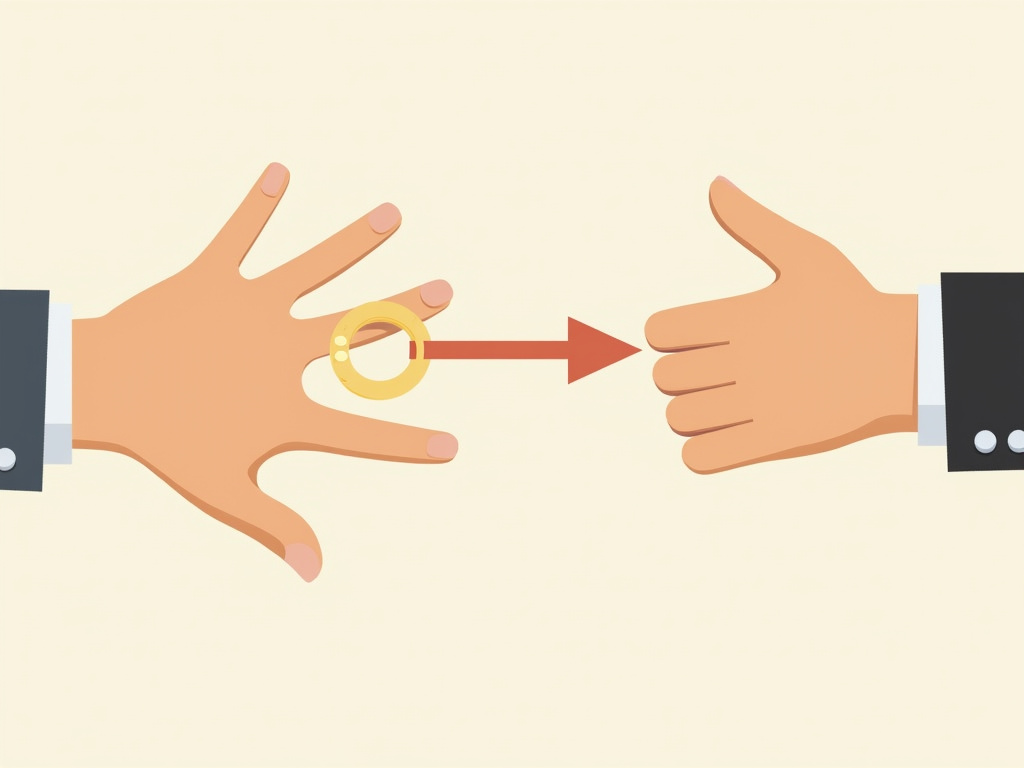
The engagement ring’s journey doesn’t end at the altar. Its post-wedding life has three common paths, and I’ve helped couples navigate each one. The choice is intensely personal, often blending sentiment with sheer practicality.
- The Hand Swap. Popular in German tradition. The engagement ring moves from the left hand to the right, and the wedding band takes its place on the left. Both are worn daily, each on its designated hand. It’s a clear, symbolic transition.
- The Stack. Both rings live on the same finger, usually the left ring finger. The wedding band goes on first (closer to the heart), with the engagement ring stacked on top. This requires rings designed to fit together. I often suggest a contour band or a set sold as a pair to ensure comfort.
- Retirement. The engagement ring is lovingly stored, becoming a keepsake or future heirloom. Only the wedding band is worn daily. This appeals to minimalists or those who see the engagement ring as a specific promise that culminates in marriage.
There’s no right answer, but there is a common pitfall.
Common mistake: Getting your engagement ring sized for your left hand, then deciding after the wedding to move it to your right. Finger sizes often differ between hands. Resizing a ring made of tungsten or titanium is often impossible, leaving you stuck.
If you and your partner are blending cultural backgrounds, perhaps you follow a German tradition (left for engagement) and she follows an American one (left for both), that’s not a problem, it’s a story. I worked with a couple who did this; they loved that their rings told a mini-story of their blended heritage to anyone who looked closely. Whichever path you choose, maintaining the set is key, whether that involves silver ring cleaning or following a gold jewelry care routine.
How do you choose a ring for daily life?
This is where my job as a curator truly begins. The ring must fit not just your finger, but your life. A beautiful ring you can’t wear is just a tiny, expensive sculpture. Let’s break down the choice beyond the metal.
Consider Your Daily Grind:
- For Active Hands (Mechanics, Gardeners, Musicians): A rounded, comfort-fit band in titanium or cobalt chrome is less likely to catch. A matte or brushed finish hides scuffs infinitely better than a high polish.
- For Office/Professional Settings: You have more flexibility. A classic polished platinum or gold band works, or consider a ring with a subtle pattern or a dark wood inlay for personality.
- For Allergy-Prone Skin: Stick with hypoallergenic metals like platinum, titanium, or surgical-grade stainless steel. Avoid nickel-containing white gold unless it has a thick, protective plating.
Style & “When” Are Linked:
Your style choice directly impacts when you’ll wear it. A bold, raised-design ring might be for evenings out, while a sleek, low-profile band is for 24/7 wear. Some men opt for two rings: a durable daily driver and a dressier version for special occasions. This flexibility is perfectly acceptable. The meaning isn’t diluted by practicality.
Finally, think long-term. A ring is a companion for decades. Learning general jewelry cleaning basics and preventing jewelry tarnish will keep it looking as significant as the day you got it. The engagement ring customs overview can provide historical context, but your daily reality will dictate its true home.
Frequently Asked Questions
Do men wear engagement rings after marriage?
Some do, some don’t. Common practices include moving the ring to the right hand (as in Germany), stacking it with the wedding band on the left, or retiring it to a box as a keepsake. It’s a personal decision you should make with your partner.
Which finger does a man’s engagement ring go on?
Traditionally, the fourth finger. The hand depends on culture: left in the US, UK, and Canada; right in Russia, Poland, Greece, and many other countries. Always consider your own heritage and personal comfort.
What is a mangagement ring?
It’s a casual term for an engagement ring designed for a man. It signifies the same commitment but reflects a modern trend toward equal partnership. Styles are often more subdued and durable than traditional women’s engagement rings.
Is it safe to wear a metal ring for physical work or sports?
No. For activities involving machinery, tools, electricity, climbing, or contact sports, you must remove a metal ring. The risk of degloving injury or electrical accident is severe. Use a silicone safety band as a safe alternative during these activities.
How should I clean and maintain my ring?
Maintenance depends on the material. For most metals, a soft brush with mild soap and water works. For specific stones, use appropriate methods: diamond ring care for diamonds, caring for moissanite jewelry for moissanite, and gemstone jewelry care for other gems. Regular, gentle cleaning prevents buildup.
The Bottom Line
So, when does a man wear an engagement ring? He wears it from the moment of promise, on the hand his culture or heart dictates, and at all times except when his safety demands it come off. The “rules” are really a starting point for a much more personal conversation.
The most important advice I can give is this: talk to your partner. This ring is a joint symbol. Its power comes from the commitment you both put into it, not the specific finger it occupies. Choose a ring that fits your life, whether that’s a rugged titanium band from Manly Bands or a classic gold piece, and then wear it (or don’t) in a way that makes sense for your story. That’s the only tradition that truly matters. And once you have it, please look into jewelry insurance for rings to protect that symbol for all the days to come.
