
What Does One Earring in the Left Ear Mean?
Today, one earring in the left ear is a personal style statement, not a code. Its historical meanings are layered: an 18th-century sailor’s burial fund, an ancient Chinese health practice, and a 1980s pop-culture signal of heterosexuality that is now obsolete. The wearer’s own intent, be it fashion, spirituality, or simple preference, is the only relevant meaning.
I learned the hard way that decoding jewelry symbols is risky business. Early in running TheJewelryNook, I published a post repeating the romantic tale of a sailor’s gold earring paying for his Christian burial. A reader, a maritime historian, emailed a firm correction. He cited a 1985 analysis of recovered sailor artifacts, noting that what was often called “gold” was actually pinchbeck, a copper-zinc alloy nearly worthless for burial costs. The real purpose was often far more superstitious or practical. I had to issue a public correction. Now, I treat historical symbolism not as folklore, but as archaeology, demanding specific sources.
So, what’s the real story behind that single left earring? It’s not one story, but many. Let’s scrape away the myths and look at what’s actually etched in the metal.
Key Takeaways
- The “left ear means straight” code from the 1980s is a dead language. Using it as a social decoder is a guaranteed blunder.
- Centuries earlier, a left earring had grim utility: a sailor’s precious metal hoop acted as voyage insurance to cover burial costs if he died abroad.
- In Ayurvedic and ancient Chinese traditions, left-side piercings were believed to improve health, immunity, and mental focus by stimulating specific energy points.
- Modern wearers, inspired by celebrities like Bad Bunny and Harry Styles, choose a single earring for fashion and self-expression, free of coded baggage.
- Assuming meaning projects your own stereotypes. The most reliable approach is to compliment the jewelry, not interpret it.
What’s the Real History Behind a Left Ear Piercing?
A single earring in the left ear has served as a sailor’s burial fund, a Cossack’s rank insignia, and an Ayurvedic health aid. These functional and spiritual purposes predate modern fashion codes by centuries, grounding the symbol in practicality rather than social signaling.
Forget the 80s. Let’s talk about the 1700s, when that earring was less about identity and more about survival. The most persistent historical meaning isn’t romantic; it’s brutally practical.
Sailors, particularly in European navies, wore a gold or silver earring as a form of travel insurance. The logic was grimly transactional: if your body washed ashore in a foreign port, the precious metal would cover the cost of a proper burial. This practice turns the earring into a portable bank account, a last gesture of dignity. It was less about which ear and more about the value of the metal itself, though many traditions favored the left.
But seafarers weren’t the only ones. Look east, and the meaning shifts from the physical to the energetic.
| Tradition | Typical Ear | Core Purpose & Belief |
|---|---|---|
| Sailors & Pirates | Left (or either) | Burial Insurance. The metal’s value guaranteed a proper burial far from home. |
| Ancient Chinese Medicine | Left | Preventative Health. Piercing specific points was believed to ward off bad luck and improve blood circulation. |
| Ayurvedic Karna Vedha | Left (often first) | Holistic Well-being. Piercing the left ear first is thought to regulate reproductive health and boost immunity. |
| Cossack Warriors | Right | Social Rank. An engraved silver hoop denoted the man was a provider and head of household. |
This table shows a clear divide: the earring as a functional tool versus a social marker. The sailor and ancient health practices saw it as an object with a direct, impactful purpose, whether paying for a funeral or balancing the body’s energy. The Cossack tradition edges closer to the modern idea of signaling, but its signal was about social role, not identity.
TL;DR: Long before it was a fashion accessory, a left earring was a pragmatic or spiritual tool, from a sailor’s final payment to an ancient health treatment.
The Ayurvedic and Energetic Perspective
This isn’t just history; for many, it’s a living practice. In a fascinating YouTube exchange, a doctor advises a man to wear a larger, princess-cut diamond in his left ear based on “Indian system” principles. She explains it “mentally helps you to be a better listener” and improves the planetary influence of Mercury.
The specific cut mattered, a princess cut purportedly reflected a “selective listener.” This connects to Vedic astrology and Ayurveda, where the left side of the body is considered receptive (lunar). Piercing specific points, similar to acupuncture, is believed to stimulate corresponding organs and systems. Here, the earring is an active component of well-being, a meaning utterly personal and internalized.
Is the “Gay Ear” Stereotype True or a Myth?

So much for ancient history. Let’s talk about the 1980s, the era that really cemented a single, reductive meaning in pop culture. And let’s be clear: that meaning is expired.
The code was simple, if you believed the teen magazines: right ear for gay men, left ear for straight men. A 1991 New York Times report noted that gay men “often [wore] a single piece of jewelry in the right ear to indicate sexual preference.” By inversion, the left ear became a whispered signal of heterosexuality. This code provided a discreet tool for a community facing widespread prejudice.
But the world moved on. The need for such a visual signal crumbled with the rise of dating apps, broader social acceptance, and open expression.
Common mistake: Assuming a man’s sexuality based on which ear is pierced. This “code” is decades out of date. You’re more likely to offend someone than correctly guess their identity, potentially causing immediate social friction.
Queer publications now actively debunk this as a myth. Grindr’s blog and Queerty call it an obsolete, even limiting, stereotype. The data underscores the shift: between 2022 and 2023, men’s earring sales soared by 147%. This wasn’t a surge in secret signaling; it was driven by artists like Bad Bunny and Lil Nas X wearing earrings as bold, androgynous fashion statements. Harry Styles wears a pearl earring because it’s iconic, not because he’s sending a covert message.
The conversation has decisively moved from “what does it mean?” to “where can I get one?”
What Are the Modern Reasons for Wearing One Earring?
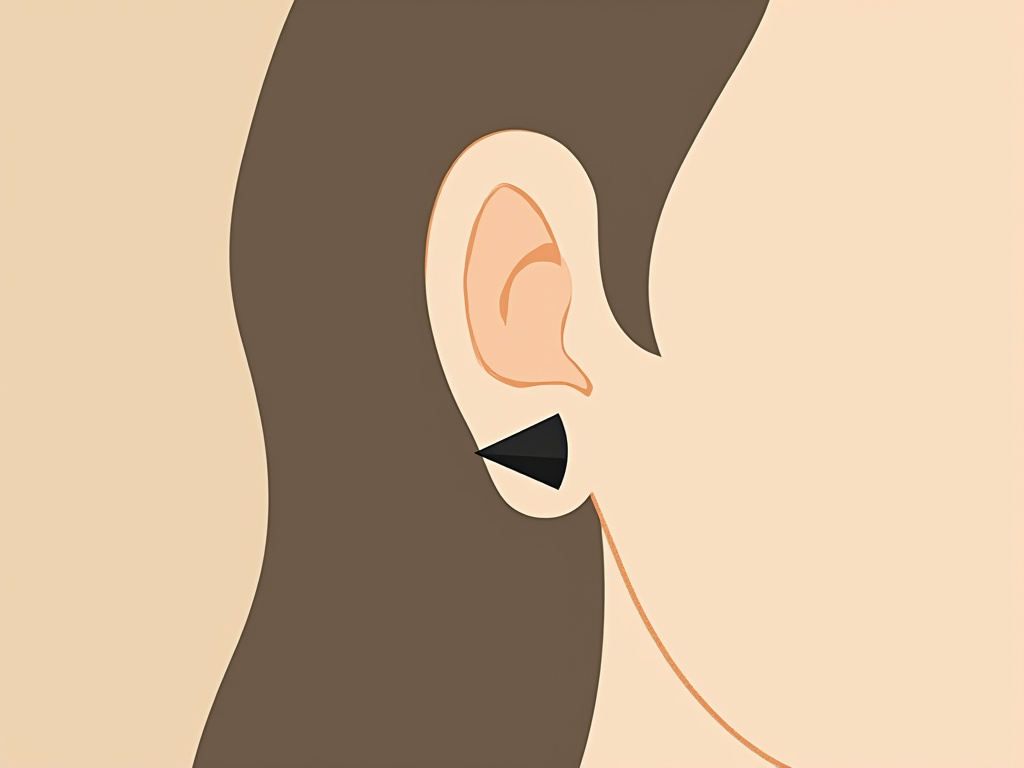
Today, the single earring has been liberated. The dominant meaning is the one the wearer assigns, often with a deliberate shrug to old rules. Why choose one, and why the left? The reasons are as varied as the people wearing them.
- Fashion as Autonomous Expression. This is the big one. The single earring is a staple of non-binary fashion, a deliberate choice to adorn without adhering to gendered norms. My friend Sam, who identifies as agender, told me their single black zirconium spike isn’t a signal; it’s a “boundary.” It says “I like this,” not “I am this.”
- Celebrity and Trend Influence. Figures like Lil Nas X don’t use earrings to signal hidden identities; they use them to craft a visible, fluid aesthetic. Their influence mainstreams the look, stripping it of coded baggage for everyone else.
- Pure, Practical Preference. Honestly? Sometimes the left ear is just the side you don’t sleep on. I’ve pierced my left helix three times because my right side always gets irritated by the pillow, a brutally practical reason with zero spiritual weight.
This collapse of old rules means the most important earring maintenance tips often relate to material care, not symbolic care. Choosing skin-safe earring materials like implant-grade titanium is a more consequential decision than which side to pierce.
Bottom line: The code is dead.
How Should You Choose and Care for a Single Earring?
If you’re inspired to join the trend, your focus should be on quality, comfort, and personal meaning, not outdated symbolism. Here’s a practical guide to getting it right.
First, decide on your commitment level. A clip-on or magnetic earring lets you test the look. For a permanent piercing, research reputable studios that use single-use needles and implant-grade metals like ASTM F136 titanium or solid 14k gold. These hypoallergenic earring metals minimize the risk of irritation.
Before you start: Piercing carries infection and allergy risks. Always go to a licensed professional, never a mall kiosk using a piercing gun. Guns can cause tissue damage and are harder to sterilize. Follow a strict piercing aftercare guide for 6-8 weeks to prevent complications.
Once healed, your choices expand. Consider what the piece says to you. Is it a minimalist stud for daily wear, or a dramatic hoop for nights out? Your jewelry storage solutions matter too; keeping single earrings organized prevents loss.
| Earring Type | Best For | Key Care Consideration |
|---|---|---|
| Implant-Grade Titanium Stud | Initial piercing, sensitive skin | Requires basic cleaning ear piercings routine; highly corrosion-resistant. |
| Sterling Silver Hoop | A classic, versatile look | Prone to tarnish; needs regular silver jewelry maintenance with a polishing cloth. |
| 14k Gold Stud | A timeless, hypoallergenic investment | Durable but can scratch; clean with mild soap and water per gold jewelry care methods. |
| Costume/Statement Piece | Fashion-forward, trend-driven looks | Often plated; avoid water and chemicals. Use gentle fashion jewelry cleaning techniques. |
TL;DR: Choose the metal and style that fit your lifestyle and values. Proper aftercare and storage are far more important than which ear you choose.
Frequently Asked Questions
Does a left earring mean a guy is straight?
No. That association is a relic of 1980s and 1990s pop culture. It is now considered an outdated stereotype. Assuming someone’s sexuality based on an earring is unreliable and can be offensive.
What does a left ear piercing mean spiritually or culturally?
In traditions like Ayurveda, a left ear piercing (often the Karna Vedha) is believed to improve immunity and reproductive health. In ancient Chinese medicine, it was thought to ward off bad luck. These are personal health and spiritual practices, not social signals.
Why did pirates and sailors wear one earring?
The most cited reason is practical: the precious metal earring acted as a portable fund to pay for a proper burial if the sailor died far from home. It was a grim form of travel insurance.
Which ear should a guy pierce?
There is no “should.” Historical codes have flipped, and modern fashion rejects rigid rules. Pierce the ear you prefer, or both. The choice is 100% about personal style and comfort.
What Actually Matters
The journey of the single left earring is a masterclass in how meaning evolves. It’s been a burial fund, a health aid, a secret handshake, and now, finally, a free agent. The oldest layers speak of practicality and belief. The most recent pop-culture layer has faded to a faint echo.
The power now belongs entirely to the wearer. That single stud or hoop could be a nod to an ancient practice, a piece of pure art, a gift loaded with memory, or simply the accessory that felt right that morning. Your best move is to admire the craft, the polish on a silver earring or the setting of a diamond, not to decipher a message that probably isn’t there.
The true meaning is the confidence with which it’s worn. Everything else is just a story we tell about the past.
