
Diamond Stud Size Guide: Find Your Perfect Fit
A good size diamond earring stud looks balanced on your unique earlobe and feels comfortable all day. For most adults, this means a total carat weight between 0.50 and 1.50 carats, translating to individual studs roughly 4mm to 5.8mm wide. The right size is less about a chart and more about how a millimeter of light interacts with your anatomy.
I learned this lesson the hard way with my first “nice” pair. I saved for a 1-carat total weight set, dreaming of that classic sparkle. When they arrived, they looked like two tiny, sad dots on my broad lobes. I was crushed. The carat weight was right, but the millimeter spread was all wrong for me. That disappointment taught me to shop with my eyes and a ruler, not just a gem certificate.
This guide is the one I wish I’d had. We’ll move past generic charts and into the tactile, personal details that make a pair feel like yours. We’ll talk about why a bezel setting saved my client Maria from a lifetime of tilting studs, and how to spend your budget where it actually shows.
Key Takeaways
- Shop by millimeter diameter, not carat weight alone. A 1.00 CTW pair typically means two ~5.1mm studs.
- Your earlobe size and shape are the final judges. A 6.5mm stud can dominate a petite lobe but disappear on a broad one.
- For earrings, prioritize Cut for sparkle, then Color. Clarity is forgiving. SI1 or SI2 stones often look flawless from a speaking distance.
- If studs tilt or droop, a martini or bezel setting that sits closer to the ear often fixes the problem better than downsizing the stone.
- The most popular and versatile total weight is about 1.50 carats (each stud ~5.8mm), offering noticeable presence without overwhelming daily wear.
What Does “Carat Weight” Actually Mean for Studs?
Carat weight measures mass, not how much light a diamond throws back at you. A deeply cut stone can weigh the same as a well-proportioned one but have a smaller face-up size. This is why two pairs listed as “1.00 CTW” can look completely different on your ear.
Total Carat Weight (CTW) refers to the combined weight of all diamonds in a piece. For stud earrings, a 1.00 CTW listing means the weight of both diamonds together totals one carat, typically resulting in two stones of approximately 0.50 carats each.
I keep Ritani’s ‘Classic 4-Prong Stud’ product page bookmarked. Their interactive slider shows the exact millimeter spread for every carat increment. For instance, their “1.00 CTW Round Brilliant Studs” list each diamond’s diameter as 5.05–5.15mm. That’s the specificity you need when comparing online listings that only shout about carat weight.
Here’s a consolidated translation from leading retailer guides, giving you a physical expectation before you buy.
| Total Carat Weight (CTW) | Approx. Diameter per Stud | Visual Effect & Best Use |
|---|---|---|
| 0.25 – 0.30 CTW | ~3.0 – 3.4mm | Subtle sparkle. Ideal for second/third piercings, minimalist stacks, or a delicate daily look. |
| 0.50 CTW | ~4.0 – 4.1mm | The entry-level sweet spot. Noticeable but professional, perfect for everyday workwear. |
| 1.00 CTW | ~5.0 – 5.2mm | The classic “engagement-style” look. Offers significant presence and versatility. |
| 1.50 CTW | ~5.8mm | The most popular statement size. Clearly luxurious but still wearable daily for many. |
| 2.00 CTW | ~6.5mm+ | A bold, formal statement. Can feel heavy and may droop on softer lobes without proper support. |
TL;DR: Always cross-reference the carat weight with the millimeter diameter. A 1.00 CTW pair equals two ~5.1mm studs, not two 1-carat diamonds.
How Do I Know What Size Will Look Good on My Ears?
A millimeter measurement is absolute. Your earlobe is not. This is where most generic advice fails. A 5.8mm stud can look modest on my broad, long lobe. That same stud on my friend’s small, attached lobe looks like a statement piece. The only judge that matters is your mirror.
Common mistake: Choosing a size because it looked perfect on a friend or influencer. Their lobe anatomy is different. What suits them might look comically large or disappointingly small on you, leading to an expensive return.
The fix is a physical, low-tech test. If shopping online, cut a circle of paper to the millimeter diameter you’re considering. Tape it to your earlobe. Look straight on, then in profile. Does it feel balanced? Is there a pleasing margin of lobe around the edges? This five-minute test is more valuable than hours of browsing.
Your earlobe’s firmness also dictates how a stud behaves. Softer, fleshy lobes or mature lobes with less collagen are more prone to drooping. A larger, heavier stone exaggerates this tilt. I had a client, Maria, who loved her 1-carat prong-set studs but hated how they tilted forward like little sundials by noon. We didn’t go smaller.
- We switched her to a bezel setting. The lower profile hugged her lobe, lowering the center of gravity.
- We checked the post length. Her original posts were too long, creating a lever. A custom-fit post eliminated the wiggle.
- We upgraded the backing. A larger, flat disc back provided more support than a standard butterfly clutch.
The tilt was gone. The problem wasn’t her lobe; it was the earring’s design. For non-traditional placements like helix piercings, a custom barbell length is non-negotiable for comfort and is a key part of long-term ear piercing care.
Why Are the 4Cs Different for Earrings?
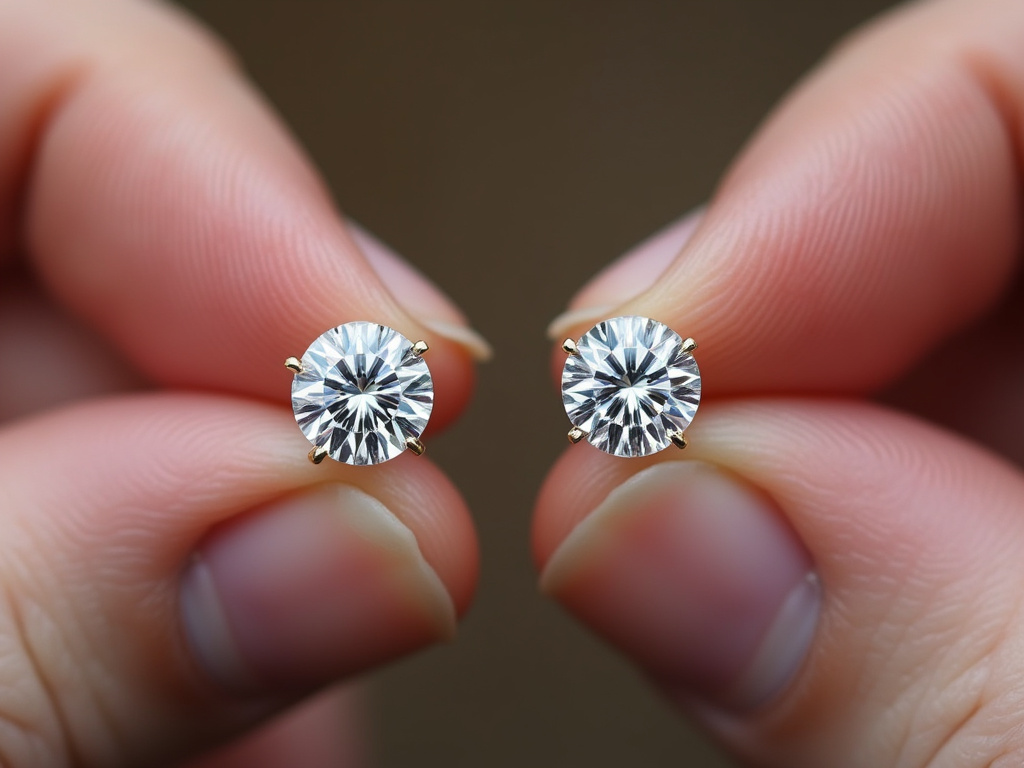
The GIA 4Cs are the universal language of diamond quality. But for a ring you stare at from inches away versus earrings viewed from feet away, the hierarchy shifts dramatically. Sophia Jewelers states this bluntly: clarity is more forgiving here than in any other category.
Cut is everything. A well-cut diamond acts like a complex mirror, bouncing light back to your eye with maximum brilliance. This sparkle is what people notice from across a room, not a microscopic feather. Never compromise on Cut grade for studs.
Color matters next. A warm tint (like a K or L color) is more visible in the white setting of an earring against your skin than a tiny inclusion. I recommend aiming for a near-colorless grade (G, H, I) for a bright white appearance without the steep premium of D-F flawless color.
Clarity is your budget saver. Here’s my personal failure story: I once guided a client to upgrade from an SI1 to a VVS1 clarity grade in her studs, costing an extra $800. When she received them, she held the old and new pairs side-by-side and couldn’t tell the difference, even in direct sunlight. I felt terrible. An SI1 or well-placed SI2 diamond will appear flawless from any normal conversational distance. Save that part of your budget for a better cut or a slightly larger size.
Carat weight you’re already translating to millimeters.
This adjusted priority. Cut, then Color, then Clarity, lets you allocate your money where it creates visible impact. It also simplifies your search. Filter for Excellent or Very Good Cut first, then Color grades G-I, and finally Clarity of SI1 or better. The sparkle you preserve with this strategy is maintained through simple cleaning diamond jewelry habits.
Which Setting is Best for Security and Sparkle?
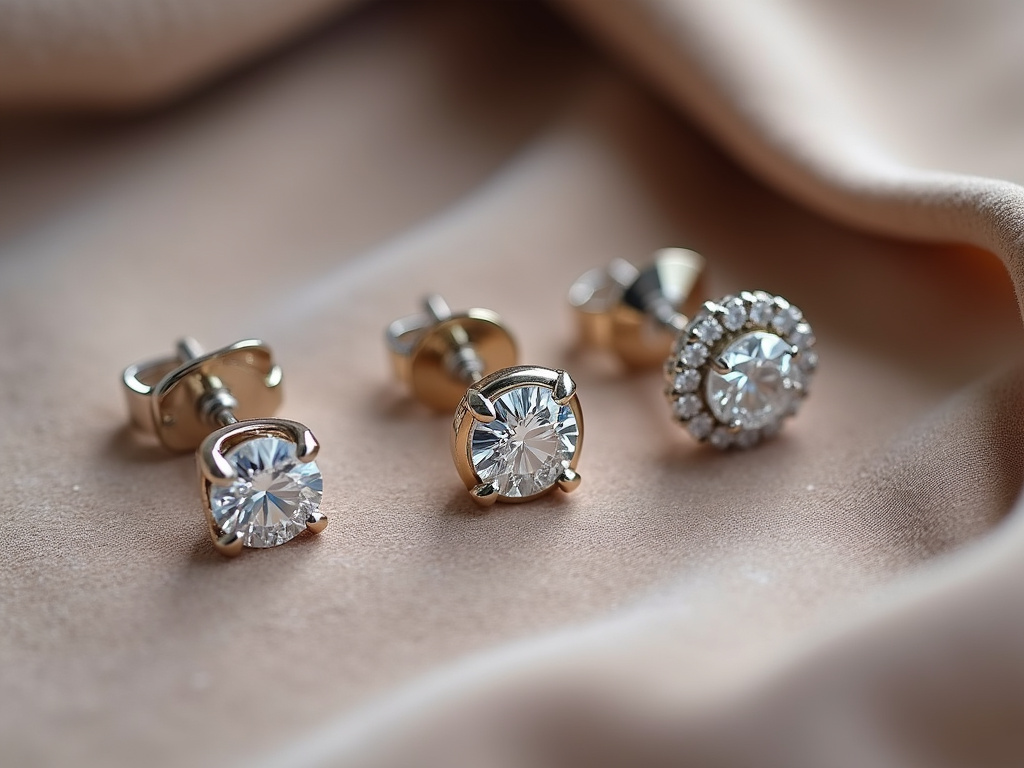
The setting does more than hold the diamond; it’s the functional interface between the stone and your ear. A poor choice can make a perfectly sized stone look and feel wrong.
Prong settings (like four or six-prong) are the classic for a reason. They allow maximum light exposure from all angles, which maximizes brilliance. However, they lift the stone away from the lobe. On softer lobes, this higher leverage point can encourage tilting.
Martini or bezel settings are the tilt-fixers. A martini setting has a V-shaped cup; a bezel is a thin metal rim. Both cradle the diamond closer to the ear, significantly lowering the center of gravity. The stud sits more upright and secure. This isn’t just style; for many, it’s a necessity for comfortable wear.
Halo settings surround a center stone with a circle of smaller diamonds. This clever design increases visual size and sparkle without a massive jump in carat weight or cost. A 0.50-carat center with a halo can face up like a 1-carat solitaire.
The metal you choose matters for longevity and preventing tarnish. Platinum is incredibly durable but can develop a soft patina. White gold is often rhodium-plated for brightness but requires re-plating over time. Your lifestyle should guide this choice as much as aesthetics.
What’s the Step-by-Step Process to Choose My Perfect Pair?
This process moves you from abstract numbers to a confident, personalized purchase.
- Find your baseline. Do you own studs you like? Measure their diameter with a caliper or ruler. This is your concrete starting point. If you love their size, look for that millimeter measurement.
- Test millimeters on your lobe. Use the paper circle test described earlier. Consider your daily environment, will this size feel appropriate for your workplace and weekend activities? This step prevents the “paper doll” effect, where a stud looks like a flat sticker on a large lobe.
- Apply the earring-specific 4Cs filter. Search for diamonds with Excellent or Very Good Cut grades first. Then filter for Color grades G-I. Finally, set Clarity to SI1 or better. This instantly filters out overpriced options with specs you’ll never see.
- Select a setting for function. If you have an active lifestyle or softer lobes, prioritize security with a low-profile bezel or martini setting. If maximum sparkle is the goal and your lobes are firm, a prong setting is classic. The right setting is part of a holistic approach to jewelry care and storage.
- Verify every detail before buying. Confirm the listed carat weight is for the pair (CTW). Ensure millimeter dimensions are provided or ask the jeweler for them. Check the post type and backing, lockable screw-backs or secure friction posts are best for valuable everyday studs.
Following these steps removes the guesswork. You’re not just buying a carat weight; you’re engineering a piece that fits your anatomy and life. For more nuanced care, especially with heirloom or delicate pieces, the principles of vintage jewelry care apply.
Frequently Asked Questions
What is the most popular diamond stud size?
Jeweler consensus and sales data point to about 1.50 carats total weight as the most frequently purchased size. This translates to each stud being approximately 5.8mm in diameter. It hits a sweet spot: clearly a luxury piece and a noticeable statement, yet still comfortable and appropriate for daily wear across most settings.
Is 1-carat total weight too big for everyday earrings?
For most people, a 1.00 CTW pair (each stud ~5.1mm) is not too big for everyday wear. It’s considered a classic, versatile size that provides significant sparkle without being overwhelming. Its suitability depends more on your personal style, workplace norms, and earlobe size than on the measurement itself.
Should diamond studs be the same size?
For a traditional, symmetrical look, yes, the two studs should be matched in carat weight, cut, and color. However, some contemporary styles intentionally use mismatched sizes (e.g., a larger stud for the first lobe piercing paired with a smaller one for the second). This is a deliberate stylistic choice, not the standard.
How do I stop my diamond studs from tilting forward?
Tilting is often a setting and fit issue, not purely a size issue. First, try switching to a martini or bezel setting, which positions the diamond closer to your earlobe for better balance. Second, ensure you’re using the correct earring backs; a larger, flatter disc back can provide more support than a small butterfly clutch. Finally, ask your jeweler if the post length is appropriate for your earlobe thickness.
Before You Go
Forget chasing a magic carat number. A good size diamond earring stud is the one whose physical width complements your unique earlobe and whose design suits your daily life. Start with the millimeter, use the adjusted 4Cs to maximize sparkle per dollar, and let the setting solve fit problems before you downsize the stone.
The real test of a perfect pair isn’t the first glance in the mirror. It’s after eight hours. Do your ears ache? Does your hair snag? Do you forget they’re there until you catch your sparkle reflected in a window? That’s the feedback loop most guides miss. A “good” size is the one that passes the forgotten-wear test, becoming a seamless part of you. For more on preserving that perfect sparkle, explore our guides on jewelry cleaning and earring maintenance.
