
What Size is a Normal Earring? The 4-6mm Fit Guide & Rules
A normal earring size for everyday studs is 4 to 6 millimeters in diameter, with a post length of 6 to 8 millimeters and a thickness (gauge) of 20 gauge (0.8mm) or 18 gauge (1.0mm). This range fits most adult earlobes comfortably for daily wear, balancing visibility with a low profile. For hoops, a normal inner diameter is 20 to 30 millimeters; for dangles, a normal length is 3 to 5 centimeters.
The mistake is thinking “normal” means one perfect number. It doesn’t. Normal is a zone of comfortable fit that disappears against your skin and clothing. A 2mm stud looks like a pinprick on some lobes and gets lost. An 8mm stud feels like a dangling weight by lunchtime if your lobe is small. The right size makes the earring part of you, not an object attached to you.
This guide breaks down the normal size for every earring type, studs, hoops, and dangles, by the millimeter. You’ll learn how to measure what you already own, match sizes to your face and lifestyle, and avoid the two fit mistakes that make even beautiful jewelry unwearable.
Key Takeaways
- The sweet spot for daily studs is 4–6mm. Smaller can disappear; larger becomes a statement piece that draws constant attention.
- Post length and gauge matter as much as face size. A 6mm post on a 4mm thick lobe embeds; a 20g post under a 8mm stone bends within a month.
- Huggie hoops are defined by an inner diameter under 12mm. The “normal” everyday hoop diameter for a single wrap is 20–30mm.
- Dangle earrings longer than 5cm move from office-appropriate to evening-out. The swing and weight change completely at that threshold.
- Piercing location dictates strict size rules. A standard 8mm post will protrude painfully from a tragus; a 16g helix bar won’t fit a 20g piercing.
The Universal Sweet Spot for Stud Earrings
Forget finding a single normal size. Think of a comfort zone. For the classic stud earring worn daily by most adults, that zone is 4 to 6 millimeters in diameter. This is the range jewelers call the universal sweet spot.
A 4mm stud offers a definite presence without flash. It’s visible in casual conversation but doesn’t dominate your profile. The 5mm stud is the true workhorse. It’s the size of a standard pencil eraser, present, polished, and appropriate for everything from a boardroom to a backyard barbecue. At 6mm, the earring begins to make more of a statement. It’s still comfortable for daily wear, but it crosses into the territory where people will notice the jewelry itself, not just your face.
Stud earrings in the 4-6mm range use a post length of 6-8mm for adult earlobes. The post thickness, or gauge, is typically 20 gauge (0.8mm) for lighter designs and 18 gauge (1.0mm) for stones over 6mm or heavier metals like solid gold. This combination provides secure seating without pinching or allowing the earring to tilt forward.
What happens outside the sweet spot? A 2mm or 3mm stud is minimalist. On a larger lobe, it can look like a freckle or a forgotten piercing. It’s a common pick for a second or third lobe hole or for cleaning ear piercings that are still sensitive. On the other end, a 7mm or 8mm stud is a conscious statement. It’s bridal, luxurious, or artistic. Wear it all day and you’ll feel the weight. It demands a sturdier 18g post to prevent the wire from bending under the mass.
Your earlobe anatomy is the final judge. The rule from professional jewelers is simple: the stud’s diameter should not exceed half the width of your earlobe. If your lobe is 12mm wide, a 6mm stud is your max for proportional look. For small lobes, the ceiling is 6mm.
TL;DR: Your normal everyday stud size is probably between 4mm and 6mm. Measure your favorite pair. If it’s in that range, you’ve found your baseline.
It’s Not Just the Face – Post Length and Gauge Are the Real Fit
The front of the earring is for show. The post is for function. Getting the post length and gauge wrong is why so many “normal” sized earrings feel terrible.
Post length is the straight part of the wire that goes through your ear. For a healed adult lobe piercing, the standard, normal length is 6 to 8 millimeters. This allows enough room for the backing to secure without clamping and for a little lobe swelling on a hot day.
Common mistake: Using a 4mm post in a lobe piercing, the backing squeezes the tissue, causing redness and embedding within hours, especially with butterfly backs.
A post shorter than 6mm risks embedding the backing into your skin. A post longer than 8mm will snag on hair, collars, and phone receivers constantly. For cartilage piercings like a helix or tragus, the normal length shrinks to 4 to 6mm. The tissue is thinner.
Gauge is the thickness of the post wire. It’s counterintuitive: a thicker wire is often more comfortable for heavier earrings. The two common sizes are:
* 20 Gauge (0.8mm): The default for most lightweight studs. It’s thin, easy to insert, and fine for stones under 6mm.
* 18 Gauge (1.0mm): The upgrade for stability. Use this for any stud over 6mm, for solid metal hoops, or if you have a tendency to bend earring posts. It fills the piercing hole more completely, reducing movement and irritation.
| Piercing Type | Normal Post Length | Normal Gauge | Risk of Wrong Size |
|---|---|---|---|
| Healed Lobe | 6–8 mm | 20g or 18g | Short post embeds; long post snags. |
| Helix (Cartilage) | 4–6 mm | 18g or 16g | Too long causes pressure sores; too thin allows cheese-cutter effect. |
| Tragus | 4–5 mm | 18g | Standard lobe-length posts protrude and catch on headphones. |
Choosing the right metal for your post is part of long-term comfort and ties directly to your general jewelry cleaning routine. Surgical stainless steel, titanium, and solid 14k gold are hypoallergenic standards. If you prefer gold, knowing specific gold earring maintenance will keep those posts smooth.
What About Hoops and Dangle Earrings?
“Normal” shifts when the earring moves. For hoops and dangles, the critical measurement isn’t diameter, it’s inner space or length.
Hoop earrings are sized by their inner diameter. This is the space inside the circle, not the thickness of the wire or any decorations.
* Huggies (5–12mm): These “normal” small hoops sit snugly against the earlobe. They don’t dangle. An inner diameter under 12mm defines a huggie.
* Everyday Hoops (20–30mm): This is the classic single-wrap hoop. It hangs with a slight drop, moving gently. This 20-30mm range is the professional piercer’s recommended sweet spot for a versatile, normal hoop.
* Statement Hoops (40mm+): These are large, noticeable, and best for evenings or bold looks. They have significant swing and weight.
A 25mm inner diameter hoop is a safe, normal starting point. It fits most ears without stretching the lobe or looking oversized.
Dangle and Drop earrings are sized by total length, measured from the bottom of the earring finding (where it attaches to the ear) to the very tip of the design.
* Office-Appropriate (3–5cm): This is the normal range for professional settings. The earring moves subtly below the lobe but stays within the jawline.
* Statement Dangles (6–9cm): These are for events. They brush your collarbone, have noticeable weight, and catch the light with movement.
A 4cm drop is a normal, wearable length that works with your hair up or down. Beyond 5cm, you’re managing the earring constantly.
How Your Face Shape and Piercing Type Change “Normal”
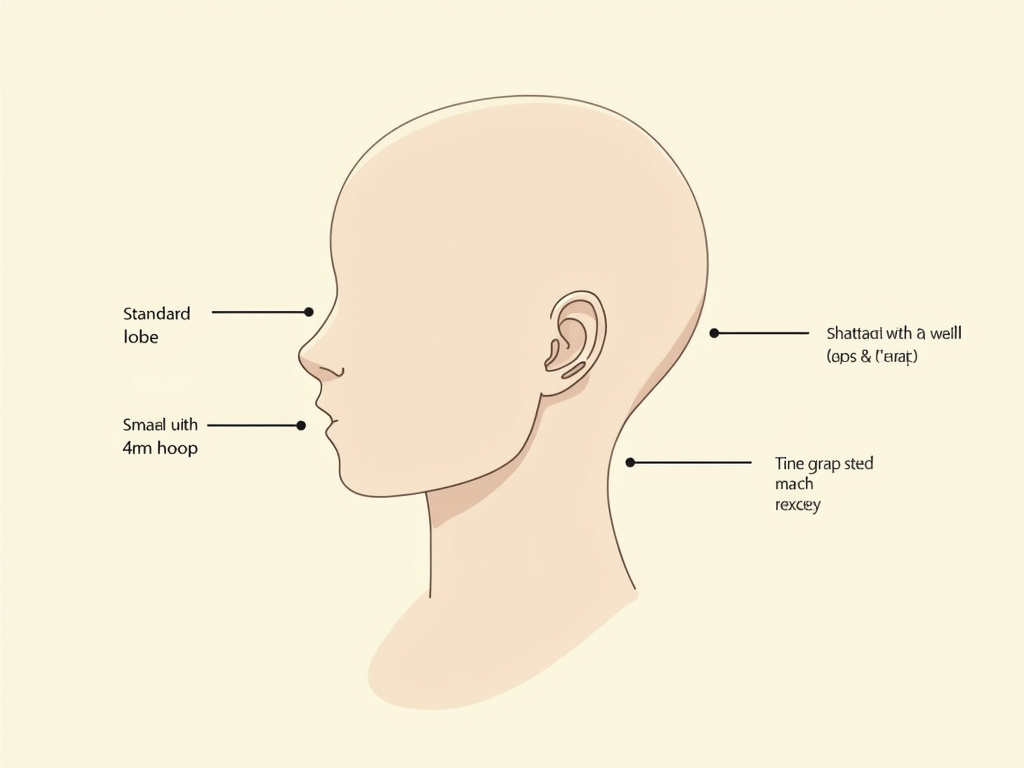
Your skeleton and your piercing’s location impose non-negotiable rules on what size looks and feels normal.
Face shape gives you a starting direction. The old rule, long faces suit wide earrings, round faces suit long earrings, has a grain of truth. A person with a round face can wear a 6mm stud, but it will emphasize the face’s curve. A 4mm stud or a 4cm drop creates a more elongated line. Conversely, someone with a long, oval face can handle an 8mm stud or a large hoop; it adds welcome width. This is a style guideline, not a law. Comfort overrules it every time.
The piercing location is law. A normal size for a lobe is abnormal for cartilage.
- Standard Lobe: The baseline. Accommodates the full 4-6mm stud range, 6-8mm posts, and most hoop sizes.
- Helix (Cartilage): Requires shorter posts (4-6mm) to avoid pressure. Hoops must be precisely sized to avoid pulling. The standard gauge is often 18g (1.0mm) or 16g (1.2mm) for stability.
- Tragus: Demands very short, often flat-back posts (5mm or less). A standard lobe-length post will stick out and be intolerable.
- Multiple Lobes: The normal size often decreases with each piercing. The first hole might take a 5mm stud, the second a 3mm, and the third a 2mm. This creates a balanced, curated look.
If you have multiple piercings, your organizing your earrings system becomes critical. Keeping track of which 4mm post belongs to which piercing saves daily frustration.
How to Actually Measure Your Earrings (And Your Ears)
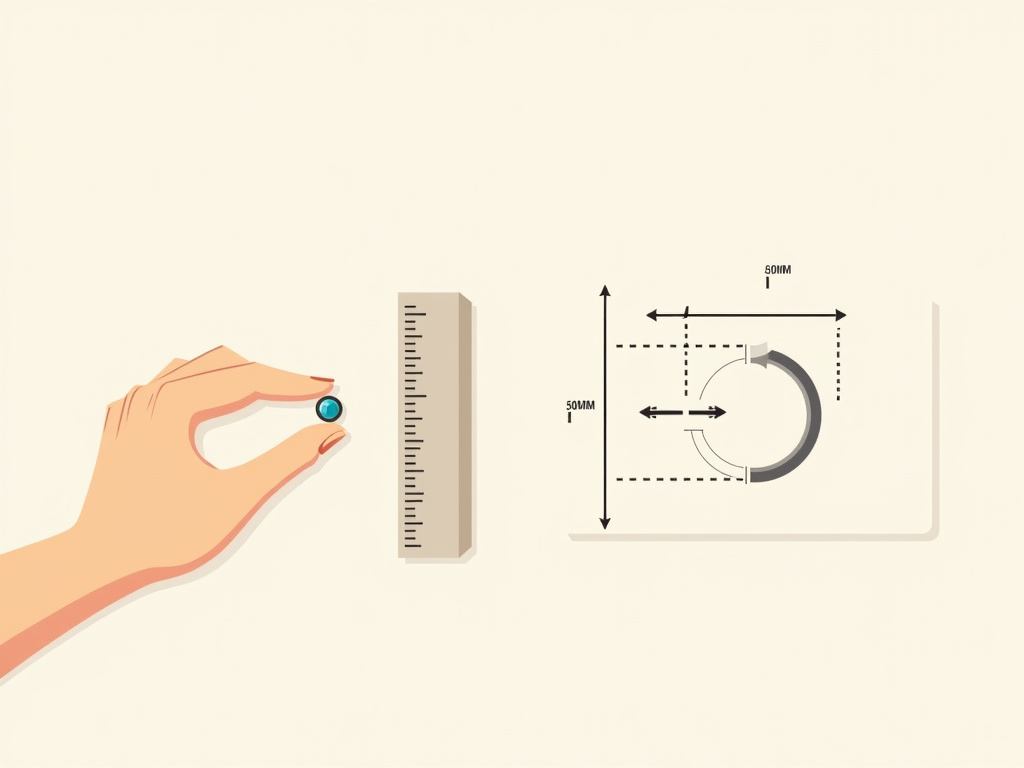
Guessing is for headaches. Measuring takes two minutes. You need a ruler with clear millimeter markings.
To measure a stud: Place the front decorative part on the ruler. Measure the diameter in millimeters. Ignore the post. Then, measure the post length from the base of the stud to the tip.
To measure a hoop: You need the inner diameter. If the hoop is closed, measure straight across the inside space from one inner edge to the opposite inner edge. This is the space your earlobe occupies.
To measure your lobe for post length: This is the trick from a YouTube piercer. Put in an earring with a standard post. Have a friend mark on the post where it exits the back of your ear. Remove the earring and measure from the base to the mark. That’s your ideal custom post length. For most, it will be between 6mm and 8mm.
To find your gauge if it’s not marked: This is harder without calipers. You can try comparing the post to a needle. A 20g post is slightly thinner than a standard sewing needle. An 18g post is slightly thicker. When in doubt, a reputable piercer can tell you in seconds.
Knowing the exact size of your favorite pieces helps when shopping online and is the first step in any solid earring maintenance tips routine. It also prevents buying duplicates that don’t fit.
The 3-Step Fit Check Before You Buy
Never buy an earring based on the face size alone. Run this three-point check.
- Check the total weight. Heavier earrings need thicker posts (18g minimum). A heavy disc on a 20g post will bend the wire, distorting the piercing over time.
- Match the post to your piercing. Cartilage? Short post (4-6mm). Lobe? Standard post (6-8mm). Is your piercing well-healed and snug? You might need the shorter end of the range.
- Consider the backing. Flat-back labrets are the professional standard for comfort and security, especially for cartilage. They require a specific post length. Butterfly backs work with standard posts but can harbor bacteria if not cleaned meticulously as part of your proper earring hole hygiene.
A pair that passes all three checks will feel normal from the first wear. It won’t pinch, pull, or feel like it’s falling out.
Frequently Asked Questions
What is the most common stud earring size?
The most common, best-selling stud size is 5 millimeters in diameter. It’s the center of the 4-6mm sweet spot, offering a perfect balance of visibility and subtlety for daily wear across most face shapes and lobe sizes.
Is 6mm too big for everyday earrings?
Not at all. A 6mm stud is firmly within the normal, everyday range. It will be more noticeable than a 4mm stud, making it a “small statement” piece. It’s an excellent choice if you want your earrings to be a defined part of your look without being flashy.
What size hoops are considered normal?
For a classic single-loop hoop that hangs slightly, an inner diameter of 20 to 30 millimeters is considered normal and highly versatile. Huggie hoops, which sit snug against the ear, have an inner diameter under 12mm.
How long should earring posts be?
For a healed adult lobe piercing, the post should be 6 to 8 millimeters long. This allows secure backing without pinching. For cartilage piercings (helix, tragus), the normal post length is shorter, typically 4 to 6 millimeters.
What if my ears are different sizes?
It’s very common. Measure the width of each lobe. Choose a stud size that doesn’t exceed half the width of your smaller lobe for a proportional look. You can also use slightly different sizes intentionally, a 4mm in one ear and a 5mm in the other, for a modern, asymmetric style.
Does metal type affect the “normal” size?
Yes, indirectly. Heavier metals like solid gold or sterling silver feel heavier at the same size than lightweight titanium or resin. A 6mm solid gold stud may demand an 18g post for support, while a 6mm titanium stud could be fine on a 20g post. For metals like silver, having a good silver earring care routine prevents tarnish from building up on those precise post measurements.
Before You Go
A normal earring size isn’t a mystery number. It’s the intersection of three measurements: the face (4-6mm for studs), the post (6-8mm for lobes), and the gauge (20g or 18g). Your personal normal is the size you put on in the morning and forget by afternoon because it fits without thought.
Start with your favorite pair. Measure it. If it’s a 5mm stud on a 7mm, 20g post, you have your blueprint. Use that blueprint to branch out, try a 25mm hoop or a 4cm drop. Avoid the two biggest traps: buying a beautiful face without checking the post length, and assuming a size that looks normal on someone else will feel normal on you. Your ears give you the only answer that matters.
