
Jade Bracelet Meaning: More Than Luck, It’s a Guardian
This post contains affiliate links. As an Amazon Associate, we earn from qualifying purchases.
A jade bracelet is a wearable circle of protection and intention. Its core meaning comes from the unbroken bangle form, symbolizing eternal safety and life’s cycles, amplified by the stone’s cultural weight as an anchor for virtue. Specific colors, green for growth, white for purity, lavender for spirit, add personal focus. Authenticity is everything; real jade’s cool, dense feel carries the meaning, while fakes are just ornaments.
You’ll see plenty of charts listing jade colors and their meanings. Green for money, white for peace. It’s a start, but it misses the point entirely. The magic isn’t in the hue, it’s in the circle. That solid, unbroken band you slip over your hand is the real story.
My worst mistake was thinking all “jade” was created equal. I once bought a stunning lavender bangle from a Bangkok market vendor who swore it was “high-quality jadeite.” It felt warm, but I was too enchanted by the color to notice. After a few weeks of wear, including showers, the vibrant purple faded to a dull, milky gray. A gemologist friend took one look and identified it as dyed quartz stabilized with resin, a material that degrades with heat and soap. My $250 lesson was harsh: the meaning evaporates if the stone isn’t real. Let’s talk about the real thing.
Key Takeaways
- The unbroken circle of a bangle is the primary symbol, representing a continuous shield and eternal cycles. This concept often outweighs the specific color symbolism.
- Authentic jade (nephrite or jadeite) carries the cultural and energetic weight. Imitations made of glass, quartz, or plastic are spiritually inert accessories.
- In living tradition, a broken bangle is not automatically bad luck. It’s widely believed the jade sacrificed itself, absorbing misfortune meant for the wearer.
- Wear it on your left wrist (the receiving side) to best absorb its purported stabilizing and protective energies, according to common practice.
- Care dictates longevity. Real jade is tough but can be fractured by sharp blows and damaged by harsh chemicals. A dedicated gemstone jewelry care routine is essential.
What is the True Meaning Behind the Circle?
You know the green stone, but do you understand the band? That closed loop isn’t just a design, it’s the thesis statement. Its meaning is built in layers: the material’s virtue, the shape’s power, and the weight of history.
In Chinese philosophy, jade embodies the Confucian virtues of wisdom, justice, compassion, modesty, and courage. The stone is considered a physical anchor for these qualities, meant to transfer them to the wearer through sustained contact.
First, consider the stone itself. Jade, specifically nephrite and jadeite, has a famously tough, interlocking crystalline structure. This physical resilience translated across cultures to symbolize moral strength, longevity, and protection. You’re not just wearing a pretty rock; you’re wearing a piece of geological endurance.
Then, there’s the shape. A bangle is a perfect, gap-less circle. In Chinese thought, this represents “Yuan Man” (圆满), completion, perfection, and the cyclical nature of the heavens. It creates a continuous barrier around your wrist, your body’s pulse point. A pendant can fall off. Earrings come in pairs. The bangle is a singular, eternal guardian.
Finally, the cultural memory. From Chinese imperial seals and Māori heirloom pendants (Pounamu) to Mesoamerican burial masks, jade was the material of ritual, sovereignty, and connection. This mediating role is physical, too. Real nephrite feels cool because it’s dense and thermally conductive, it literally pulls heat from your skin. That tangible sensation is why, in some traditions, it’s considered a ‘cooling’ stone.
TL;DR: The core meaning is protection and virtue, derived from the stone’s toughness, the eternal symbolism of the circle, and its sacred role across human history.
How Do I Know If My Jade Bracelet Is Real?
The symbolism only holds if the material is genuine. A bracelet of dyed marble or resin carries no history, no weight, and none of the protective virtues. Telling the difference is the first act of respect.
I learned this the hard way with my lavender market bangle. The tests I skipped are the ones you must use. Forget the certificate from an unknown shop; trust your senses first.
Perform these three quick, non-destructive checks:
- The Temperature Test: Cup the bangle in your hand for a full minute. Genuine jade will stubbornly remain cool to the touch. Imitations like glass or plastic will quickly warm to your body temperature.
- The Visual Luster Test: Hold it under good light. Real jade has a soft, waxy, or oily polish, it glows from within, it doesn’t sparkle like glass. That high, reflective shine is a dead giveaway of a fake.
- The Heft Test: Pick it up. Jade is remarkably dense. It should feel surprisingly heavy for its size. If it feels light or hollow, it’s likely another material.
For a closer look, examine it with a decent loupe. I use a BelOMO 10x triplet loupe for its clarity. You’re looking for nature’s fingerprints: subtle color gradients, wispy clouds, or fibrous structures. Beware of perfect clarity or bubbles, which indicate glass, or uniform dye concentrations that look painted on.
| Trait | Genuine Jade (Nephrite/Jadeite) | Common Imitation (Glass, Dyed Quartz, Plastic) |
|---|---|---|
| Feel | Consistently cool, surprisingly heavy. | Feels room temperature or light. |
| Look | Soft, waxy luster; natural, imperfect inclusions. | Glassy shine or dull plastic; often too perfect or bubbly. |
| Sound | When gently tapped (e.g., with a pen), it has a high, resonant clink. | Sounds duller, more of a clack. |
| Hardness | Extremely tough. A steel knife will not scratch it (test discreetly). | Softer; may scratch easily. |
Common mistake: Assuming a high price tag guarantees authenticity. Unscrupulous sellers often price fakes high to mimic value. I overpaid for my fake because the price made me believe it was rare. Trust physical tests over any sales tag.
Caring for real jade is simple but non-negotiable. Clean it with a soft cloth dampened with distilled water and a drop of unscented castile soap, like Dr. Bronner’s, which leaves no filmy residue. Dry it thoroughly. This isn’t just general jewelry cleaning; it’s preserving a talisman. Always avoid ultrasonic cleaners and steamers, the vibrations and heat can cause hidden fractures.
What Does Each Jade Color Symbolize?
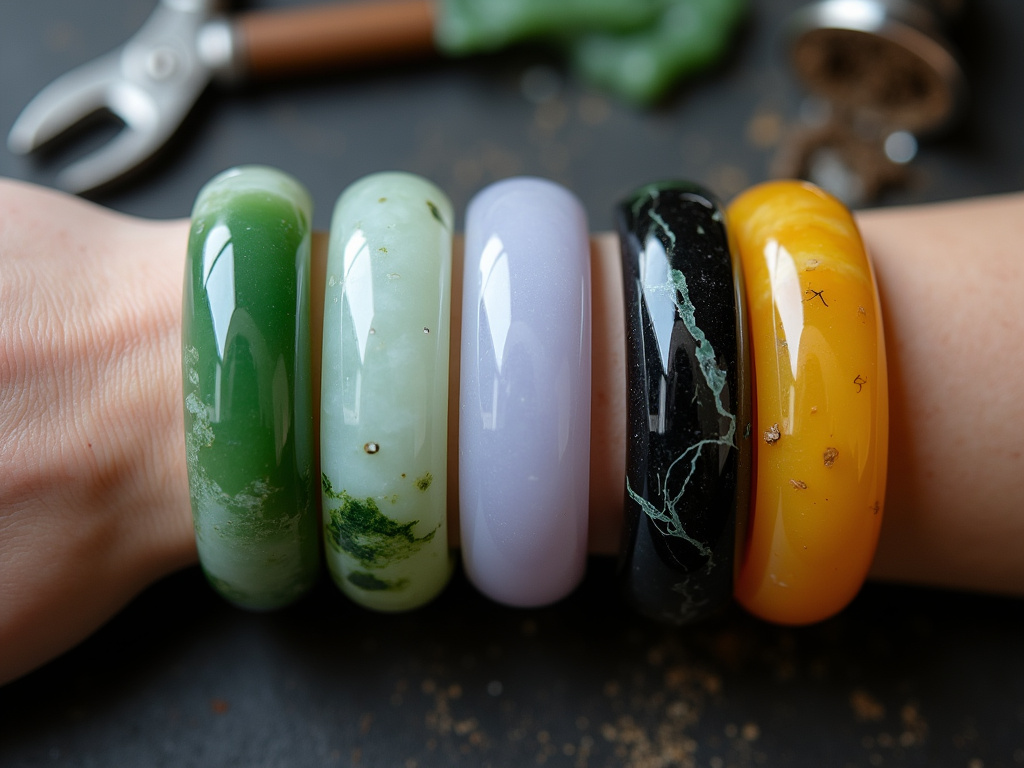
While the circle is primary, the color tunes the bracelet’s intention. The hue you choose, or inherit, sets a specific frequency. My personal collection spans the spectrum, each for a different need.
Green might be the classic, but it’s a mistake to think it’s the only “real” option. The value and authenticity of white nephrite or vivid lavender jadeite can be far higher. The color should resonate with you. A gift of white jade from an elder often carries a wish for your righteous path, not your bank account.
Here’s how the colors break down beyond the basic charts:
| Color | Primary Symbolism | A Deeper Cultural Note |
|---|---|---|
| Green Jade | Growth, vitality, abundance, harmony. | The most common, tied to nature’s life force. “Imperial” green jadeite is the rarest and most valuable. |
| White Jade | Purity, innocence, peace, moral clarity. | Highly revered in Confucian philosophy for embodying purity of character and intention. |
| Lavender Jade | Spiritual wisdom, intuition, divine connection. | Often associated with higher consciousness and is prized for its soothing, meditative energy. |
| Black Jade | Powerful protection, grounding, absorbing negativity. | Seen as a powerful shield, it’s believed to guard the wearer from spiritual and psychic harm. |
| Yellow/Red Jade | Joy, energy, ambition, good fortune. | Connected to vitality, celebration, and success in ventures and personal endeavors. |
Common mistake: Chasing only deep, uniform “imperial” green. This desire leads most people to overpay for dyed quartz or composite materials. True meaning comes from natural, untreated stone. A pale but genuine green nephrite carries more symbolic weight than a vivid fake.
The stone’s character is in its imperfections. Highly saturated, perfectly even color is exceptionally rare. Most genuine pieces will have some variation, veining, or cloudiness. These aren’t flaws to the symbolic mind; they’re the stone’s biography, its proof of a natural life under the earth.
How Should I Wear and Care for My Jade Bracelet?
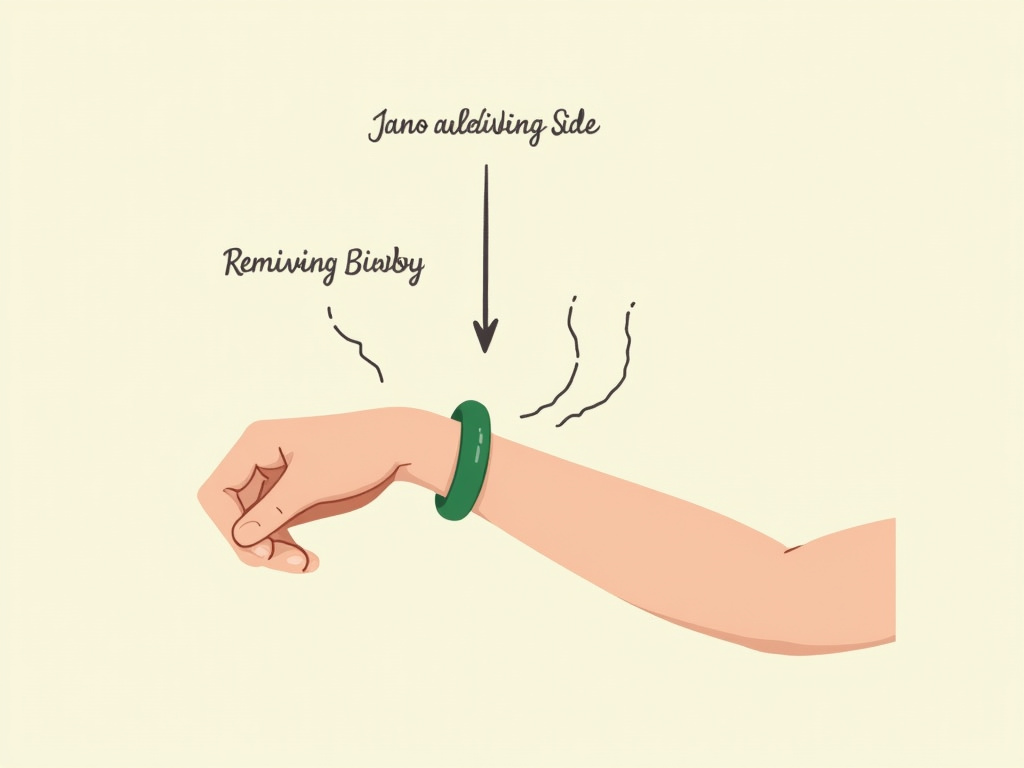
The “how” activates the “what.” Wearing jade with intention turns it from an ornament into a functional companion. Tradition, particularly in Feng Shui, suggests wearing it on your left wrist. The left side is considered the receiving side, the channel through which energy enters. Wearing jade there allows you to absorb its stabilizing qualities.
The fit is everything. A bangle should slide over your hand with a firm but manageable push, then sit snugly enough not to spin freely or clang against your desk. It needs to make consistent contact with your skin. A bracelet that’s too loose loses that intimate connection; one that’s painfully tight constricts the very energy flow it’s meant to facilitate.
Can you wear more than one? Yes, but with purpose. Stacking multiple jade bangles can amplify their energy. You might wear a green one for prosperity alongside a white one for clarity. However, avoid letting them constantly knock against harder materials like metal bracelets, as jade, while tough, can chip. Your proper jewelry storage should include separate soft pouches.
Before you start cleaning: Avoid harsh chemicals (perfume, chlorine, cleaners) which can dull the polish over time. Never use an ultrasonic cleaner, the intense vibrations can propagate tiny fractures. Sharp impacts, like dropping it on a tile floor, can cause it to fracture despite its toughness.
For cleaning tarnished pieces with metal accents, a gentle baking soda cleaning paste can be safe for the metal if carefully applied, but always rinse and dry the jade thoroughly afterward. For heirlooms or uncertain pieces, consider a professional’s touch or follow a guide for cleaning vintage pieces.
Does a Broken Jade Bracelet Mean Bad Luck?
This is where most quick online guides get it wrong. The oversimplified answer is “bad luck.” In the living tradition, the interpretation is often more profound, and even protective.
The predominant belief, especially in Chinese culture, is that the jade has fulfilled its purpose. The idea is that jade becomes so attuned to its wearer it can absorb negative energy or impending misfortune. If the bangle breaks, it has taken the full impact on your behalf. The misfortune passed, but the bracelet sacrificed its integrity. It broke so you didn’t.
The response should be gratitude, not fear. You thank the jade for its service. The fragments are often kept respectfully, wrapped in silk, stored in a special box, or repurposed into other jewelry like a pendant. Throwing the pieces away is considered disrespectful to the guardian that just protected you.
Of course, context matters. Did it snag on a doorframe, or did it shatter from a short fall onto a carpet? The former is likely an accident. The latter, given jade’s renowned toughness, gives more pause to the superstitious. Either way, the event invites reflection on the bracelet’s journey with you.
If the piece was valuable or sentimental, this is a clear moment to consult a professional about repair or redesign. It’s also the prudent time to consider a professional jewelry appraisal for insurance, especially if you plan to reset the stone into a new piece.
What Are the Cultural Stories Behind Jade?
Jade’s symbolism isn’t a single story. It’s a collection of human reverence, with each culture adding a unique chapter that deepens the meaning of the bracelet on your wrist.
In Chinese culture, jade (“Yu”) is virtue crystallized. It was more precious than gold or silver. Emperors were buried in jade suits to ensure physical immortality. Confucius explicitly linked jade’s polish, its resonant tone when struck, and its unyielding strength to human virtues like benevolence and wisdom. Wearing it was an active aspiration to embody those ideals.
For the Māori of New Zealand, nephrite (“Pounamu” or greenstone) is a treasure (“Taonga”) with its own life force (“mauri”). It is considered a living entity. Heirloom pieces carry the history, prestige, and strength of ancestors. A Pounamu bracelet is not merely owned; it is held in guardianship. It connects the wearer to the land (“whenua”) and their lineage.
Mesoamerican cultures, like the Maya and Aztec, revered jadeite (“chalchihuitl”), associating its vibrant green with water, fertility, and life itself. It symbolized the soul and was placed in the mouths of the dead as a seed for rebirth in the afterlife.
These threads, virtue in China, ancestral life-force in Māori belief, the soul in Mesoamerica, all weave together into a simple truth: jade is not an ordinary stone. When you understand these roots, a bangle becomes a conversation with centuries of human longing for protection, connection, and meaning.
Frequently Asked Questions
Can I sleep or shower with my jade bracelet?
You can, but I don’t recommend it for the long-term health of the piece. While jade is tough, constant exposure to soaps, shampoos, and hard water can slowly dull its polish. Sleeping with it risks catching it on bedding and causing an accidental impact. For uninterrupted symbolism, a snug fit allows for all-day wear, but for preventing jewelry tarnish on any metal elements and preserving the stone’s luster, it’s best to take it off.
What’s the difference between nephrite and jadeite?
Both are “real jade” but differ chemically. Nephrite is more common, often in creamy white to dark green shades, with a softer, waxy luster. Jadeite is rarer, can achieve the coveted “imperial green,” and has a brighter, more vitreous polish. Jadeite is generally considered more valuable, but both carry the same core cultural and symbolic significance.
Is it bad luck to receive a jade bracelet as a gift?
Quite the opposite. In many cultures, including Chinese and Māori traditions, receiving jade as a gift is considered a tremendous honor and blessing. It signifies the giver’s well-wishes for your protection, health, and prosperity. The meaning is deeply positive.
How do I clean a jade bracelet with intricate carvings?
Use a soft-bristled toothbrush dedicated to jewelry cleaning basics. Gently scrub the carved areas with a solution of lukewarm distilled water and a tiny drop of mild, unscented soap. Rinse thoroughly under running water, ensuring no soap residue is trapped in the crevices, and pat dry immediately with a soft, lint-free cloth.
Can men wear jade bracelets?
Absolutely. Historically, jade was worn by warriors, emperors, and chiefs across cultures as a symbol of strength, sovereignty, and moral integrity. The meaning transcends gender. A wider, more substantial bangle style is often chosen, but the intention and symbolism are the same.
Are there any metals that pair well with jade in a bracelet?
Jade is often set in high-purity gold or sterling silver, as these tarnish-resistant jewelry metals complement its cool tones without reacting negatively. Avoid cheap base metals that may corrode and stain the stone over time.
What Actually Matters
A jade bracelet is more than a list of symbolic colors. It’s a circle of stories, forged in the earth’s pressure, shaped by human hands, and charged with intention. The green gets the attention, but the unbroken band is the silent guardian.
Its power is conditional on its truth. A fake is just an accessory. Learn the cool, dense weight of the real thing, the look of its waxy depth under light. Care for it not as a trinket, but as a companion: clean it gently, store it separately, and understand that if it ever breaks, the old stories say it did its job perfectly, absorbing a blow meant for you.
Wear it on your left wrist. Let it fit close. Choose a color that speaks to your path, not just a chart. In doing so, you’re not just wearing jewelry; you’re keeping a small, polished piece of eternity circling your pulse.
