
What Does a Lock Necklace Mean? Symbolism Decoded
A lock necklace symbolizes security, but its specific meaning is a keyhole shaped by design, culture, and personal intent. It can be a Chinese talisman for protection, a modern fashion choker, a romantic token, or a private vow, with the true significance held by the wearer.
I once bought a delicate silver Jia Suo charm from a small antique dealer in San Francisco’s Chinatown, drawn to its worn edges and the promise of a story. For months, I wore it admiring the dark patina, thinking it added character. It wasn’t until I tried to show a friend the intricate inscription that I realized my mistake, the tarnish had completely filled the delicate grooves, obscuring the characters. A professional jeweler later confirmed the four characters were cháng mìng fù guì (長命富貴), a wish for “longevity, wealth, and honour.” The corrosion was so advanced it had permanently softened the engraving. That experience taught me that the meaning of a lock necklace isn’t just in its symbolism, but in the care we take to preserve the story it tells.
Key Takeaways
- The core meaning is not universal; it’s decoded through the lock’s design (flat Chinese charm vs. 3D padlock), its cultural origin, and the wearer’s personal context.
- Never assume a lock choker has a BDSM connotation. Outside that specific, consensual context, it is overwhelmingly seen as fashion or a romantic token.
- Inscriptions are literal clues. Traditional Chinese lock charms bear direct blessings, like cháng mìng fù guì, stating their protective purpose.
- A paired key introduces themes of trust and access, transforming the symbol from one of security to one of chosen connection.
- Proper, material-specific care is essential. Using the wrong method can permanently damage engravings, strip plating, or ruin materials like leather.
What is the history behind lock necklace symbolism?
Lock charms are Chinese numismatic charms shaped like ancient security locks. They are flat, without moving parts, and symbolize protection from harm, misfortune, and evil spirits, often intended to bless young boys with long life.
The story doesn’t begin with a padlock. To grasp the depth of a lock necklace, you must start with the Jia Suo, or Chinese lock charm. These are not functional locks but flat, often concave metal pendants, historically made of silver. They were numismatic charms, objects shaped like coins but used for spiritual, not monetary, value. Their sole purpose was talismanic: to protect the wearer, specifically to “lock” a child to the earth and guard them from evil spirits and early death.
These charms are wearable prayers. Common inscriptions are direct invocations. Beyond the well-known cháng mìng fù guì, you might find zhuàng yuán jí dì (wishes for high rank) or references to sacred Chinese mountains. This isn’t decoration; it’s a textual spell for safety and prosperity.
The “Hundred Family Lock” (Bai Jia Suo) ritual adds a profound layer of communal meaning. In less wealthy families, after a child’s birth, relatives would ask a hundred neighboring families for a single coin each. This collected copper was cast into a distinctive pentagonal, prism-shaped silver lock. The child wore it, carrying the literal goodwill and protective energy of an entire community. This rich history is detailed in the primary-source Wikipedia entry on lock charms.
| Lock Type | Era & Origin | Typical Form | Core Historical Purpose |
|---|---|---|---|
| Chinese Jia Suo Charm | Ancient China to present | Flat, often silver, non-functional | Talismanic protection for children, blessing longevity |
| Victorian Sentimental Padlock | 19th Century Europe | 3D padlock, often with key | Romantic token, symbol of locked love |
| Modern Gothic Padlock Pendant | Late 20th Century – present | 3D padlock, often dark metal | Fashion statement, aesthetic drawn from Victorian and punk |
| Bai Jia Suo (Hundred Family Lock) | Traditional Chinese custom | Silver, pentagonal prism | Communal blessing ritual for a newborn |
TL;DR: The oldest meaning is protection, originating from flat Chinese charms worn as spiritual armor for children.
How does design change a lock necklace’s meaning?
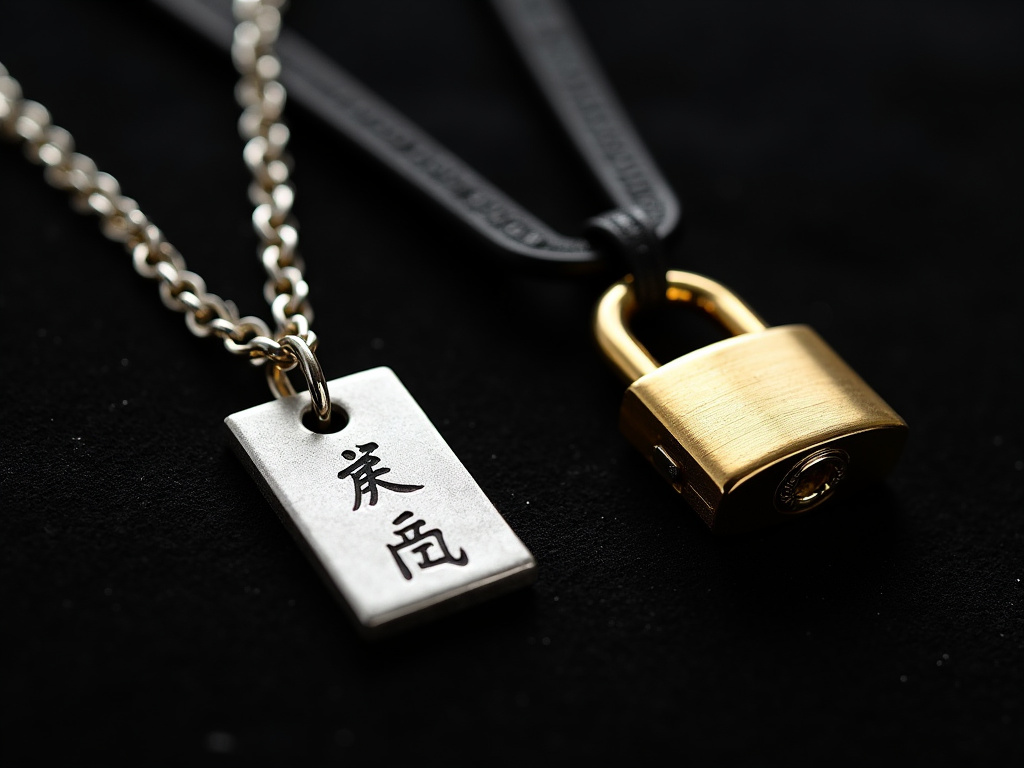
The physical form is your first and most reliable clue. A rigid, flat pendant etched with Chinese characters speaks a completely different language than a shiny, three-dimensional padlock on a black choker.
A Chinese lock charm is typically a single, flat piece of metal. It has no moving parts. Its value is in its symbolism and craftsmanship, often requiring gentle silver necklace care to preserve delicate engravings. Conversely, a padlock pendant is a detailed, miniaturized version of a functional lock. When placed on a choker collar (30-38 cm in length), it draws on intimate, worn-close-to-the-skin symbolism popular in alternative fashion.
The metal itself tells a story. Sterling silver on a traditional charm will develop a patina, which can feel authentic but risks obscuring inscriptions. A gold-plated fashion lock will wear at friction points, revealing the base metal beneath, a process accelerated by improper gold necklace care. For a low-maintenance modern piece, many choose tarnish-resistant metals like stainless steel.
Common mistake: Polishing a gold-plated padlock pendant with a silver polishing cloth. The abrasives will strip the thin plating layer in weeks, leaving you with a brass-colored lock. Use only a soft cloth and mild soapy water for plated pieces.
Modern Interpretations and Styles
Today’s designs blend these histories.
1. Minimalist Lock Pendants: Simple, sleek lock silhouettes on fine chains, often in stainless steel necklace care-friendly materials, serving as a personal emblem.
2. Locket-Hybrids: A lock-shaped pendant that opens to hold a photo, merging the symbolism of security with that of a cherished memory.
3. Statement Collars: Wide leather or velvet bands with a central lock, where the band’s material requires as much attention as the metal. Never submerge these; spot clean only.
What does a lock necklace mean in different contexts?
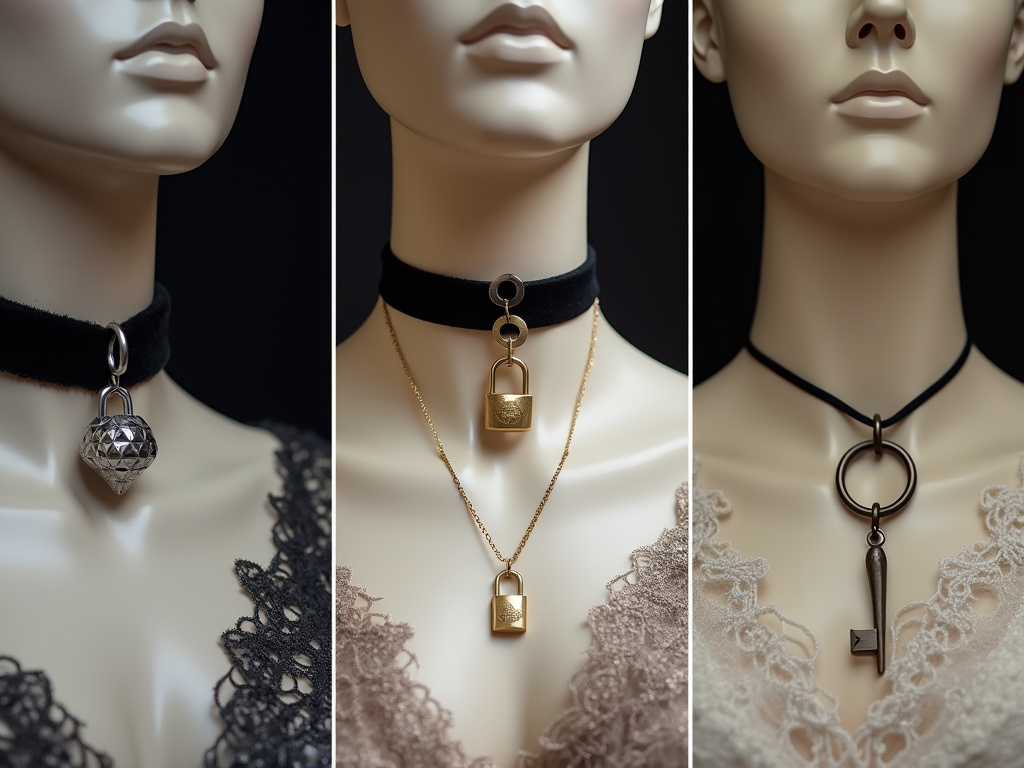
This is where most online guides oversimplify. The same black velvet choker with a tiny silver lock can hold three different meanings on three different people. The context is the master key.
As a Fashion Statement
This is the most common interpretation. The lock is a geometric accent, a textural element in a Gothic or punk-inspired outfit. No hidden message, it’s chosen for aesthetics. For these pieces, which are often plated, knowing how to handle costume jewelry care prevents quick deterioration.
As a Token of Love or Friendship
Rooted in Victorian symbolism, couples or friends exchange lock and key sets. The metaphor is clear: “You hold the key to my heart” or “our bond is locked.” It’s a public display of a private connection. The lock represents the secured relationship; the key represents the means to nurture it.
As a Symbol of a Private Dynamic
In BDSM and related lifestyles, a locked collar is a powerful, consensual symbol of commitment and ownership. The crucial point is that these are often designed to be discreet, a simple lock on a leather band meant to pass as ordinary jewelry. The meaning is profound for those involved and intentionally invisible to outsiders.
I wear a small steel lock on a black cord most days. To me, it’s a weightless anchor, a cool click of metal against my collarbone when I move. It has no secret meaning, and that’s the point, its simplicity is its purpose. Assuming a deeper narrative would miss the truth.
As a Personal Vow
The most intimate meaning is one known only to the wearer. The lock might represent a sealed chapter, a conquered habit, or a private grief compartmentalized. There is no external keyholder. The necklace becomes a tactile reminder of a personal boundary or victory.
TL;DR: The wearer’s intent defines the symbol. A lock choker is far more likely to be a fashion item than a lifestyle declaration.
How does adding a key change the symbolism?
A lock alone suggests security or closure. Introduce a key, and you introduce the concepts of access, trust, and active belonging. This pairing shifts the symbol from passive to relational.
The person holding the key is entrusted with something precious. In romance, it’s the heart. In friendship, it’s unwavering trust. The key itself carries meaning: a skeleton key (a key that can open many locks) symbolizes unlocking general potential, while a specific key might represent a new home or career path.
This duality also demands practical care. If the lock and key are separate pendants, proper jewelry storage solutions are non-negotiable to prevent them from scratching each other or tangling chains. A felt-lined box or individual pouches preserves both the items and the symbolic connection they represent.
How should I care for my lock necklace?
A neglected symbol loses its power. Tarnish, corrosion, or a broken clasp betrays the meaning the piece is meant to hold. Your care routine must be as tailored as the symbolism.
Before you start: Always identify the primary material. Using a silver dip on a copper alloy will cause irreversible pink discoloration. Submerging a leather choker will stiffen and crack the band. Test cleaning methods on a small, inconspicuous area first.
- For Inscribed Silver Charms: Use a very soft, dedicated polishing cloth like the Sunshine Cloth. Gently work along the grooves. Avoid liquid dips, as they can seep into engraving and permanently darken it, which is a common issue requiring tarnish removal.
- For Gold-Plated or Fashion Pieces: Mix a drop of Dawn Ultra dish soap in warm water. Gently scrub with a soft-bristled toothbrush, rinse, and dry thoroughly. Never use polish, as it strips plating.
- For Copper or Brass Locks: These develop a patina. To maintain shine, use a mix of lemon juice and salt, but know this will remove the natural aging. For copper necklace care that preserves a stable patina, a professional sealant is best.
- For Chokers with Fabric/Leather Bands: Never immerse the band. Clean only the metal component according to its material. Store flat to avoid creasing the band.
After any cleaning, consistent tarnish prevention tips are your best defense. Store pieces in anti-tarnish bags or a lined box, away from humidity and cosmetics. For a full overview of techniques, our guide on safe jewelry cleaning covers the fundamentals.
TL;DR: Match your cleaning to the metal. Preserve engravings, protect plating, and keep fabric bands dry. When in doubt, gentle soap and water is safest.
Frequently Asked Questions
Is a lock necklace a good gift for a friend?
Yes, absolutely. Exchanging lock and key necklaces is a powerful platonic gesture symbolizing an unbreakable bond and mutual trust. It says, “You hold the key to our friendship.”
What if someone gives me the key to their lock necklace?
This is a significant gesture of deep trust and belonging. They are symbolically granting you access to something they hold precious, their heart, their confidence, or a private part of their world. It represents a chosen and intimate connection.
Can men wear lock necklaces?
Historically, Chinese lock charms were primarily made for baby boys. Today, lock pendants are fully unisex. Masculine designs featuring heavier chains, simpler padlock shapes, or blackened steel are widely popular. The symbolism of protection, commitment, or personal style is universal.
What’s the difference between a lock charm and a padlock necklace?
lock charm (Jia Suo) is a flat, often antique-inspired pendant based on ancient Chinese security locks, valued for cultural and protective symbolism. A padlock necklace is a three-dimensional representation of a modern padlock, more associated with Western romance, fashion, or Gothic aesthetics.
How do I stop my silver lock from tarnishing so quickly?
Store it in an anti-tarnish bag or a box with anti-tarnish strips. Always put it on after applying perfume, lotion, or hairspray, and wipe it gently with a dry cloth after wearing. For more detailed strategies, explore our article on keeping jewelry shiny.
Before You Go
A lock necklace is a container, waiting to be filled with intention. It can hold the weight of centuries-old blessings, the lightness of a fashion moment, the warmth of a promise, or the silence of a private vow. Our job as wearers or observers is to respect that capacity for meaning. Look at the design, consider the context, but ultimately understand that the truest definition is whispered between the metal and the skin it touches. Choose your symbol, then commit to the care for silver necklaces, gold, or steel that keeps its story, whatever that story may be, clear and lasting.
