
How Much to Spend on an Engagement Ring: A Realistic Guide
The only “right” amount for an engagement ring is the cash you have saved without touching your emergency fund or taking on debt. National averages are descriptive, not prescriptive, your personal financial picture is the true guide.
I opened my grandmother’s heirloom box when I was seven. The rings inside weren’t about carats or price tags; they were about stories, worn smooth by decades of love and life. That’s the spirit I bring to TheJewelryNook. Today, the question isn’t about following a rule invented by advertisers. It’s about finding a number that honors your story without writing a chapter of financial stress.
Let’s clear the air first. That “three-month salary” guideline? It’s a relic. Your budget should be a reflection of your savings account, not a vintage marketing campaign. We’ll use real data from The Knot and Ritani, insights from financial planners, and my own decade of curating pieces for couples to build a framework that works for you, not a magazine.
Key Takeaways
- The national average engagement ring cost is $5,200, but regional spending varies wildly from $4,900 to nearly $7,000.
- One in three proposers goes into debt for the ring, a clear sign that artificial targets are harming real financial health.
- Lab-grown diamonds are resetting expectations, offering 2-3 times the carat size for the same budget as a natural stone.
- Your total cost includes the wedding band, insurance, appraisal, and maintenance, often adding 25-40% to the sticker price.
- I believe in starting with a cash-only number that protects your emergency fund and shared goals like a wedding or home.
The appropriate expenditure for an engagement ring is determined by personal financial circumstances and priorities, not by external rules or averages. Current market data indicates a national average near $5,200, with significant regional variation and a downward trend influenced by economic factors and lab-grown diamond availability.
What’s Wrong With the “Three Months’ Salary” Rule?
That rule has no foundation in etiquette or modern finance. It was a De Beers marketing ploy from the 1930s designed to move product, not build stable futures.
Etiquette trainer Mariah Grumet, founder of Old Soul Etiquette, is blunt: “from an etiquette perspective, there’s no rule that dictates what anyone should spend.” Financial experts echo this. Heather Boneparth of Bone Fide Wealth defines the right amount as a number that “doesn’t compromise your long-term financial stability.”
I’ve seen the pressure this rule creates. A client once came to me with a stunning ring… and $8,000 in credit card debt he hid from his partner. The guilt overshadowed the joy. Using a Depression-era ad as your budget template is like using a horse-drawn carriage for your commute, it’s the wrong tool for the modern world.
TL;DR: The three-month rule is historical advertising, not advice. Ignore it completely.
What Are Couples Actually Spending in 2024?
Forget the rulebook, look at the checkbook. Real spending data from The Knot’s 2024 survey gives us a grounded starting point.
The average cost nationwide is $5,200. More telling is the trend: down from $6,000 in 2021. This reflects broader economic mindfulness and the seismic impact of lab-grown diamonds. But an average is just a midpoint. It hides dramatic regional differences, where local culture and cost of living play huge roles.
| Region | Average Spend (2023) |
|---|---|
| Mid-Atlantic (NY, NJ, PA) | ~$6,900 |
| West Coast (CA, WA, OR) | ~$5,800 |
| South Central (TX, OK, AR, LA) | ~$5,300 |
| Midwest (NE, ND, OH, SD, WI) | ~$4,900 |
Midwest frugality? Or just smarter priorities, hard to say. The key is to use this data as a benchmark, not a battleground. If your personal number is below your region’s average, that’s not a failure. It’s a financially sound choice.
Common mistake: Chasing the average as a target. This pressure leads directly to debt, which one in three buyers incurs. If $5,200 requires a loan for you, your personal number is lower.
How Do I Build a Personal Ring Budget?
Your budget must start with your finances, not a headline. Shannon Delany-Ron, CMO for James Allen, advises developing a personal budget first, then prioritizing the ring’s features. Here’s my adapted, ring-specific sequence.
- Audit your cash position, but protect your wedding fund. How much can you allocate from savings without touching your 3-6 month emergency fund? This is your maximum cash budget. Crucially, exclude money earmarked for your wedding venue deposit or honeymoon. I saw a couple drain their venue fund for a bigger diamond, then scramble for a high-interest loan. It soured the entire planning process.
- Define your non-negotiables before you shop. Is a natural diamond essential for sentiment, or is a larger lab-grown stone the priority? Is a specific setting, like a Tiffany-style solitaire or a vintage Art Deco design, a must? If you don’t list these, a savvy salesperson will “up-sell” you on a higher clarity grade you’ll never see with the naked eye (like VS1 over VS2), wasting hundreds on an invisible difference.
- Allocate across the 4Cs with value in mind. With your total cash number set, see how it maps to diamond quality. For the best value, especially in a yellow gold setting, skip the D-F color range. A G or H color is visually identical and saves 20-30%. I always show clients a G-color, SI1 clarity stone first; the inclusions are almost always eye-clean. A helpful GIA diamond cost guide can show how these factors interact.
This process inverts the old model. Your real-world finances dictate a smart, sustainable spend.
Lab-Grown vs. Natural Diamond: What’s the Real Trade-Off?
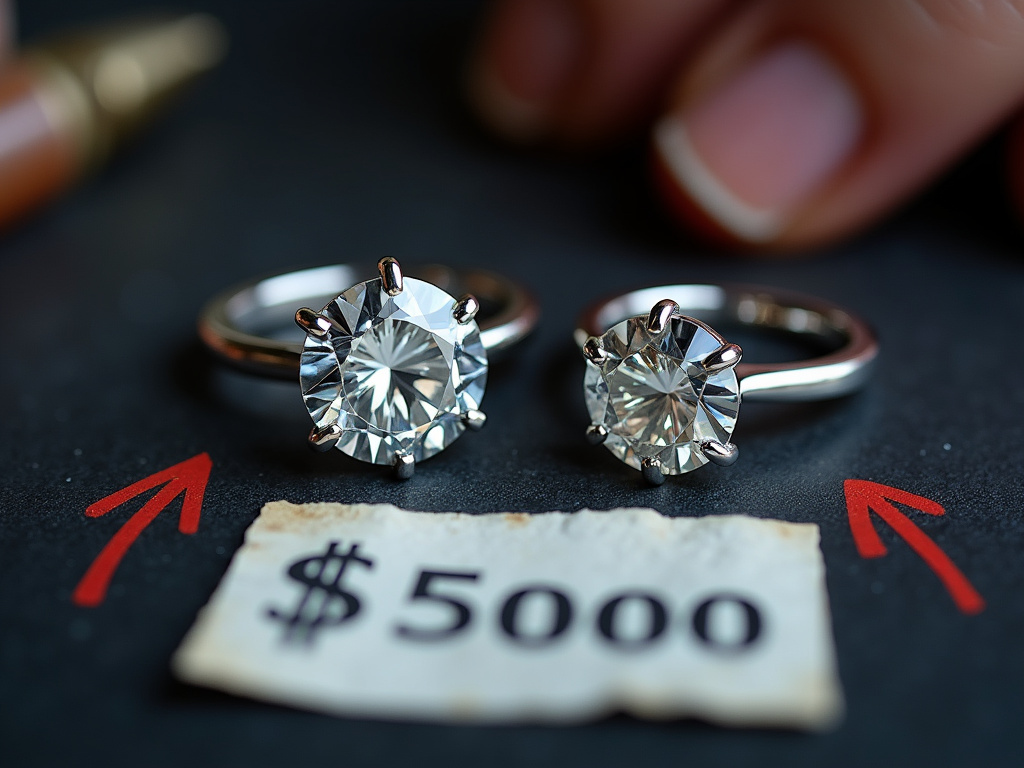
This is the single biggest factor reshaping budgets. A lab-grown diamond is physically identical but costs significantly less, acting as a budget multiplier for size.
Ritani’s 2026 projections make the math stark. Your $5,000 budget has two very different paths. The choice directly answers the “how expensive” question.
| Budget | Lab-Grown Diamond (Est. Carat) | Natural Diamond (Est. Carat) | Primary Consideration |
|---|---|---|---|
| $2,500 | ~1.0 ct | ~0.5 ct | Maximizing size for a minimalist solitaire. |
| $5,000 | 1.5 – 2.0 ct | ~0.75 ct | Balancing noticeable size with natural rarity. |
| $8,000 | 2.0 – 3.0 ct | ~1.0 ct | A statement stone or high-color natural diamond. |
| $12,000+ | 3.0+ ct | 1.5+ ct | Premium custom designs or collector-grade stones. |
Want a 2-carat look on a $5,000 budget? Lab-grown is your path. Committed to a natural stone? You’ll spend more for less carat weight. Let me be blunt: if you’re under 30 and have student loans, choosing a natural diamond over a lab-grown one is a sentimental luxury that can delay your first home. The only regret I consistently hear is from those who financed the sparkle.
What Does “Full Cost of Ownership” Really Mean?
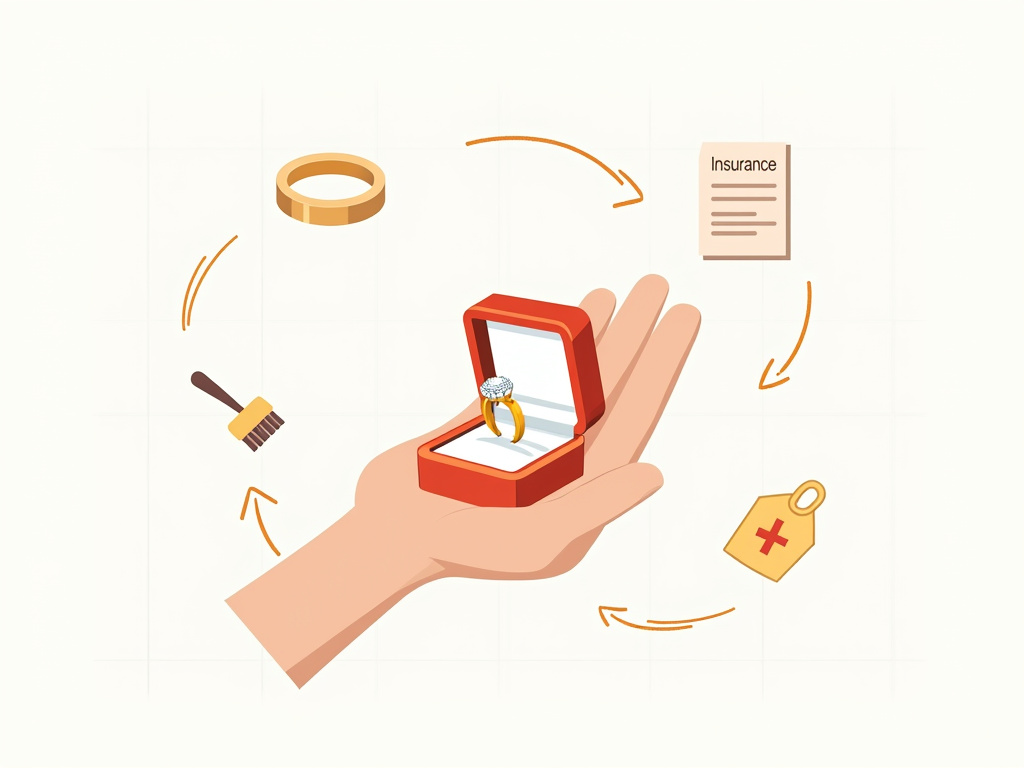
The price tag is a down payment. Failing to plan for these add-ons is how a $5,000 ring becomes a $7,000 commitment in year one.
– The Wedding Band: This isn’t an afterthought. A matching band typically costs 20-50% of the engagement ring’s price. For a $5,000 ring, budget at least $1,000-$2,500 more.
Insurance and Appraisal: This is the one most people forget until it’s too late. Most insurers require a recent professional jewelry valuation to issue a policy. Insuring an engagement ring costs 1-2% of the appraised value annually ($50-$100 per year for a $5,000 ring). Don’t assume your renters insurance coverage is sufficient, it often has laughably low sub-limits for jewelry loss.
– Maintenance: Budget $100-$150 every other year for professional check-ups, prong tightening, and cleaning. A ring that’s too heavy or catches on everything. I’ve seen a gorgeous cathedral setting literally unravel a client’s favorite sweater. That’s a sign you prioritized look over life. Proper home care, like cleaning a diamond ring with dish soap, helps between visits.
– Future Resizing: Weight fluctuation or a poor initial fit may require resizing ($50-$150). Factor it in.
When you set your main budget, immediately carve out 10-15% as a buffer for these inevitable expenses.
When Should You Adjust Your Budget Up or Down?
A rigid budget is as bad as no budget. There are smart reasons to stretch, and smarter reasons to pull back.
Legitimate Reasons to Spend More
- You’re resetting a legacy stone. Incorporating a family diamond into a new custom setting often justifies a higher budget for the workmanship and sentiment.
- Your partner’s lifestyle demands durability. A nurse, gardener, or mechanic needs a ultra-secure setting. I learned the hard way after a client’s pave diamonds fell out: I now insist on a six-prong setting for any center stone over a carat, not four, even though it costs more. The security is non-negotiable for daily wear.
- You’ve specifically saved for this goal. If a “dream ring fund” has been a dedicated savings line item for years, using that money is fiscally responsible.
Smart Reasons to Spend Less
- You have high-interest debt. Credit card debt at 20% APR mathematically outweighs any ring’s sentimental value. Pay the debt first.
- A major shared goal is imminent. Diverting a home down payment fund to a ring can delay ownership for years. The ring is a symbol; the home is the foundation.
- Your partner prefers alternative beauty. A stunning antique ring or a unique gemstone like morganite offers incredible character at a fraction of the cost. Proper gemstone jewelry care is different but just as important.
Common mistake: Financing the ring to hit a higher budget. Monthly payments add interest and turn a gift of commitment into a stressful bill. The goal is a strong financial partnership, not a maxed-out credit line.
Frequently Asked Questions
Is $10,000 too much for an engagement ring?
It’s not too much if it represents a small percentage of your net worth, requires no debt, and doesn’t compromise other goals like saving for a home. For most couples, however, it’s an unnecessary strain. Use the national average of $5,200 as a reality check, not a target.
What is a reasonable monthly payment for a ring?
Zero. The consensus from financial planners is to avoid financing. If you can’t pay in cash, choose a less expensive ring. Payments add interest and create a bill attached to a symbol of love.
How do I know if my partner wants an expensive ring?
Have a direct, open conversation. Look at their existing jewelry, is it simple and durable, or delicate and brand-oriented? Comments they’ve made about friends’ rings are strong clues. Surprise is overrated compared to getting it right.
Does the cost of the ring affect its insurance?
Yes, directly. Your annual premium is typically 1-2% of the ring’s appraised value. A more expensive ring costs more to insure forever, a permanent part of ownership. A jewelry appraisal report sets this value.
Can I upgrade the ring later if I buy a cheaper one now?
Absolutely. Many jewelers have trade-in programs where you can apply a significant portion of your original ring’s value toward a new one. This is a strategic way to start with a symbol you can afford now and grow into a dream piece later, together.
Before You Go
The right amount for an engagement ring is the largest number you can pull from savings without guilt, loans, or raidng your emergency fund. Use the averages, $5,200 nationally, trending toward $3,000-$7,000, as a market snapshot, not a personal mandate.
Let lab-grown diamonds give you permission to think differently about size. Let the advice of financial experts override the ghost of 1930s advertising. And always budget for the full picture: the wedding band, the insurance for jewelry, and the lifelong care it will need. After a decade in this business, I know the most cherished rings aren’t the most expensive. They’re the ones that fit seamlessly into a life well-lived, backed by a foundation that’s just as solid.
