
Can Anyone Wear Jade Jewelry? Necklace Guidelines and Tips
This post contains affiliate links. As an Amazon Associate, we earn from qualifying purchases.
Almost anyone can wear a jade necklace, provided they understand its cultural weight and follow specific material-care rules. The real question isn’t permission, it’s about matching the stone’s physical needs and your personal context.
Most guides stop at “jade is for everyone” and list generic blessings. They miss the practical realities of owning a mineral that chips on tile floors and fogs under perfume. You end up with a cracked heirloom or skin irritation because nobody mentioned the fine print.
This guide cuts through the mystique. We’ll cover who wears jade well, who should proceed with caution, and the non-negotiable maintenance that keeps your piece from turning into a regret. You’ll get styling notes that work, not just symbolic platitudes.
Key Takeaways
- Jade’s hardness varies: jadeite (6.5–7 Mohs) resists scratches better than nephrite (6–6.5 Mohs), but both can chip on hard edges.
- Remove jade before swimming. Chlorinated pool water can penetrate microscopic cracks and permanently dull the polish.
- Men can absolutely wear jade necklaces; opt for thicker, simpler carvings or polished ovals on a leather cord for a masculine look.
- If you are pregnant or undergoing medical treatment like chemotherapy, consult a doctor before wearing jade daily due to traditional beliefs about its concentrated energy.
- Store jade separately in a lined box. Even dust from harder diamonds (10 Mohs) can score its surface over time.
Who Wears Jade Necklaces? Breaking Down the “Anyone” Myth
The short answer is yes, jade necklaces have a place in most wardrobes. The long answer requires a filter. Culturally, jade is a gift of goodwill, often given to children for protection or to friends for prosperity. Aesthetically, its spectrum, from creamy white nephrite to vibrant green jadeite, suits a wide range of skin tones and personal styles.
The universal mistake is treating all jade as identical. A delicate, carved floral jadeite pendant demands different handling than a stout nephrite disc. One forgives a minor bump. The other shows a stress crack by lunchtime.
For daily wear, choose a piece with a smooth, rounded shape and a secure bezel or rope setting. Intricate carvings and thin bails are high-risk points for cracks.
TL;DR: Jade is accessible, but your specific piece’s shape, setting, and material dictate how casually you can treat it.
The Two Jades: Jadeite vs. Nephrite and Why It Matters
Your necklace is likely one of two minerals: jadeite or nephrite. This isn’t just gemology trivia, it decides your care routine. Jadeite is the harder, more vitreous stone, ranging from 6.5 to 7 on the Mohs scale. It takes a higher polish and is often the source of the iconic “imperial green” color. Nephrite is slightly softer, between 6 and 6.5 Mohs, with a more fibrous, greasy luster and commonly found in shades of white, cream, and spinach green.
This hardness differential is small on paper but huge in practice. A nephrite cabochon left loose in a jewelry box with quartz earrings (7 Mohs) will develop fine scratches within a month. Jadeite holds up better, but neither survives a drop onto a ceramic bathroom sink. The edge of the sink wins every time.
| Property | Jadeite | Nephrite |
|---|---|---|
| Mohs Hardness | 6.5 – 7 | 6 – 6.5 |
| Luster | Vitreous (glassy) | Greasy, waxy |
| Typical Colors | Vibrant greens, lavenders, whites | Creamy whites, spinach greens, yellows |
| Best For | High-polish statement pieces, intricate carving | Smooth, organic-looking pendants, worry stones |
| Key Caution | Prone to chipping on sharp impacts | More susceptible to surface scratching |
The takeaway? Identify your stone. If it’s highly translucent and vividly colored, it’s probably jadeite, handle with care against impacts. If it’s opaque with a soft, matte finish, it’s likely nephrite, protect it from abrasion. Proper gemstone jewelry care starts with knowing what you have.
Who Should Be Cautious With Jade? (Considerations and Exceptions)
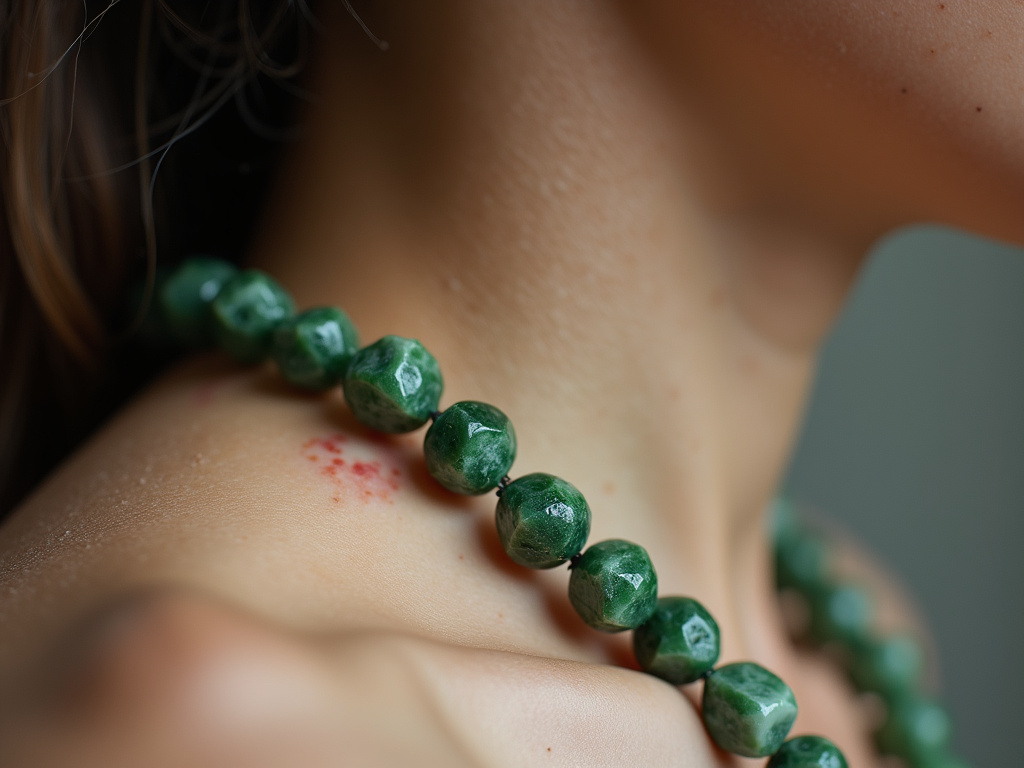
While jade is broadly welcoming, specific situations call for pause. This isn’t medical advice, but an acknowledgment of long-held cultural and practical cautions that many modern sellers gloss over.
First, consider your physical state. Traditional Chinese medicine and culture advise caution for pregnant women, suggesting the stone’s concentrated energy might be too stimulating. Similarly, individuals undergoing intense medical treatments like chemotherapy or radiation might choose to set their jade aside. The principle isn’t that the stone interferes, but that the body is in a heightened, vulnerable state. When in doubt, a conversation with your doctor is the only responsible step.
Common mistake: Wearing a jade bangle during household chores, a single knock against a granite countertop can spiderweb the inner circumference with hairline fractures you won’t see until you hold it to the light.
Second, know your skin. Highly polished jadeite is generally inert, but unrefined or “rough” jade necklaces can have microscopic crystalline edges. For those with sensitive skin, this can cause low-grade irritation, a persistent red line along the necklace’s path. The fix is simple: choose a fully polished piece or ensure a cloth barrier between the stone and your skin.
Finally, there’s a traditional concept rooted in Chinese metaphysics: conflicting Five Elements (Wu Xing). If your purported element clashes with the earth element of jade, some practitioners recommend moderation. This is a deeply personal, cultural calculation, not a universal rule.
TL;DR: Pregnancy, medical treatment, sensitive skin, and personal belief systems are valid reasons to wear jade selectively or not at all.
The Physical Care Rules Jade Demands
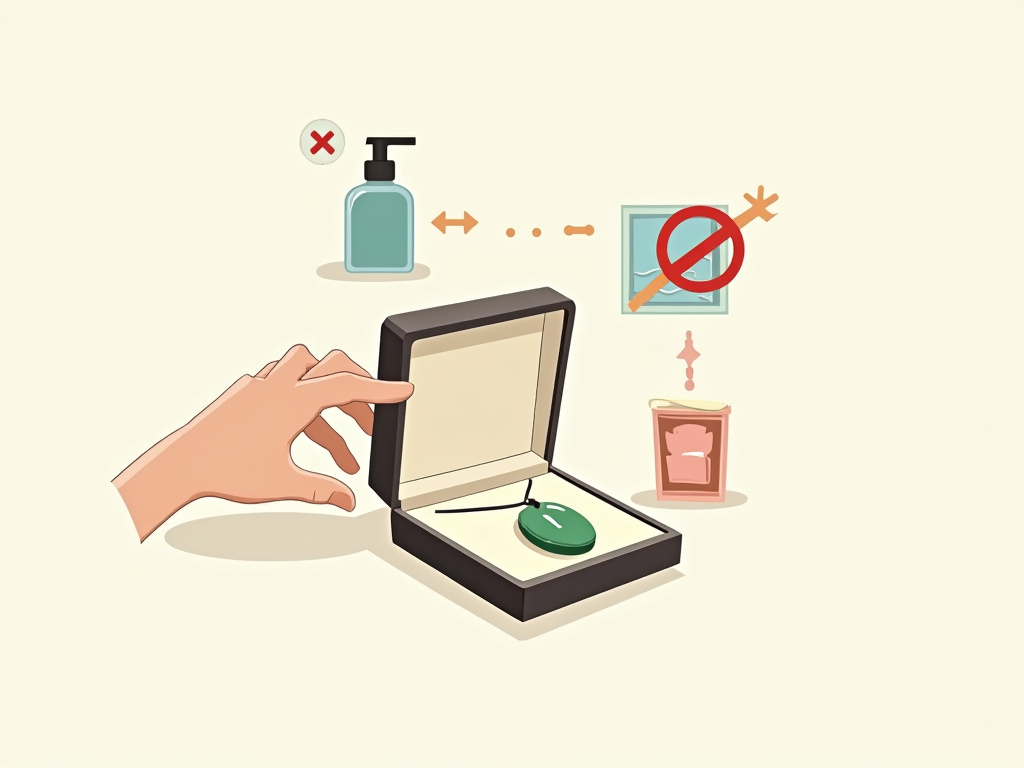
Jade is tough but not invincible. Its care protocol is straightforward but non-negotiable. Ignore it, and you’ll watch a beautiful stone turn dull, damaged, and worthless.
- No Chemicals, Ever. This is the first and greatest rule. Perfume, hairspray, sunscreen, and household cleaners will etch into jade’s polish. They create a cloudy film that requires professional repolishing to remove. Put your necklace on last when getting ready.
- Swimming is a Hard No. Chlorinated and salt water are the enemies. They can seep into any microscopic fissures, weakening the stone’s structure and permanently altering its color. This is not a maybe. Take it off.
- Protect It From Heat. Extreme heat can cause internal fractures. Don’t wear it in saunas, while cooking over a hot stove, or sunbathing for hours. Thermal shock is real.
- Clean Gently. Use lukewarm water, a drop of mild dish soap, and a soft toothbrush. Rinse thoroughly and dry immediately with a lint-free cloth. Never soak it or use ultrasonic cleaners. For more detailed steps, our guide on general jewelry cleaning has you covered.
- Store It Solo. Jade loses fights with harder gems. Store it in its own soft pouch or a compartmentalized box, away from diamonds, sapphires, or even metal chains that can scratch it. Good proper jewelry storage prevents 90% of wear-and-tear damage.
The consequence of skipping these steps is cumulative. A little perfume today, a pool tomorrow, a drop next week. The stone doesn’t announce its decline. It just slowly dies.
Styling a Jade Necklace for Modern Wear
Forget the idea that jade is only for formal or traditional dress. A jade pendant on a long chain can be a fantastic everyday anchor. For women, a small, polished jade disc on a delicate gold chain works with jeans and a tee. For men, a thicker, unadorned jade cylinder on a black leather cord reads as intentional and modern, not ornamental.
The styling trick is to let the jade be the sole focal point. Pair it with simple metal bands or stud earrings. Avoid layering it with multiple other statement necklaces, it gets visually lost and physically battered.
Color coordination is easier than you think. White nephrite looks crisp against black, navy, and gray. Green jadeite pops against white, cream, and earthy tones. Don’t overthink it. If your outfit has a neutral base, jade adds the perfect point of interest.
I used to save my best jade pendant for special occasions. Then I realized it spent 95% of its life in a box. Now it’s my Tuesday necklace. The stone hasn’t changed, but my enjoyment of it multiplied.
TL;DR: Wear jade with clean, neutral outfits. Let it stand alone, and choose a setting that matches your daily activity level.
Jade Jewelry for Men: A Complete Style Guide
The question “can men wear jade?” has a definitive yes. Historically, Chinese scholars and emperors wore jade belt hooks, seals, and pendants as symbols of power and virtue. Modern style simply adapts the form.
Men’s jade necklaces often work best with a deliberate, minimalist aesthetic. Look for:
* Simple Shapes: Ovals, rectangles, or smooth talismans without intricate flora/fauna carvings.
* Substantial Size: A pendant between 1.5 and 3 inches in length has presence without being overwhelming.
* Robust Settings: A bezel or thick rope setting secures the stone better than dainty prongs.
* Masculine Materials: Matte black leather cords, tungsten carbide chains, or thick sterling silver snake chains.
A gray nephrite pi disc or a dark green jadeite arrowhead pendant becomes a conversation piece. It signals an appreciation for material and craft, far from the fleeting trends of fast fashion. For more on materials that stand the test of time, explore our page on tarnish-resistant jewelry for low-maintenance options.
Frequently Asked Questions
Does jade necklaces suit all skin tones?
Yes. The vast color range of jade means there’s a flattering shade for everyone. Cooler skin tones often shine with lavender or white jadeite, while warmer tones are complemented by yellow or spinach-green nephrite. Olive and neutral skin tones can carry the classic imperial green beautifully.
How do I clean my jade necklace at home?
Mix lukewarm water with a drop of mild dish soap. Gently scrub the stone with a soft-bristled toothbrush, getting under the setting if possible. Rinse thoroughly under running water. Dry it completely with a soft cloth before storing. Never use harsh chemicals, vinegar, or ultrasonic cleaners. For persistent dirt, a baking soda cleaning paste can be used with extreme gentleness.
Can I sleep in my jade necklace?
It’s not recommended. Beyond traditional beliefs about energy disruption during sleep, there’s a practical risk. The chain can tangle, and you can roll onto the stone, applying pressure that could crack it against your collarbone or the mattress.
Why does some jewelry turn my skin green, and will jade do that?
The green skin marks come from a reaction between your skin’s acids and certain base metals like copper, common in cheaper alloys. Solid jade itself will not cause this. However, if your jade pendant is set in a low-karat gold or silver alloy, the setting might. If you’re prone to reactions, look for settings in sterling silver, karat gold, or platinum. Learn more about the skin discoloration causes here.
How often should I wear my jade necklace?
As often as you like, provided you follow the care rules. Daily wear is fine if you remove it for sleeping, swimming, cleaning, and workouts. Consistent wear can actually create a pleasant, personal patina on nephrite. Just commit to a quick wipe-down with a soft cloth each night to remove oils, a key part of preventing jewelry tarnish and buildup.
The Bottom Line
Jade necklaces are more accessible than lore makes them seem. The barriers aren’t about who you are, but about how you live and care for a comparatively delicate natural material. Choose a piece that matches your lifestyle, smooth and sturdy for daily life, intricate and precious for occasional wear.
Respect its limits: chemicals, chlorine, and hard knocks. Embrace its versatility: it’s a stone for men and women, for jeans and dresses, for heirlooms and new purchases. Your job isn’t to be worthy of the jade. It’s to be a competent custodian of it. Do that, and the question of who can wear it answers itself.
