
Can I Wear a Tie Clip Without a Jacket? The Complete Guide
Yes, you can wear a tie clip without a jacket. The clip must be correctly sized for your tie, placed between the third and fourth shirt buttons, and chosen to match the formality of your shirt and any other layers, like an open vest or a casual denim jacket.
Most people think a tie clip is just a jacket accessory. They slap it on any tie, at any height, and wonder why the look feels off. The clip isn’t an afterthought. It’s a structural detail that either completes the outfit or breaks it.
This guide covers the specific rules for wearing a tie clip solo. We’ll break down placement, proportion, metal choices, and the exceptions that let you bend the rules for a polished, intentional look.
Key Takeaways
- A tie clip worn without a jacket must be perfectly proportional, spanning two-thirds of the tie’s width and never hanging over the edges.
- Place the clip horizontally between the third and fourth shirt buttons. This anchors the tie at the visual center of your torso.
- Skip the clip if you’re wearing a closed waistcoat. The vest already secures the tie, and adding metal creates visual clutter.
- For casual settings like a denim jacket over a shirt and tie, a simple, understated clip elevates the look from sloppy to deliberate.
- In windy conditions or when moving constantly, the clip’s function to keep the tie in place overrides strict style rules.
The Golden Rule for Placement and Proportion
Get the placement wrong and the whole outfit looks unbalanced. The standard rule exists for a physiological reason: it centers the accessory on your body.
Clip placement is not a suggestion. It’s engineering. You must secure both the tie and the shirt placket between the third and fourth buttons, counting the top collar button as the first. This spot lands the clip right at the sternum. It’s the visual anchor point for a shirt worn alone.
Common mistake: Placing the clip too high near the knot or too low near the belly. A high clip crowds the knot and looks tense. A low clip drags the eye downward and makes the tie look like it’s pulling away from your body.
The clip must also be the right width. It should cover about two-thirds of the tie’s width. A clip that’s too narrow looks like a forgotten paperclip. One that’s too wide and hangs over the edges is the fastest way to look like you’re wearing a costume.
TL;DR: Horizontal line, third to fourth button, two-thirds of the tie’s width. Memorize that.
Choosing the Right Clip for the Job
Not all tie clips are equal. The right one depends on your tie’s width, the formality, and the metal of your other accessories.
A clip designed for a standard-width tie is typically 2.1 inches long. For the modern skinny tie, you need a clip in the 0.9-inch range. Using a standard clip on a skinny tie will overwhelm it. The metal will extend past the fabric edges, which violates the core proportion rule.
| Tie Width | Recommended Clip Length | What Happens If You Mismatch |
|---|---|---|
| Standard (3–3.5 inches) | ~2.1 inches | A shorter clip looks insignificant and fails to secure the placket properly. |
| Skinny (2–2.5 inches) | ~0.9–1.5 inches | A standard 2.1-inch clip overhangs the tie edges, breaking the silhouette and looking clumsy. |
| Extra Wide (4+ inches) | 2.5 inches or custom | A standard clip appears too small, losing its visual weight and functional grip. |
Metal choice matters less without a jacket, but it shouldn’t clash. If you’re wearing a leather-strap watch with a brushed buckle, a polished chrome clip will fight with it. Match the finish to your belt buckle, watch case, or any rings. A simple rule: one metal tone per outfit.
This attention to matching metals is part of broader proper jewelry storage to avoid scratches and preserve finishes, which applies to cufflinks and tie clips as well.
When a Waistcoat Changes Everything
A waistcoat, or vest, introduces a major exception. The standard advice is correct: do not wear a tie clip with a closed waistcoat.
The vest’s front panels already sandwich the tie against your shirt. Adding a metal bar is redundant. It creates a busy, over-accessorized look right at the center of your torso. If the vest is high-cut, showing only an inch or two of tie, a clip is completely unnecessary and likely won’t even be seen.
I wore a silver tie bar with a grey three-piece suit to a wedding. With the vest buttoned, all you could see was a sliver of silver peeking between the wool. It looked like a mistake, not an accent. I took it off before the photos. The lesson was clear: the vest is the anchor.
However, you can bend this rule in two scenarios. If the waistcoat is worn open over the shirt and tie, a subtle clip can be appropriate. It prevents the tie from swinging freely. Also, in a “black tie optional” setting where you wear a tuxedo with a standard tie instead of a bow tie, a minimalist clip can work if the vest is open.
TL;DR: Closed vest, no clip. Open vest or creative black tie, a slim, elegant clip is permissible.
Making It Work with Casual Layers
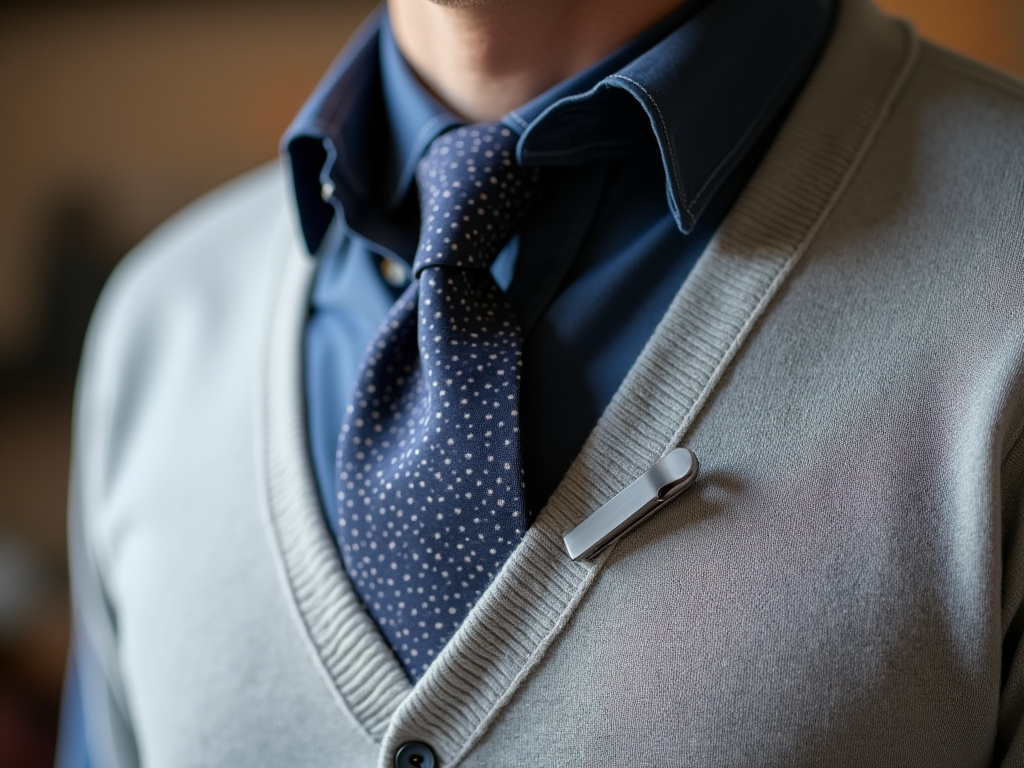
This is where the “no jacket” rule gets interesting. A tie clip isn’t just for suits. It’s a tool to add polish to casual smart outfits.
A denim jacket, a cardigan, or a fine-gauge sweater over a shirt and tie is a classic smart-casual formula. Here, a tie clip does two jobs. It keeps the tie neat under the open layer, and it signals that the tie is intentional, not an afterthought. Choose a clip with a matte or brushed finish to keep the vibe relaxed. A vintage-inspired design can work perfectly.
The same principle applies if you’re just wearing a shirt and tie alone in a business-casual office. The clip provides a finished look, preventing the tie from drifting over your shoulder when you lean forward or from dipping into your lunch.
For these casual pairings, your general jewelry cleaning routine becomes important. A clip worn regularly against fabric will collect lint and skin oils. A quick wipe with a soft cloth keeps it presentable.
Navigating Formal and Functional Exceptions

Some situations have their own rulebook. Formal evening wear, like traditional white-tie or black-tie events, requires a bow tie. Bow ties do not get clips. End of story.
But modern “creative black tie” often swaps the bow tie for a black necktie. In this case, if you forego the cummerbund or vest, a tie clip can be acceptable. The key is subtlety. The clip should be thin, simple, and likely in a dark metal like gunmetal or black enamel. It’s an accent, not a statement.
Then there’s pure function. If you’re working an outdoor event on a windy day, or traveling through a busy airport, the clip’s practical purpose overrides style nuances. Its job is to physically restrain the tie. In these cases, wear the clip. A flapping tie is more distracting than a slightly off-center accessory.
Before you start: If your clip has a sharp clasp or pinch mechanism, be careful when attaching it over delicate silk ties. Pinching too hard can leave a permanent crease or, worse, puncture the fabric. Test the tension on a thick part of the tie first.
This functional mindset extends to all accessories. Knowing how to address tarnished jewelry solutions quickly ensures a clip with a silver or plated finish doesn’t show up with dull spots on an important day.
The One Metal and Style Mistake
The most common error isn’t placement. It’s treating the tie clip as a standalone piece of flair without considering the rest of your metals.
Wearing a warm gold wedding band, a stainless steel watch, and a cool silver tie clip creates a disjointed look. Your eye jumps from one metal tone to another. Without a jacket to provide a visual buffer, this clash is more apparent. Pick one dominant metal and stick with it for all visible accessories.
Style matters too. A novelty clip shaped like a wrench or a guitar is for a very specific, often casual, look. Without a jacket, that clip becomes the focal point of your outfit. Make sure you want that much attention. For most professional or semi-formal settings, a simple bar is the safest and most elegant choice.
Maintaining these different metals requires specific care. The methods for silver jewelry care differ from those for gold jewelry maintenance. A silver clip needs anti-tarnish strips in your drawer, while a gold-plated one just needs gentle wiping.
Frequently Asked Questions
Does a tie clip go on the tie or the shirt?
It goes on both. The clip must pierce the front placket of your shirt and then clamp onto the tie. If it’s only on the tie, it will slide down and fail its function. You should feel a slight pull on your shirt fabric when it’s attached correctly.
How tight should a tie clip be?
Snug, but not tight enough to pinch or wrinkle the fabric severely. It should hold the tie firmly against the shirt so it doesn’t swing, but you should be able to slide a finger between the clip and the tie with a little resistance. Overtightening can damage the tie’s material.
Can you wear a tie clip with a sweater?
Yes, but only if the sweater is a V-neck and the tie is fully visible. The clip should be attached to the tie and the shirt underneath the sweater’s fabric. You generally wouldn’t clip through the knit material of the sweater itself, as it can snag and distort.
Is a tie bar the same as a tie clip?
Yes, the terms are used interchangeably. Traditionally, a “bar” might refer to a simpler, straight design, while a “clip” might describe the mechanism. In modern usage, they mean the same accessory.
What if my tie clip keeps sliding?
This usually means it’s not gripping the shirt placket. Ensure you have enough shirt fabric pinched in the clasp. If it’s an older clip, the spring tension might be worn. Consider replacing it. For valuable metal clips, proper long-term jewelry care includes checking mechanical parts for wear.
Before You Go
Wearing a tie clip without a jacket is not just allowed; it’s a smart way to polish a look. The rules are specific for a reason. Nail the placement between the third and fourth buttons. Match the clip’s length to your tie’s width. Let a closed waistcoat do its job and skip the clip. For casual layers, choose a simple, complementary design.
The goal is intentionality. The clip should look like part of a considered outfit, not a last-minute add-on. Get these details right, and you’ll own the look, jacket or no jacket. And remember, keeping that clip clean is part of the deal—a quick pass with a specialized steel cleaner or a gentle wipe for plated pieces ensures it always looks sharp.
{
“@context”: “https://schema.org”,
“@type”: “HowTo”,
“name”: “How to Wear a Tie Clip Without a Jacket”,
“tool”: [
{
“@type”: “HowToTool”,
“name”: “Tie clip or tie bar”
},
{
“@type”: “HowToTool”,
“name”: “Standard necktie”
},
{
“@type”: “HowToTool”,
“name”: “Dress shirt”
}
],
“step”: [
{
“@type”: “HowToStep”,
“name”: “Select the right clip for your tie”,
“text”: “Match the clip length to your tie width. A standard 2.1-inch clip fits most ties; for skinny ties, choose a clip around 0.9 inches long.”
},
{
“@type”: “HowToStep”,
“name”: “Position the clip correctly”,
“text”: “Place the clip horizontally between the third and fourth buttons of your shirt, securing both the tie and the shirt placket.”
},
{
“@type”: “HowToStep”,
“name”: “Check the proportion”,
“text”: “The clip should span about two-thirds of the tie’s width. It must not hang over the edges of the tie.”
},
{
“@type”: “HowToStep”,
“name”: “Consider your overall outfit”,
“text”: “Ensure the clip’s style and metal finish complement your shirt, any visible layer like a vest, and the formality of the occasion.”
}
]
}
{
“@context”: “https://schema.org”,
“@type”: “FAQPage”,
“mainEntity”: [
{
“@type”: “Question”,
“name”: “Does a tie clip go on the tie or the shirt?”,
“acceptedAnswer”: {
“@type”: “Answer”,
“text”: “It goes on both. The clip must pierce the front placket of your shirt and then clamp onto the tie. If it’s only on the tie, it will slide down and fail its function. You should feel a slight pull on your shirt fabric when it’s attached correctly.”
}
},
{
“@type”: “Question”,
“name”: “How tight should a tie clip be?”,
“acceptedAnswer”: {
“@type”: “Answer”,
“text”: “Snug, but not tight enough to pinch or wrinkle the fabric severely. It should hold the tie firmly against the shirt so it doesn’t swing, but you should be able to slide a finger between the clip and the tie with a little resistance. Overtightening can damage the tie’s material.”
}
},
{
“@type”: “Question”,
“name”: “Can you wear a tie clip with a sweater?”,
“acceptedAnswer”: {
“@type”: “Answer”,
“text”: “Yes, but only if the sweater is a V-neck and the tie is fully visible. The clip should be attached to the tie and the shirt underneath the sweater’s fabric. You generally wouldn’t clip through the knit material of the sweater itself, as it can snag and distort.”
}
},
{
“@type”: “Question”,
“name”: “Is a tie bar the same as a tie clip?”,
“acceptedAnswer”: {
“@type”: “Answer”,
“text”: “Yes, the terms are used interchangeably. Traditionally, a \”bar\” might refer to a simpler, straight design, while a \”clip\” might describe the mechanism. In modern usage, they mean the same accessory.”
}
},
{
“@type”: “Question”,
“name”: “What if my tie clip keeps sliding?”,
“acceptedAnswer”: {
“@type”: “Answer”,
“text”: “This usually means it’s not gripping the shirt placket. Ensure you have enough shirt fabric pinched in the clasp. If it’s an older clip, the spring tension might be worn. Consider replacing it. For valuable metal clips, proper long-term jewelry care includes checking mechanical parts for wear.”
}
}
]
}
