
The Danger of Earring Infections: Cartilage Piercing Risks
Earring infections are dangerous when they involve the upper ear’s cartilage, where a bacterium called Pseudomonas aeruginosa can destroy tissue, leading to permanent deformity. A 2021 outbreak was linked to contaminated aftercare spray. While lobe infections are often minor, delaying treatment for a cartilage infection by more than five days significantly increases hospitalization risk.
My grandmother’s heirloom jewelry box taught me that beautiful things require care. But nothing in that velvet-lined box prepared me for the care a new piercing needs, or the shocking speed a simple accessory can become a medical emergency. This isn’t about mild irritation; it’s about the infection that can literally reshape you.
If you’ve ever wondered whether that throbbing cartilage piercing is just “part of the process,” you’re asking the right question. The answer lies in a specific bacteria, a critical five-day window, and sometimes, the very bottle of solution meant to keep you safe.
Key Takeaways
- Cartilage piercings are uniquely vulnerable to Pseudomonas aeruginosa, a bacterium that can cause perichondritis and destroy cartilage, leading to permanent “cauliflower ear.”
- Waiting more than five days to treat a cartilage infection dramatically increases the risk of hospitalization and long-term deformity.
- Contaminated aftercare solutions have caused documented outbreaks, meaning your infection source might not be the piercing studio.
- Fluoroquinolone antibiotics (like ciprofloxacin) are the first-line medical treatment; over-the-counter creams are useless against these deep infections.
- Proper prevention starts with choosing a piercer who uses an autoclave and implant-grade metals like ASTM F136 Titanium, not just a “sterile needle.”
What Makes a Cartilage Piercing Infection So Dangerous?
The danger isn’t in the lobe’s soft flesh but in the rigid cartilage of your upper ear. This tissue is avascular, meaning it has almost no direct blood supply. An infection here isn’t a surface issue you can clean away. It’s a siege behind a wall, and the most common attacker has a name: Pseudomonas aeruginosa.
Perichondritis caused by Pseudomonas aeruginosa following an ear piercing is a tissue-destructive infection. A delay in treatment of more than five days significantly increases the likelihood of hospitalization and the risk of permanent ear deformity.
My own high helix piercing, done with a gun at a mall kiosk when I was 18, taught me this. I used the included “cleaning solution”, which I now know was just scented alcohol, and slept on it. By day four, the pain was a constant throb. The doctor prescribed ciprofloxacin and told me I was lucky; the scar tissue from the gun’s blunt trauma had almost created a perfect pocket for the Pseudomonas. I still have a tiny, hard lump behind that piercing as a permanent reminder to never skip the autoclave.
This bacteria is responsible for up to 100% of piercing-related cartilage infections. It doesn’t just cause redness; it invades the perichondrium, the cartilage’s nourishing layer. Without treatment, the cartilage dies. The body’s repair job with fibrous scar tissue creates the lumpy, thickened “cauliflower ear” deformity seen in wrestlers and rugby players, a fate entirely possible from a neglected piercing.
TL;DR: Cartilage infections are medical events requiring prescription antibiotics. Pseudomonas aeruginosa is the primary culprit, and it can permanently disfigure your ear.
Infected vs. Irritated: How to Spot the Critical Difference
You must distinguish between normal healing agitation and a brewing disaster. Irritation is local, often itchy, and improves with consistent piercing aftercare. An infection is aggressive, painful, and spreads.
For a new lobe piercing, mild redness and clear or whitish discharge are normal. A small “piercing bump” of granulation tissue can also form. These are not infections.
An infection declares itself with unmistakable signs. The symptoms of infected ear piercing outlined by the Cleveland Clinic provide a clear framework. The table below separates minor concerns from major red flags.
| Symptom | Likely Minor Irritation | Sign of a Serious Infection |
|---|---|---|
| Pain | Tenderness or a dull ache. | Throbbing, persistent pain that worsens or disturbs sleep. |
| Swelling | Mild, manageable swelling. | Significant swelling that distorts the ear’s natural contour. |
| Discharge | Clear or whitish lymph fluid. | Thick, yellow or green pus, often with a foul odor. |
| Heat | The area may feel warm. | The ear is noticeably hot to the touch compared to the other side. |
| Redness | Localized to the piercing site. | Intense, spreading redness that moves across your ear. |
| Systemic Signs | None. | Fever, chills, or red streaks radiating from the site. |
The systemic signs are non-negotiable. Fever or red streaks (lymphangitis) indicate the infection may be entering your bloodstream, a condition called sepsis. This is a true emergency.
Common mistake: Treating a hot, swollen cartilage piercing with extra cleaning and “waiting it out.” The infection is inside the cartilage wall, where saline cannot reach. This delay is what leads to the high risk of permanent damage.
My Piercer’s One Rule for Cartilage Infections
Sarah, my piercer at Infinite Body in Philly, has a rule she repeats like a mantra: “If it’s hot, it’s not.” Not warm. Hot. She says she can diagnose a Pseudomonas infection over the phone if someone says, “My ear feels like it’s on fire.” She’s right. That specific, localized inferno is your body screaming that the battle is inside the cartilage, not on the surface. All the saline in the world can’t cool that down. It’s the single most reliable symptom that separates a bad irritation from a medical problem that needs a doctor, today.
This specific, burning heat is why your general jewelry hygiene practices aren’t enough here. A cartilage piercing demands a sterile, medical-grade approach from the very first day.
Could Your Piercing Aftercare Spray Be the Problem?
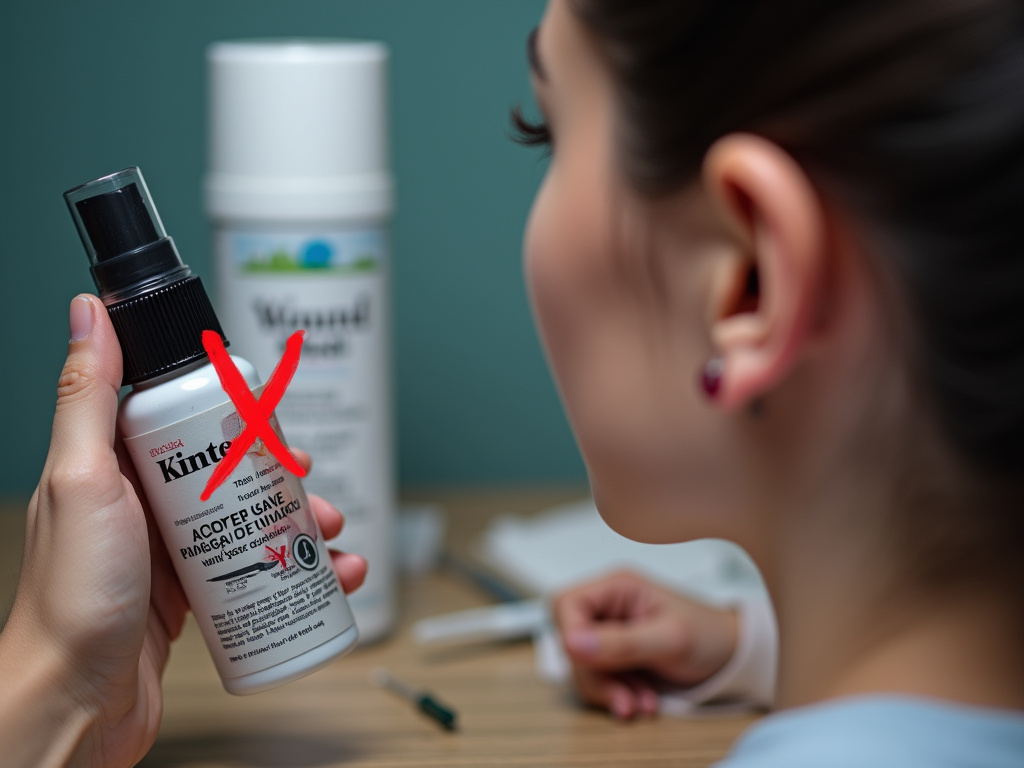
Imagine doing everything right, choosing a great studio, cleaning diligently, and still landing in the hospital. In 2021, this happened to multiple people in Australia. Health officials traced a community outbreak of Pseudomonas aeruginosa infections back to a single batch of contaminated piercing aftercare solution.
The CDC EID outbreak case study used genomic sequencing to prove the link. The investigation revealed a critical gap: these solutions, sprayed onto open wounds, are often classified as cosmetics, not therapeutic goods. Their manufacturing isn’t held to sterility standards.
This finding hit home for me. As someone who curates heirloom pieces, I’m obsessed with longevity and care. But here was a ‘care’ product designed to protect a new heirloom, your body, that couldn’t guarantee basic sterility. It felt like being told to polish a vintage silver necklace with sandpaper.
So, what should you use? I stock NeilMed Piercing Aftercare Fine Mist in my kit. It’s USP-grade sterile saline in a pressurized can, so the nozzle never touches the wound. I prefer it over additive-filled sprays because it’s just saline and water. When in doubt, any sterile saline wound wash from a pharmacy is a safe bet. This vigilance applies to all facial piercing care, not just ears.
A Step-by-Step Guide: When to Seek Medical Help
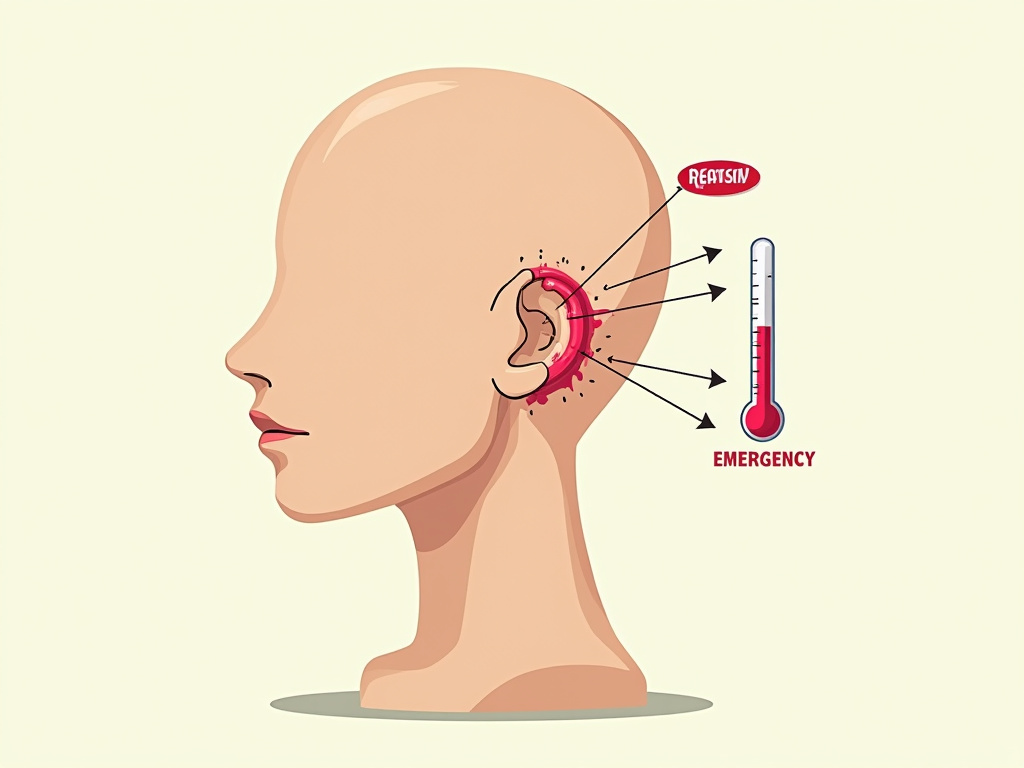
Timing is everything. This decision tree is based on medical guidelines and hard-earned experience.
- Monitor Closely (Lobe or Cartilage): Mild redness, slight swelling, and clear discharge are normal for the first few weeks. Stick to your cleaning ear piercings routine.
- See a Doctor or Urgent Care Within 24 Hours (Cartilage Piercing): If you have any of the following: swelling that changes your ear’s shape, throbbing pain unrelieved by OTC meds, skin hot to the touch beyond the hole, or any colored pus.
- Go to the Emergency Room Immediately (Any Piercing): If you develop fever (over 100.4°F), red streaks spreading from the site, dizziness, or rapid heart rate.
Do not “sleep on it” if a cartilage piercing is getting worse. The StatPearls piercing infection overview notes that perichondritis can progress to an abscess requiring surgical drainage. Tell the doctor everything: your piercing date, your aftercare product, and any swimming (a major risk factor).
How to Prevent a Dangerous Infection Before the Needle Touches Your Skin
You can shrink the risk to almost zero. Prevention is a protocol, not a single step.
- Choose the Studio, Not Just the Piercer. Look for an APP (Association of Professional Piercers) member or a studio displaying an autoclave. Your jewelry should come from a sealed, sterilized pouch opened in front of you.
- Demand the Right Metal. Insist on implant-grade titanium (ASTM F136) or niobium for initial jewelry. Why? “Surgical steel” is a meaningless marketing term that often contains nickel. A nickel allergy creates chronic inflammation and micro-tears, a welcome mat for Pseudomonas. I’ve seen clients mistake this angry irritation for an infection for months.
- Sterilize Your Aftercare. Use only sterile saline wound wash or a solution like NeilMed Piercing Aftercare. Avoid alcohol, hydrogen peroxide, and antibiotic ointments, they damage healing tissue and can worsen skin reactions to jewelry.
- Protect It While You Sleep. Use a travel pillow with a hole in the center to keep pressure off a new ear piercing. This simple trick prevents trauma that can restart the healing process.
- Leave. It. Alone. No twisting, turning, or playing with the jewelry. Let crusties form and fall off naturally during cleaning.
- Keep It High and Dry. Avoid pools, hot tubs, lakes, and direct hair product contact for at least 8 weeks. After showering, gently dry the area with a clean paper towel, not a shared bath towel.
This protocol is more rigorous than typical earring hygiene, but cartilage doesn’t offer second chances. Investing in hypoallergenic jewelry materials from the start is the best insurance policy you can buy.
Frequently Asked Questions
How do I know if my ear piercing is infected or just irritated?
Irritation is localized, often itchy, and improves with consistent cleaning. Infection involves spreading redness, worsening throbbing pain, noticeable heat, and yellow/green pus. For cartilage, heat and swelling are the biggest tells.
Should I take the earring out if it’s infected?
No. Removing the jewelry can allow the outer hole to close, trapping the infection inside and forming an abscess. Leave it in unless a doctor instructs removal. It provides a necessary drainage path.
What’s the best thing to clean an infected ear piercing?
For a minor lobe infection, use sterile saline wound wash on a gauze pad twice daily. For any cartilage infection with the symptoms above, stop home cleaning and see a doctor immediately. Do not use harsh chemicals.
How long does it take for an infected piercing to heal with antibiotics?
With appropriate oral antibiotics (like ciprofloxacin for cartilage), symptoms should start improving within 48-72 hours. You must finish the entire prescribed course (often 7-14 days) to prevent relapse. Complete tissue healing takes several more weeks.
Can an earring infection kill you?
While extremely rare, an untreated infection can lead to sepsis, a life-threatening systemic response. The greater danger for most healthy people is permanent disfigurement of the ear from cartilage destruction.
What if I have a metal allergy and get an infection?
This is a tricky overlap. See a doctor to diagnose the infection first. Once cleared, switch to a known safe metal like implant-grade titanium. Proper silver earring care or gold earring care is for healed piercings, not fresh, infected ones.
Before You Go
Earring infections in the lobe are usually a manageable nuisance. In the cartilage, they are a legitimate medical threat with permanent consequences. The bacterium Pseudomonas aeruginosa doesn’t play around, and as we’ve seen, the danger can sometimes come from the very product meant to protect you.
Let your grandmother’s wisdom guide you: true care involves knowing the limits of home remedies. Watch for that specific, burning heat and any swelling that changes your ear’s silhouette. If you see those signs, a doctor visit isn’t overreacting, it’s the only way to preserve the story your ears tell, without a chapter written in scar tissue. Your vigilance, and choosing the right body-safe materials from the start, are the ultimate heirlooms you can give yourself.
{
“@context”: “https://schema.org”,
“@type”: “HowTo”,
“name”: “How to Identify and Respond to a Dangerous Earring Infection”,
“totalTime”: “PT5M”,
“tool”: [
{
“@type”: “HowToTool”,
“name”: “Clean cotton swabs”
},
{
“@type”: “HowToTool”,
“name”: “Sterile saline solution”
},
{
“@type”: “HowToTool”,
“name”: “Clean hands”
}
],
“step”: [
{
“@type”: “HowToStep”,
“name”: “Wash your hands”,
“text”: “Thoroughly wash your hands with soap and water before touching the piercing or the surrounding area to prevent introducing more bacteria.”
},
{
“@type”: “HowToStep”,
“name”: “Assess the symptoms”,
“text”: “Look for key danger signs: severe redness spreading beyond the piercing site, throbbing pain, hot skin, yellow/green pus, or fever. Cartilage infections are an immediate red flag.”
},
{
“@type”: “HowToStep”,
“name”: “Clean gently if it’s minor”,
“text”: “If it’s a mild lobe irritation, clean twice daily with sterile saline on a cotton swab. Do not remove the earring unless a doctor tells you to.”
},
{
“@type”: “HowToStep”,
“name”: “Decide on medical care”,
“text”: “For any cartilage symptoms, fever, or spreading redness, stop home care and see a doctor or visit an urgent care clinic within 24 hours.”
}
]
}
{
“@context”: “https://schema.org”,
“@type”: “FAQPage”,
“mainEntity”: [
{
“@type”: “Question”,
“name”: “How do I know if my ear piercing is infected or just irritated?”,
“acceptedAnswer”: {
“@type”: “Answer”,
“text”: “Irritation is localized, often itchy, and improves with consistent cleaning. Infection involves spreading redness, worsening throbbing pain, noticeable heat, and yellow/green pus. For cartilage, heat and swelling are the biggest tells.”
}
},
{
“@type”: “Question”,
“name”: “Should I take the earring out if it’s infected?”,
“acceptedAnswer”: {
“@type”: “Answer”,
“text”: “No. Removing the jewelry can allow the outer hole to close, trapping the infection inside and forming an abscess. Leave it in unless a doctor instructs removal. It provides a necessary drainage path.”
}
},
{
“@type”: “Question”,
“name”: “What’s the best thing to clean an infected ear piercing?”,
“acceptedAnswer”: {
“@type”: “Answer”,
“text”: “For a minor lobe infection, use sterile saline wound wash on a gauze pad twice daily. For any cartilage infection with the symptoms above, stop home cleaning and see a doctor immediately. Do not use harsh chemicals.”
}
},
{
“@type”: “Question”,
“name”: “How long does it take for an infected piercing to heal with antibiotics?”,
“acceptedAnswer”: {
“@type”: “Answer”,
“text”: “With appropriate oral antibiotics (like ciprofloxacin for cartilage), symptoms should start improving within 48-72 hours. You must finish the entire prescribed course (often 7-14 days) to prevent relapse. Complete tissue healing takes several more weeks.”
}
},
{
“@type”: “Question”,
“name”: “Can an earring infection kill you?”,
“acceptedAnswer”: {
“@type”: “Answer”,
“text”: “While extremely rare, an untreated infection can lead to sepsis, a life-threatening systemic response. The greater danger for most healthy people is permanent disfigurement of the ear from cartilage destruction.”
}
},
{
“@type”: “Question”,
“name”: “What if I have a metal allergy and get an infection?”,
“acceptedAnswer”: {
“@type”: “Answer”,
“text”: “This is a tricky overlap. See a doctor to diagnose the infection first. Once cleared, switch to a known safe metal like implant-grade titanium. Proper silver earring care or gold earring care is for healed piercings, not fresh, infected ones.”
}
}
]
}
