
Can You Sleep With an Anklet On? A Jewelry Expert’s Guide
This post contains affiliate links. As an Amazon Associate, we earn from qualifying purchases.
You can sleep with an anklet on if it meets three specific conditions: it must be loose-fitting, made of a hypoallergenic metal like 14K gold or 316L surgical steel, and you must be a relatively still sleeper. Violating any one condition risks skin irritation, a broken chain, or a permanently damaged piece.
Most people test an anklet’s comfort for an hour on the couch. The real test is night 30, when the cumulative effect of 240 hours of friction and sweat reveals itself not as discomfort, but as a permanent kink in the chain or a greenish stain on your skin that takes days to fade.
This guide moves past generic advice. We’ll cover the exact materials and designs that can handle the bed, the personal sleep style that decides your answer, and the non-negotiable moments to take it off.
Key Takeaways
- Sleeping in an anklet is only safe if the chain is thicker than 0.8mm and the length is between 14–18 inches. Thinner, longer chains are prone to tangling and snapping.
- Your personal sleep movement is the deciding factor. A restless “sleep fighter” will damage most anklets within weeks, while a “sound sleeper” can often wear one safely.
- Night sweat trapped under the band can cause a rash within two or three nights, especially with plated or nickel-containing metals.
- A tight anklet can cause swelling and numbness by restricting circulation over a six-hour sleep cycle, it’s not just a temporary mark.
- A simple, five-second nightly wipe with a dry cloth is the most effective habit for preventing tarnish and skin irritation.
What Makes an Anklet Safe for Overnight Wear?
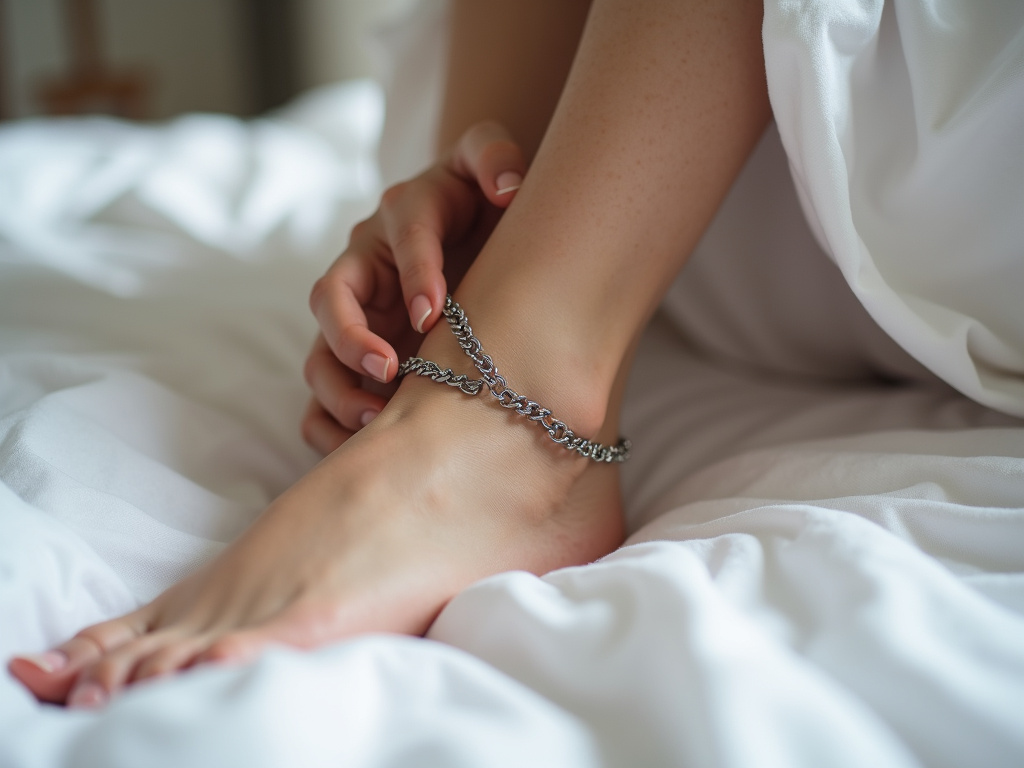
Forget vague terms like “lightweight.” Safe sleep-friendly jewelry adheres to three measurable, specific criteria. Missing one turns a night of rest into a stress test for your skin and your accessory.
A safe overnight anklet has a loose fit, is constructed from a body-safe metal like 14K gold or 316L surgical stainless steel, and is worn by an individual with minimal sleep movement. Chains thinner than 0.8mm will knot or break against bedding friction.
First, assess the fit. The band should slide easily over your ankle bone. You must be able to slip a finger underneath it with zero resistance. What feels snug while standing can become a constrictor once you’re horizontal and fluids redistribute. That slow, constant pressure is what leads to waking up with a deep indent or a pins-and-needles sensation.
Second, the material is non-negotiable. Your skin’s chemistry and nighttime perspiration don’t pause. This interaction dictates which metals are true 24/7 companions.
| Material | Safe for Sleep? | The Specific Reason |
|---|---|---|
| 14K, 18K, 24K Solid Gold | Yes | Gold is inert. It does not react with sweat or oxidize, making it the safest, though premium, choice. |
| 316L Surgical Stainless Steel | Yes | A hypoallergenic workhorse. Highly resistant to corrosion from night sweat and a champion of low-maintenance metal care. |
| Titanium | Yes | Even more inert than surgical steel. The ultimate choice for highly sensitive skin. |
| Gold-Filled or Silver-Plated | No | Plating wears thin at friction points. The underlying base metal (often nickel) contacts skin, causing green stains and rashes. |
| Costume Alloys with Nickel | No | Nickel is a common irritant. Sweat leaches it from the alloy, leading to contact dermatitis within days. |
Third, honestly assess your sleep movement. This is the most personal and decisive factor. Are you a “sleep fighter” or a “sound sleeper”? If you constantly shift, turning your ankles against sheets, you apply random force and friction that fatigues jump rings and snags charms. A sound sleeper poses almost zero mechanical risk.
TL;DR: Fit must be loose, metal must be hypoallergenic, and you must be a still sleeper. Fail on any point and expect a problem.
Are You a Sleep Fighter or a Sound Sleeper?
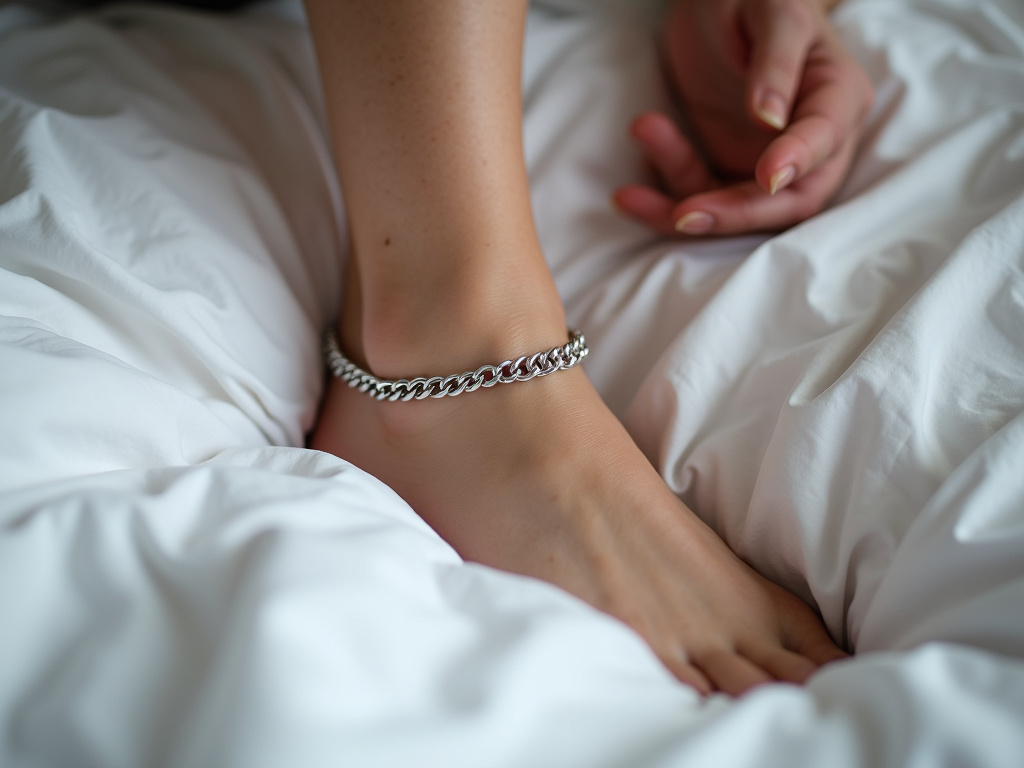
This isn’t just cute labeling. It’s the difference between an anklet that lasts for years and one that’s destroyed in a month. Your nocturnal habits dictate the physics your jewelry must endure.
If you’re a sleep fighter, your limbs are in motion. Your ankle rubs against the mattress, gets caught in sheets, and changes angle dozens of times. Every movement is a tiny stress test.
- Delicate chains under 0.8mm will twist into a tight, irreparable knot.
- Charms and pendants act as hooks, catching on threads and warping jump rings.
- Even sturdy chains endure constant abrasion, wearing down at specific contact points.
The consequence isn’t always a dramatic break. It’s often a slow failure. I learned this with my James Avery Sterling Silver ‘Cobblestone’ chain anklet, a gift I’d worn for years. It snapped at the 4th link one morning after a particularly restless night. The constant abrasion against my Egyptian cotton sheets had worn the sterling so thin it just gave way. The repair cost was $45, a tangible lesson about sleep-fighting with delicate chains.
For a sound sleeper, the risks shift. Minimal movement means minimal friction. The primary concerns become chemical (sweat reaction) and circulatory (tightness), which are easier to manage with the right material and fit.
Common mistake: Assuming a sturdy-looking gold-filled anklet can handle restless sleep, the repeated micro-abrasions from bedding will wear through the plating at the ankle bone in under two months, exposing the skin to the irritant base metal.
Which Anklet Designs Should You Never Sleep In?
Some designs are fundamentally incompatible with sleep. Wearing them to bed is a direct path to a repair shop or a skin reaction. Here’s your definitive no-sleep list.
- Anklets with Sharp Edges or Protruding Charms. Any point or geometric shape becomes a pressure point that can dig into your skin, leading to bruising or irritation as you shift.
- Thread-like Chains (Under 0.8mm). These are decorative, not durable. The simple force of a leg turning under a blanket is enough to kink them permanently. They belong in proper jewelry storage at night.
- Rigid Cuffs or Non-Adjustable Bangles. Without a chain’s give, there’s no room for natural nighttime swelling. It will become uncomfortably tight.
- Any Plated or Costume Jewelry. Overnight wear accelerates plating loss exponentially. The exposed base metal then reacts with sweat, a problem that requires specific cleaning fashion jewelry techniques to manage tarnish and grime.
- Anklets with String, Leather, or Fabric Ties. Moisture from night sweat weakens fibers, causing them to stretch, degrade, or develop mildew.
The failure modes here are predictable and often irreversible. A kinked chain can’t be fully straightened. A plating flaw can’t be patched at home. Knowing when to remove jewelry is as crucial as knowing how to wear it.
When Is Removing Your Anklet Non-Negotiable?
Even if your anklet passes all the safety checks, specific life scenarios demand you take it off. Ignoring these is asking for trouble.
Your skin is naturally sensitive or prone to eczema. This predisposition lowers your tolerance threshold. The constant, mild friction of a chain, even a hypoallergenic one, can trigger a reaction that daytime wear wouldn’t. Monitor closely.
You’re a heavy night sweater. Moisture is the enemy. It traps against the skin, creating a perfect environment for irritation, and accelerates tarnish on all but the most inert metals. If you wake up damp, make removal part of your bedtime routine.
You’ve applied lotion or cream to your legs. These products contain chemicals that can interact with metals, causing dulling or discoloration. They also create a sticky film. For the longevity of pieces like a silver anklet, keep skincare and jewelry separate.
The anklet feels any tighter when you lie down. Your body redistributes fluid when horizontal. What felt fine standing can feel constricted in bed. Listen to that signal.
You see the earliest sign of redness or itching. This is your body’s stop sign. Continuing will worsen the reaction. Remove it, let the skin heal completely, and reassess the material or fit.
The Essential Care Routine for a 24/7 Anklet
Choosing to sleep in an anklet means committing to a more vigilant care routine. The increased exposure to sweat and friction demands it. I learned the hard way that skipping the nightly wipe-down has a smell, a faint, metallic tang mixed with old sweat that clung to my 316L stainless steel anklet after a week. Now, my routine starts with that smell test.
The Non-Negotiable Nightly Wipe. This takes five seconds. Use a soft, dry cloth (a glasses microfiber cloth is perfect) to gently wipe the anklet and the skin underneath. This removes moisture, salt, and oils, acting as your first defense in preventing jewelry damage.
The Weekly Inspection. Once a week, in good light, play detective.
* Hunt for kinks or twists in the chain.
* Ensure clasps and jump rings are fully closed and not misshapen.
* Feel for new rough spots on the metal.
* Look for focal points of discoloration or wear.
This catches small issues before they escalate, a principle central to gemstone jewelry care as well.
The Monthly Deep Clean. Residue builds up. The method depends on your anklet’s material, a key part of general jewelry cleaning.
| Material | Cleaning Method | Product Note |
|---|---|---|
| Stainless Steel / Titanium | Warm water, mild dish soap, soft brush. Rinse & dry thoroughly. | Simple and effective. |
| Solid Gold | Same as above. For deeper shine, use a dedicated polish. | I use Connoisseurs Jewelry Cleaner for Gold & Diamonds—the liquid, not the dip. |
| Solid Silver | Use a specific silver polishing cloth for tarnish. | The Sunshine Polishing Cloth (the blue one) is impregnated with anti-tarnish chemicals. |
| Copper | A mix of lemon juice and salt can clean, but may remove desired patina. | For copper patina maintenance, often less is more. |
Give It a Night Off. Even the hardiest anklet benefits from a break. It allows your skin to breathe and lets you perform a more thorough cleaning. This rotation is a cornerstone of long-term jewelry care.
Frequently Asked Questions
Does sleeping with an anklet damage it?
Yes, it can accelerate wear. The primary damages are metal fatigue from friction (leading to broken links), accelerated plating loss, and knotting of delicate chains. A well-chosen anklet on a still sleeper minimizes, but doesn’t eliminate, this risk.
Can I sleep with a new anklet on?
It’s wiser not to. Wear the anklet during the day for at least a week first. This “test drive” confirms the fit is comfortable and the material causes no irritation before introducing the variables of sleep movement and prolonged overnight contact.
What is the best material for an anklet to sleep in?
The best materials are 14K or 18K solid gold, 316L surgical stainless steel, and titanium. These are hypoallergenic and highly resistant to corrosion from body chemistry. You should actively avoid plated metals and alloys containing nickel.
How tight should an anklet be for sleeping?
It must be loose. You should be able to easily slide one finger between the anklet and your skin all the way around with no pinching. If it leaves any mark on your skin after a few hours of daytime wear, it is too tight for sleeping.
Will an anklet stretch if I sleep with it on?
chain-style anklet made of a soft metal like pure silver or gold can gradually stretch over many months due to constant mild tension and movement. More durable metals like stainless steel and titanium are far less prone to stretching.
Can sleeping with an anklet cause an infection?
Directly, it’s uncommon. However, a tight or poorly cleaned anklet can cause minor skin abrasions and trap sweat and bacteria, creating conditions that could lead to folliculitis or a minor skin infection. Consistent cleaning and a loose fit are your best prevention.
The Bottom Line
Sleeping with an anklet isn’t a universal yes or no. It’s a conditional yes, hinging on the specific trio of fit, material, and your own sleep behavior. Get these right, and your anklet can be a constant, comfortable companion.
Get one wrong, and the consequences, a rash, a snapped chain, a tarnished treasure, are predictable. Your personal sleep pattern is the most decisive factor. A sleep fighter should likely take it off. A sound sleeper, with the right piece, can likely keep it on.
Listen to your skin; it gives the earliest warnings. Implement the simple five-second wipe. And remember, even the perfect sleep anklet deserves a night off in a dedicated spot, a practice that aligns with the best jewelry storage tips for longevity.
