
Can You Use an Earring as a Nose Ring? The Real Risks
This post contains affiliate links. As an Amazon Associate, we earn from qualifying purchases.
You can technically force an earring into a nose piercing, but you shouldn’t. Standard earrings are a thicker 18-gauge, while nose studs are a thinner 20 or 22-gauge. This mismatch stretches the piercing channel, while common earring materials and butterfly-back designs invite allergic reactions and painful pressure sores. It’s a shortcut that often leads to infection or permanent scarring.
We’ve all been there. You’re getting ready, your favorite nose stud vanishes into the bathroom sink void, and your eyes land on your earring tray. The temptation is real. As someone who has curated and worn jewelry for decades, I get the impulse. But my own painful lesson, a weekend trip that ended with a clinic visit, taught me that these are not interchangeable tools.
This isn’t just a generic warning. It’s a breakdown of the precise physical incompatibilities, the named brands that are safe, and the exact, regrettable steps I took that turned a small problem into a bigger one.
Key Takeaways
- Gauge is non-negotiable. Forcing a 1.0mm (18g) earring post into a hole meant for a 0.8mm (20g) stud doesn’t just stretch it, it creates micro-tears in the delicate fistula, the living tube of tissue that lines your piercing.
- “Hypoallergenic” is a hollow promise for nose wear. A metal that’s fine for your earlobe can wreak havoc in your nose. I learned this with a pair of gold-plated “Simply Whispers” studs; the plating wore off inside my piercing within hours, exposing nickel and triggering a granuloma.
- Butterfly backs are designed for disaster on a nostril. The flat back presses relentlessly on the sensitive inner lining, cutting off circulation. A pressure sore can form in under 48 hours.
- In a true bind, protocol is everything. If you have no alternative, the earring must be implant-grade metal, sanitized beyond belief, and worn for less than four hours with the backing left comically loose.
- Your “healed” piercing is a dynamic organ. Even a years-old fistula will contract slightly. Forcing thicker jewelry through it re-injures the tissue, restarting an inflammation cycle you can’t see until it’s too late.
What Actually Happens When You Force the Wrong Jewelry?
The fistula, the healed tissue tube lining a piercing, is not an inert hole. It is a dynamic, vascular structure that reacts to pressure and foreign material with inflammation, fluid production, and contraction.
Think of your nose piercing not as a hole, but as a living, breathing sleeve of skin inside your skin. When you insert a piece of jewelry that’s even a fraction of a millimeter too wide, you’re not gently persuading it. You’re causing blunt-force trauma on a microscopic scale. The 0.2mm difference between an 18-gauge earring and a 20-gauge nose stud might seem trivial, but inside the warm, confined space of your piercing channel, it’s the difference between a smooth slide and a damaging grind.
This friction creates micro-tears. Those tears are open doors for the bacteria that live on your skin, leading to infection. They also signal your body to flood the area with lymph fluid, that clear, sticky discharge, which then dries and can literally glue an ill-fitting piece in place.
Common mistake: Thinking a little resistance is normal, sharp pain upon insertion is your body’s alarm system. Ignoring it means you’re tearing tissue, not stretching it.
The Anatomy of a Bad Fit
Why is the nose so unforgiving compared to the earlobe? The tissue is fundamentally different. Your nostril is made of firmer, cartilaginous tissue with a rich blood supply. It’s more sensitive and reactive. The sustained pressure from a too-thick post doesn’t just cause discomfort; it can cause ischemia, where blood flow is restricted and the tissue is literally starved. That’s when the deep, throbbing ache and angry redness set in.
| Gauge | Diameter | Intended Use | Effect in Nostril |
|---|---|---|---|
| 18g | ~1.0 mm | Standard earring posts, some cartilage piercings | Stretches and micro-tears the fistula, high infection risk, constant inflammatory response. |
| 20g | ~0.8 mm | Standard nostril studs, lip rings | The correct, comfortable fit for most healed nose piercings. |
| 22g | ~0.6 mm | Delicate nose studs, initial piercings | Ideal for fresh piercings or those with sensitive, reactive tissue. |
TL;DR: Using an earring in your nose is like wearing shoes a full size too small. You might walk, but every step causes damage.
Why “Hypoallergenic” Earrings Betray Your Nose
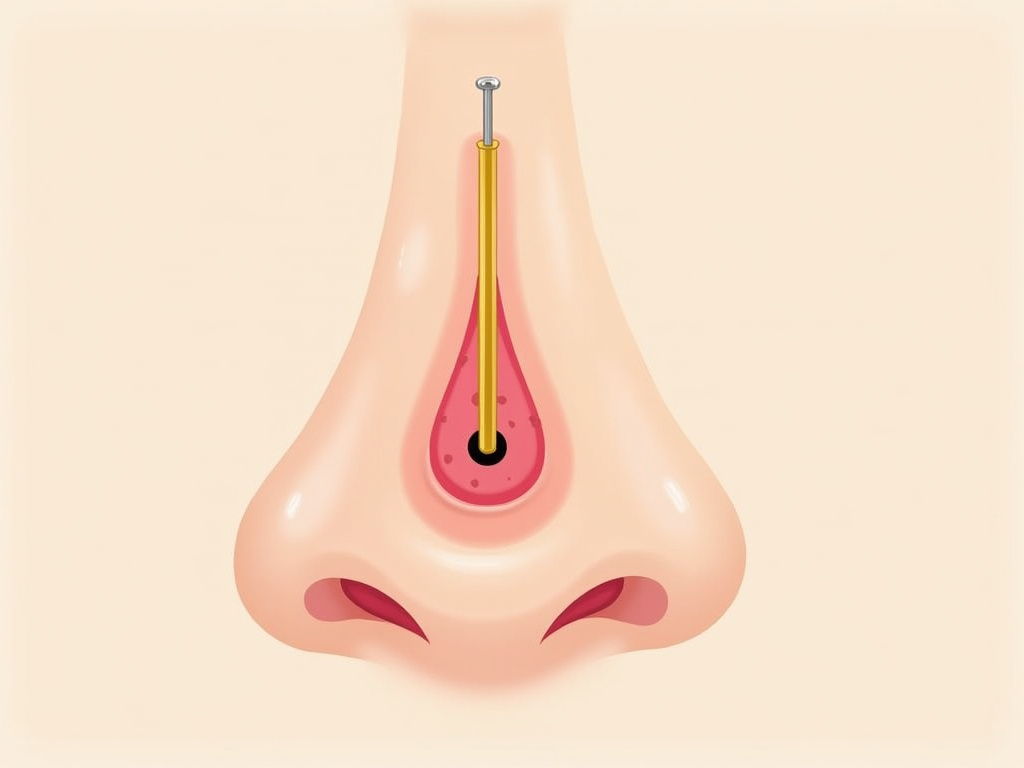
That metallic smell on cheap jewelry? That’s nickel and copper oxidizing. Now imagine that chemical reaction happening inside the warm, damp, slightly acidic environment of your piercing. It’s a perfect storm for irritation.
The label “hypoallergenic” is largely unregulated for fashion jewelry. An earring can be labeled as such if it has a single outer layer of a less-reactive metal, like a micron of gold plating over a brass core. The inside of a piercing is a friction chamber. With every insertion, removal, and even the subtle movement from smiling or talking, that plating wears thin.
I made this error with a pair of gold-plated studs I’d worn in my ears for years. In my nose, the plating wore through in hours. The exposed nickel base gave me an itchy, tender bump that developed into a fleshy granuloma, a $15 earring mistake that required a $80 visit to my piercer, Maria at Precision Piercing, for a cortisone shot.
For body jewelry, the standard is implant-grade. This means:
* ASTM F136 Titanium: The gold standard. Nickel-free, highly biocompatible, and lightweight.
* ASTM F138 316LVM Surgical Steel: The “VM” stands for vacuum-melted, which removes impurities that can cause reactions.
Your typical earring is made from 316L surgical steel (not the implant-grade VM variant) or plated base metal. This is why a dedicated nose piercing care guide starts with the right material, and why surface jewelry cleaning basics won’t stop an internal metal allergy.
The Backing Design: Your Instant Headache
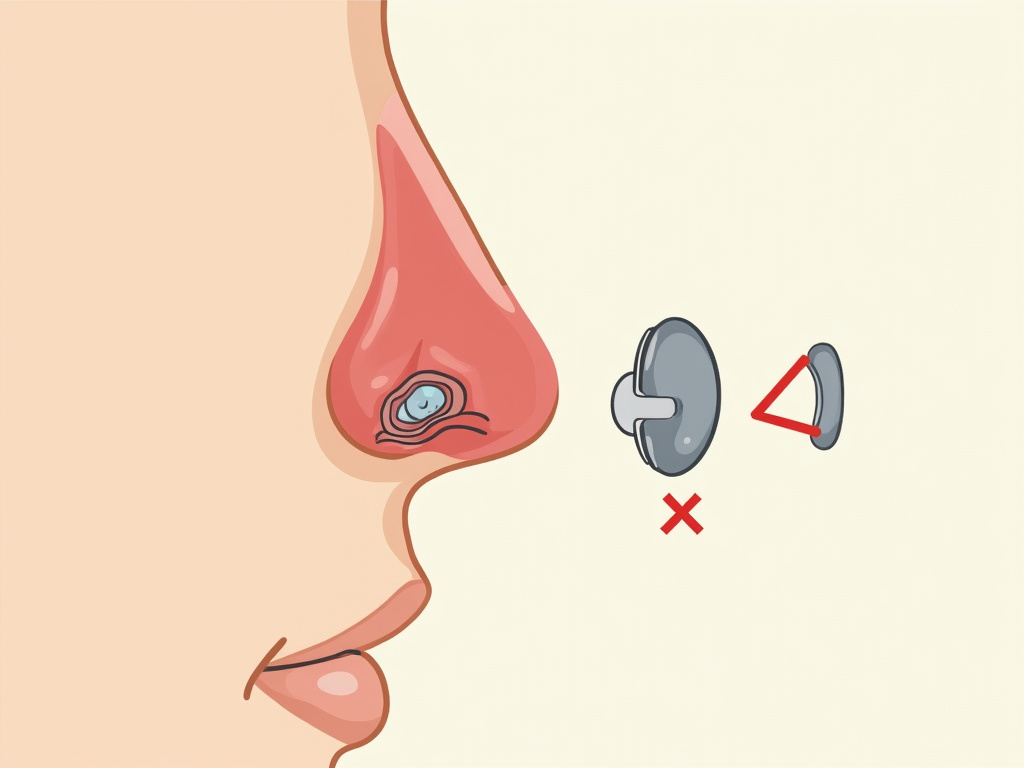
If the gauge mismatch is a slow burn, the backing is the instant, unmistakable pain. Earrings are engineered for the soft, flat plane of an earlobe. Nose jewelry is designed for the curved, rigid wall of your nostril.
Let’s break down why common earring backs fail:
- Butterfly / Push Backs: The worst offender. The flat disc clamps tight, pressing directly into the delicate nasal mucosa. This constant pressure cuts off circulation, creating a painful pressure sore that can evolve into a granuloma within days.
- French Wires / L-bends: Sometimes found on earrings, but the wire is usually thicker and the bend shallower than a proper nose stud. It feels less like security and more like a persistent, dull pinching.
- Threadless/Threaded Labrets: The professional standard for a reason. A flat-back disc sits comfortably inside the nostril, distributing pressure evenly. The decorative top (like those from Neometal or Industrial Strength) attaches separately. You won’t find this system on earrings.
Common mistake: Snapping a butterfly back tight for security, this guarantees a pressure injury. If you absolutely must use one, leave it so loose the earring wobbles. The damage will still occur, just slower.
If You Have No Other Choice: The Damage-Control Protocol
Sometimes, you’re in a bind. Your nose screw snaps at 10 PM before an event. If you must proceed, this strict protocol minimizes (but never eliminates) risk. This is not for fresh piercings (under 9 months old).
Before you start: You are risking infection, embedding, and granuloma formation. Have sterile saline wound wash (NeilMed) on hand. If you feel sharp pain, see pus, or the jewelry sticks, remove it immediately. Do not sleep with it in.
- Select the least offensive earring. Dig for a simple stud made of implant-grade titanium, niobium, or solid 14k/18k gold. No plating. A threadless labret-style earring is ideal, but rare. Absolutely avoid butterfly backs if possible.
- Sanitize aggressively. Soak the entire earring in 70% isopropyl alcohol for 5 full minutes. Rinse it thoroughly under sterile water or saline to remove all alcohol residue, it will burn your piercing.
- Prepare the site. Wash your hands with antibacterial soap. Spray your nostril inside and out with sterile saline.
- Lubricate the tip. Dip the very end of the post in a tiny drop of water-based lubricant (like KY Jelly). Do not use Vaseline, oil, or saliva.
- Insert with zero force. Gently guide the post in. If you meet firm resistance, stop. The gauge is wrong, and proceeding will cause injury.
- Do not secure the back. If it’s a push-back, leave a visible 1-2mm gap between the backing and your skin.
- Set a hard time limit. Remove the earring within 4 hours. Do not wear it overnight.
After removal, clean the area with saline twice daily for two days, monitoring for signs of infection. This intensive process is what you’d follow for infected piercing care, a situation you’re trying desperately to avoid.
What to Buy Instead: Real Nose Jewelry That Works
Losing a nose stud is frustrating, but buying a correct replacement is always cheaper and less painful than treating an infection. Here are your actual options, in order of my professional preference.
My personal kit always includes a spare Neometal 22g threadless labret post (5/16″ length is a good default) with a simple titanium ball top. It’s a one-time investment under $30 from a shop like BodyArtForms.
- Threadless Labret Stud: The modern standard. A flat-back disc sits comfortably inside the nostril, and decorative tops push on securely. Brands like Neometal and Anatometal make high-quality, implant-grade options.
- L-Bend Nose Stud: The classic. A gentle 90-degree bend holds it in place by tension. Easy to insert once you get the hang of it.
- Captive Bead Ring (CBR): A continuous ring with a bead that snaps in. Provides even pressure, excellent for healing, but can feel bulky.
- Nose Screw: The corkscrew shape offers great security, but the curve can be tricky to insert correctly.
Investing in tarnish-resistant jewelry made from body-safe metals like titanium is the ultimate solution. For maintenance, knowing how to care for stainless steel jewelry or silver body jewelry is key, and proper jewelry storage prevents future emergencies.
Frequently Asked Questions
Can I use a hoop earring as a nose ring?
It’s a worse idea than a stud. The metal is likely not body-safe, and the clasp (like a lever-back) is a bacteria trap and a mechanical failure point. It can snap open, leaving a sharp wire end inside your nose.
How long can I safely wear an earring in my nose?
There is no truly safe duration. For a one-time emergency, the absolute maximum is 4 hours. Every minute beyond that exponentially increases the risk of pressure sores and metal reaction.
My nose piercing is years old. Why would it reject an earring now?
Healed fistula tissue is dynamic; it contracts when empty. You’re forcing it to stretch again. Furthermore, nasal tissue is more sensitive and reactive than earlobe tissue. A metal that was tolerable for your ears may contain just enough nickel to trigger a reaction in your nose.
What’s the best metal if I have super sensitive skin?
Implant-grade titanium (ASTM F136) is the best choice. It is nickel-free and the most biocompatible metal for piercings. Niobium is another excellent, hypoallergenic option.
I used an earring and now I have a red bump. What do I do?
First, remove the earring. Gently clean the area twice daily with sterile saline spray only. Do not apply tea tree oil, antibiotic ointment, or makeup, these can trap bacteria or dry out the fistula. If the bump grows, weeps pus, or the area feels hot, see a doctor or your piercer.
The Bottom Line
Using an earring as a nose ring is a gamble with poor odds. The physical incompatibilities in gauge, material, and design aren’t minor inconveniences, they’re direct causes of pain, infection, and scarring. My own experiment with a plated stud was a vivid, costly lesson in why “hypoallergenic” means little inside a piercing.
Your body is not a generic jewelry display. It’s a specific environment that demands specific tools. Keep a proper nose ring aftercare kit handy, know your metals, and when in doubt, visit a professional piercer. They can fit you with the correct, comfortable piece in minutes. That single, correct piece of jewelry, cared for with proper ear piercing jewelry care, is always cheaper than treating the consequence of a shortcut.
