
How Can You Tell if a Ring is Real Gold? Try These 7 Tests
This post contains affiliate links. As an Amazon Associate, we earn from qualifying purchases.
You can tell if a ring is real gold by first checking for a numerical purity hallmark (like 750 for 18K) inside the band, then confirming with a magnet test and a streak test on ceramic. Real gold is not magnetic and leaves a golden-yellow streak. For karat verification, a 14K gold test acid (60% nitric) will not dissolve a genuine streak.
Most people start with the wrong test. They rub a ring on their skin, drop it in water, or hold a weak fridge magnet to it. These methods are either folklore or easily fooled by modern fakes. A copper ring with a thin gold wash will sink in water and pass a weak magnet check, leaving you confident but wrong.
This guide walks through seven tests, from the five-second visual check to the chemical acid test pawn shops use. You will learn which methods are reliable, which are theatrical, and when to spend the money on a professional appraisal.
Key Takeaways
- The magnet test eliminates fakes containing iron or nickel, but a non-magnetic result does not confirm gold, copper and tungsten are also non-magnetic.
- A hallmark stamp like 750 (18K) or 585 (14K) is the strongest initial indicator, but its absence does not prove a fake, especially on older or handmade pieces.
- The ceramic streak test is a fast, destructive-to-plating check: real gold leaves a golden streak; fake gold leaves a black or green one.
- Acid testing with 14K or 10K nitric acid solutions provides karat-level verification but requires exposing base metal on plated items.
- Professional electronic testers like the Dymond M24 can determine karat in 2 seconds but are cost-prohibitive for most home users.
The 5-Second Visual Check That Rules Out 90% of Fakes
Look inside the band. Use a 10x jeweler’s loupe or the macro lens on your phone. You are searching for a tiny stamped number. This is the purity hallmark, and it is the single fastest clue you have.
Modern commercial gold jewelry sold in the US and UK is almost always stamped. The numbers correspond to parts per thousand of pure gold.
| Hallmark Stamp | Karat Equivalent | Gold Purity |
|---|---|---|
| 999 | 24K | 99.9% |
| 916 | 22K | 91.6% |
| 750 | 18K | 75.0% |
| 585 | 14K | 58.5% |
| 417 | 10K | 41.7% |
Find a 750, and you are holding 18-karat gold. See 585, it is 14-karat. These stamps are regulated and a strong sign of legitimacy. But stamps can be forged. A cheap ring from a street vendor might be stamped 750 while being mostly brass. The stamp is a starting point, not a finish line.
Also look for quality marks like “GF” (gold-filled) or “HGE” (heavy gold electroplate). These are not solid gold. They have a thin layer of gold over a base metal core. “Vermeil” refers to sterling silver plated with gold. Proper caring for gold jewelry is different for these layered pieces, as harsh cleaning can strip the gold layer.
Common mistake: Assuming no stamp means fake gold. Graduate gemologist Jerry Ehrenwald notes that older, handmade, or antique jewelry can be genuine gold yet lack any hallmark. Relying solely on the stamp check means discarding potential heirlooms.
TL;DR: A 750 or 585 stamp is a great sign, but its absence isn’t a death sentence, move to the next test.
Is the Magnet Test Actually Reliable?
Hold a strong neodymium magnet close to the ring. Do not use a weak refrigerator magnet. You need the pull force of a rare-earth magnet.
If the ring jumps to the magnet, the test is over. The ring contains a ferrous metal like iron or nickel. It is not solid gold. This test is excellent for eliminating the cheapest fakes.
Passing the magnet test means nothing by itself.
Copper, brass, silver, and tungsten are all non-magnetic. A ring made of copper with a gold-colored coating will pass the magnet test effortlessly. This is why YouTube reliability scores for the magnet test are low, it catches only one type of fake. For a more definitive home test that doesn’t rely on magnetism, the principles behind cleaning a silver ring with a chemical reaction can be informative, though the substances differ.
A magnet tells you what the ring is not. It cannot tell you what the ring is.
Use the magnet test as a fast filter. If the ring sticks, you are done. If it does not, you have only ruled out one class of impostor. The real work starts now.
Why Density Tests Fail Against Tungsten
The classic “gold is heavy” advice leads to the water displacement test. Real gold is dense, it sinks. Many fakes, made of lighter metals, will float or sink slowly.
Tungsten fakes this perfectly.
Tungsten has a density nearly identical to gold. A tungsten ring plated with gold will pass the sink test, the weight-in-your-hand test, and the magnet test. It is the counterfeit that breaks the rule-of-thumb checks. This is why pawn shops never rely on density alone. They go straight to acid or electronics.
The Ceramic Streak Test: Simple, Telling, and Slightly Destructive
Find an unglazed ceramic tile, the back of a dinner plate, or a dedicated testing stone. Rub the ring firmly across the surface. Press hard enough to leave a visible streak.
Examine the streak color. This is the tell.
- Golden-Yellow Streak: Indicates real gold. The color should match the ring’s hue.
- Black or Dark Gray Streak: Signals a base metal like iron, steel, or tungsten.
- Green Streak: Points to copper or a high-copper alloy like brass.
The test works because the rubbing action scrapes off a microscopic layer of metal. The color of that powdered metal reveals the core material beneath any surface plating. If the ring is gold-plated, you will see the base metal streak appear after the thin gold layer is worn through.
This makes it a destructive test for plated items. You will mar the ring’s surface. Choose a spot on the inner band or an inconspicuous area. The streak test is a favorite for quick, fairly reliable field checks. It is why you often see pawn dealers rubbing jewelry on a small black stone.
Common mistake: Using a glazed ceramic surface. The glaze prevents the metal from depositing a streak. You will just see a shiny scratch and learn nothing.
For jewelry you wish to keep pristine, consider gentler verification methods first, similar to the approach for delicate gemstone cleaning.
Professional-Grade Electronic Testing
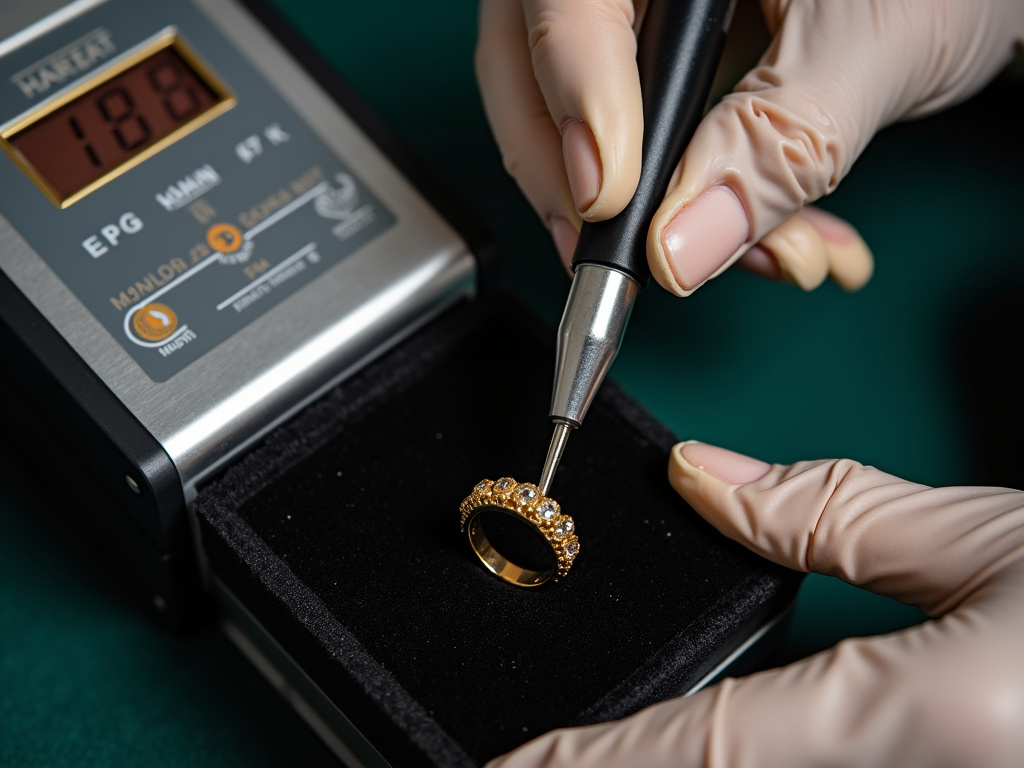
This is the method used by reputable buyers and appraisers. Devices like the Dymond M24 Gold Tester use a patented electronic circuit to measure gold’s conductivity.
The Dymond M24, covered by U.S. Patents 5080766 and 5128016, can give a karat reading (9K to 24K) in about two seconds. It distinguishes solid gold from gold plate without damaging the item. The manual notes that if you get an occasional reading in the next karat range, like 17K when testing an 18K piece, the gold’s purity is borderline and the device is working correctly.
These testers cost hundreds of dollars. For the casual owner, this isn’t a practical purchase. But knowing they exist helps you understand the professional standard. When you get a professional ring appraisal, this is likely one tool they will use. The report will detail the findings far beyond a simple yes/no.
The Dymond M24’s patent claims it can distinguish non-gold and gold plate from “Karat Gold” without destructive Fire Assay testing. That’s the commercial benchmark.
If you are buying or selling high-value gold frequently, renting or investing in such a tester changes the game. For a one-time check on a single ring, the cost is hard to justify. This is the dividing line between hobbyist and pro verification.
The Acid Test: Chemical Verification of Karat
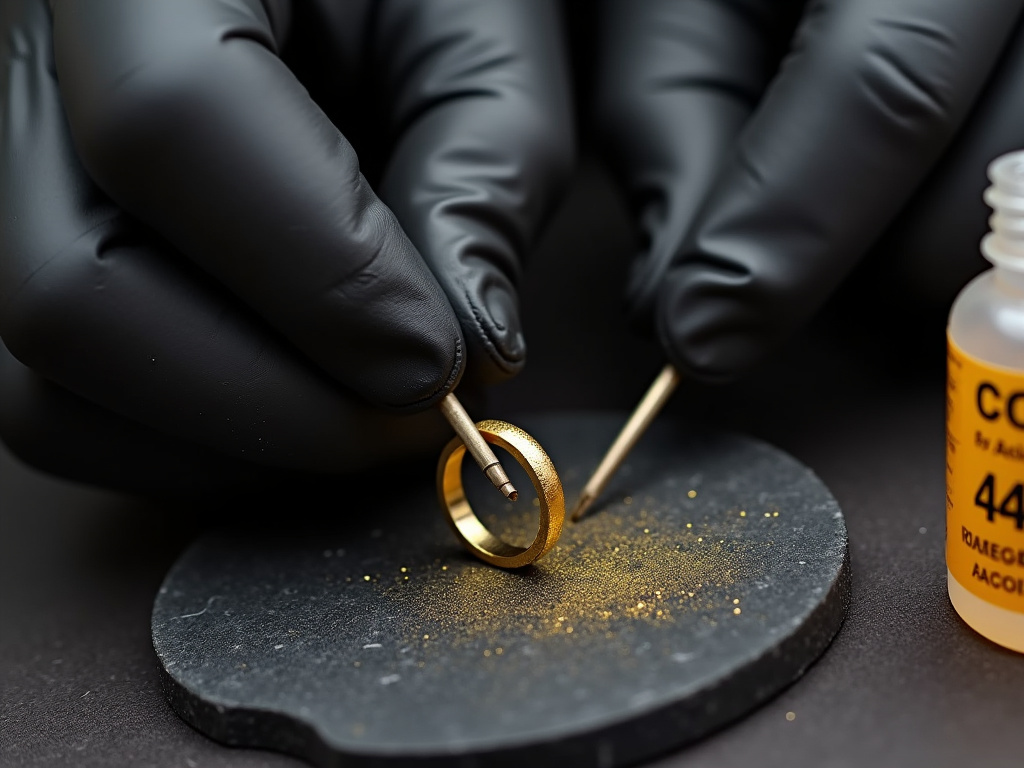
This is the most definitive home test, but it involves hazardous chemicals. You need a gold testing stone, a set of test acids, and protective gloves.
Before you start: Nitric acid is corrosive. 14K test acid is a 60% dilute nitric solution; 10K test acid is 45%. Wear nitrile gloves and eye protection. Work in a ventilated area. Have baking soda and water nearby to neutralize spills.
The process is methodical. First, file a small notch in a hidden spot on the ring. This ensures you reach the base metal if the piece is plated. Rub the ring on the testing stone to transfer a streak of metal.
Apply a drop of the 14K test acid directly onto the streak. Watch the reaction.
- No Reaction: The streak remains unchanged. This indicates the gold is 14K or higher.
- Streak Dissolves Quickly: The metal fizzes and disappears. This means the gold is below 14K.
- Streak Turns Green or Milky: Indicates a low-karat gold or gold-filled item with significant copper or silver content.
If the streak passes the 14K test, you can proceed to an 18K acid for higher verification. For pure gold (24K) or high-karat alloys, aqua regia (a mix of nitric and hydrochloric acid) is used, followed by Schwerter’s solution to identify the base metals by color change.
This test provides a karat estimate, not just a real/fake answer. It is the reason acid test kits are sold to serious hobbyists and small dealers. The chemicals have a shelf life and must be stored safely.
Home Tests That Are Theatrical (Not Reliable)
Some methods are repeated so often they feel true. They are not useless, but their reliability is poor.
The Vinegar Test. Soaking a ring in vinegar for five minutes and checking for discoloration. Real gold is inert and should not react. The problem? Vinegar is a weak acid. It can interact with skin oils, residual polish, or other alloys in lower-karat gold, causing a color change that has nothing to do with purity. A pass doesn’t confirm gold; a fail might be a false positive.
The Skin Discoloration Test. The idea that real gold doesn’t turn your skin green. Body chemistry is the dominant variable. The green color comes from copper reacting with sweat and acids on your skin. A high-copper alloy like 10K gold can absolutely cause discoloration on some people. A perfectly solid 14K ring might leave a green band on another. It is an indicator of copper content, not gold authenticity.
The Bite Test. Folklore says real gold is soft and will show tooth marks. While pure gold is malleable, common gold alloys (10K, 14K) are hardened with other metals and are quite resistant to biting. You are more likely to damage your tooth or the ring’s setting than learn anything useful.
These tests are better suited for social media clips than for verification. They lack the diagnostic precision of a hallmark, a magnet, or a streak.
When to Trust a Professional Appraiser
Your home tests have given you conflicting signals. The ring has no stamp but passed the magnet test. The ceramic streak was ambiguous. You are staring at a potential heirloom or a significant purchase.
This is the point to stop guessing and consult a professional. A qualified appraiser or graduate gemologist (GG) has the tools and training you lack.
They will not just tell you if it’s gold. A proper appraisal, like the process outlined in getting a ring appraised, will detail the karat weight, the stone quality (if any), the manufacturing method, and the current market value. This document is essential for insurance, estate planning, or sale.
The cost of an appraisal is a fraction of the ring’s potential value or the cost of a mistake. It turns anecdote into fact. For specialty items like a moissanite ring, which requires specific care, or pieces with gemstones, their expertise is irreplaceable.
I brought a thick, unmarked band to an appraiser after my home acid test suggested it was low-karat. The electronic tester pinged at 22K. My acid had reacted with a century’s worth of embedded dirt in the filing, not the metal itself. The appraisal fee saved me from selling a family ring for scrap value.
Frequently Asked Questions
What does a 750 stamp on a ring mean?
750 stamp means the ring is 18-karat gold. The number represents 750 parts per thousand pure gold, or 75% purity. It is one of the most common hallmarks for quality gold jewelry.
Can real gold have no stamp?
Yes. Older jewelry, handmade pieces, or items from certain regions may not be stamped. The absence of a hallmark requires further testing but does not automatically mean the piece is fake.
Does real gold stick to a magnet?
No. Real, solid gold is not magnetic. If a ring is strongly attracted to a neodymium magnet, it contains ferrous metals like iron or nickel and is not solid gold. Passing the magnet test does not confirm gold, however.
How can you test gold at home without acid?
The most reliable non-chemical tests are the visual hallmark check, the magnet test, and the ceramic streak test. Combined, these three can give you a strong indication. For true karat verification without acid, you would need an electronic gold tester.
What is the most accurate way to test gold?
The most accurate method is a combination of X-ray fluorescence (XRF) analysis and specific gravity testing, performed in a professional lab. For most practical purposes, a professional appraisal using electronic testers and acid kits is considered definitive.
Before You Go
Start with the inside of the band. Look for the stamp. If you see 750 or 585, you have a strong lead. Confirm it with a strong magnet, real gold will not budge. Then, make a small, discreet rub on an unglazed ceramic surface. A golden streak is your best home-proof.
Understand the limits. The magnet test misses copper and tungsten fakes. The sink test is fooled by tungsten. Skin discoloration is a body chemistry puzzle, not a purity test.
For any ring of sentimental or monetary value, the certainty of a professional appraisal is worth the fee. They have the Dymond M24, the acid kits, and the trained eye you are trying to emulate. Once you know what you have, you can move on to proper cleaning gold jewelry and preventing jewelry tarnish to keep it looking its best.
