
How to Wear Wedding Band with Engagement Ring
This post contains affiliate links. As an Amazon Associate, we earn from qualifying purchases.
Traditionally, wear your wedding band first on your left ring finger, closest to your heart, with your engagement ring stacked on top. This order honors the wedding vow as the foundational bond. However, personal comfort, ring design, and cultural traditions all offer valid and beautiful alternatives.
You’ve said yes, you’ve celebrated, and now you’re staring at two beautiful rings. How do they live together on one finger? The answer is steeped in centuries of symbolism, but it’s also deeply personal. As someone who has worn, collected, and even clumsily damaged heirloom pieces, I know the “right” way is a blend of respect for tradition and a fierce commitment to what works for your life and your jewelry.
This isn’t just about left or right. It’s about preventing a diamond from rattling loose because a straight band rubbed its prongs raw for a decade. It’s about knowing when to break the rules so your rings feel like a part of you, not a puzzle you solved. Let’s find the perfect stack for your story.
Key Takeaways
- The foundational rule: wedding band goes on first (closest to your heart), engagement ring stacks on top, typically on the left hand.
- Before your ceremony, switch your engagement ring to your right hand to allow the wedding band to be placed on a bare left finger, practice this switch to avoid altar fumbles.
- Ring design dictates the band shape: a halo needs a curved band, a cathedral setting needs a V-shaped or notched band for a flush fit.
- In many countries like Germany, Russia, India, and Greece, wedding rings are worn on the right hand, but the band-first order usually remains.
- Your daily comfort is paramount. If stacking is uncomfortable, wear rings on separate hands or opt for the engagement ring first against your skin.
What is the traditional order for wedding and engagement rings?
The sequence is specific: wedding band on the bottom, engagement ring on top. This isn’t arbitrary etiquette. It’s a physical representation of your commitment’s timeline. The wedding band, exchanged during the vows, forms the eternal circle closest to your heart. The engagement ring, which preceded it, then crowns and protects that bond.
The wedding band is placed on the bare finger during the marriage ceremony as the primary symbol of the union. Following the ceremony, the engagement ring is returned to the same finger, stacked above the band. This practice is standard in the United States, Canada, the United Kingdom, France, and Italy.
Forget this order, and you’ll fight the mechanics. The engagement ring’s basket will catch on the band every time you try to put it on. More critically, you miss the quiet poetry of the symbolism, the promise is the foundation, the proposal is its beautiful adornment.
TL;DR: Slide the wedding band on first, then the engagement ring. This honors the ceremony’s symbolism and makes putting them on effortless.
How should I handle the rings during my wedding ceremony?
This is the moment where symbolic tradition meets practical logistics. You’re at the altar with your engagement ring on your left hand. Your partner reaches for it to place the wedding band. Forcing the band over the diamond is a recipe for a awkward pause and potentially damaged prongs.
The smooth move is a simple transfer. Before you walk down the aisle, move your engagement ring to your right ring finger. This leaves your left hand completely bare and ready. After your partner places the wedding band, you can move your engagement ring back to your left hand, stacking it on top. You can do this immediately after the kiss or later during photos.
I learned this the hard way as a maid of honor. The bride, flustered and emotional, tried to push her wedding band over her brilliant-cut solitaire from Blue Nile. It snagged, the moment froze, and the gentle nudge she had to give her fiancé’s hand looked tense in every photo. We practiced the switch three times at the rehearsal, it takes ten seconds and saves the moment.
What if my engagement ring and wedding band don’t fit together?
Not every ring is part of a perfectly matched set. Sometimes you inherit a band, or your taste evolves. Forcing incompatible designs to stack can lead to discomfort, gaps that collect grime, and accelerated wear.
Common mistake: Pairing a straight band with a halo setting, the gap isn’t just visual; it pinches skin, snags knit sweaters, and creates a reservoir for hand lotion that accelerates tarnish on both rings.
Your solution depends on the design conflict. A one-size-fits-all approach doesn’t work with jewelry.
| Engagement Ring Style | The Fit Problem | The Band Solution |
|---|---|---|
| Halo or Cluster Setting | A straight band cannot sit flush against the ring’s gallery, leaving a visible, dirt-trapping gap. | A curved or contoured band, like many from designers such as Sofia Kaman or the “Swoon” style from Melanie Casey, is milled to follow the halo’s outline. |
| Cathedral or High-Profile Setting | The arched shoulders lift the center stone, creating space underneath the ring. | A V-shaped, notched, or “shadow” band is designed to tuck neatly under the arch. Many jewelers, like James Allen, offer custom-notching services for a perfect fit. |
| Large or Asymmetric Design | The rings sit at an angle, feel unbalanced, or put uncomfortable pressure on adjacent fingers. | Wear them on separate hands. This is a clean, modern look that lets each piece shine independently and is far more comfortable. |
| Any style with extreme discomfort | The combined bulk or metal edges dig into your finger or knuckle. | Wear the engagement ring first (against your skin) or reserve it for special occasions, wearing only the band daily. |
For any stack, but especially these custom pairs, regular, separate inspection is crucial. Dirt trapped in a gap can abrade metal over time, making consistent diamond ring cleaning and general jewelry cleaning non-negotiable for longevity.
Are there cultural or personal exceptions to the rules?
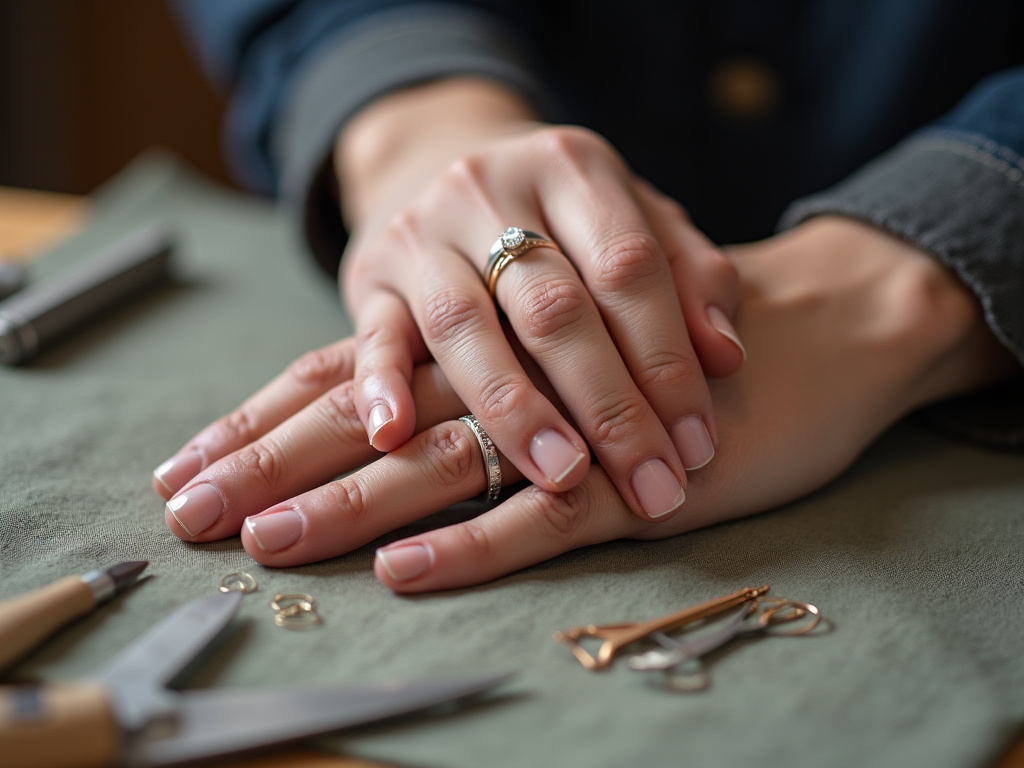
Absolutely. The “left hand, fourth finger” rule is a Western tradition, not a global law. Your heritage or personal comfort completely rewrites the playbook.
In numerous cultures, the right hand is the home for wedding rings. Countries with this tradition include Germany, Poland, Greece, Russia, Spain, Portugal, and India. In Brazil, couples may start with rings on the right hand and switch them to the left after the ceremony. The key is that even on the right hand, the symbolic order often holds: the wedding band is placed first, closer to the body’s center.
Personal preference is the ultimate authority. I’m left-handed, and wearing a stack on my dominant hand while writing or crafting drives me mad. For years, I wore my grandmother’s thin wedding band on my right hand simply because it felt right. The GIA jewelry styling recommendations affirm that cultural practices vary widely, but the meaning you assign your rings is what matters most.
If your rings are different metals, like a rose gold engagement ring and a platinum band, wearing them together is fine. Just know that the softer gold will gradually wear against the harder platinum, leaving a faint metallic transfer. Some, like me, find this “patina” charming, a map of your life together. If you dislike it, more frequent polishing gold jewelry can manage it.
How do I add an anniversary or eternity band to the stack?
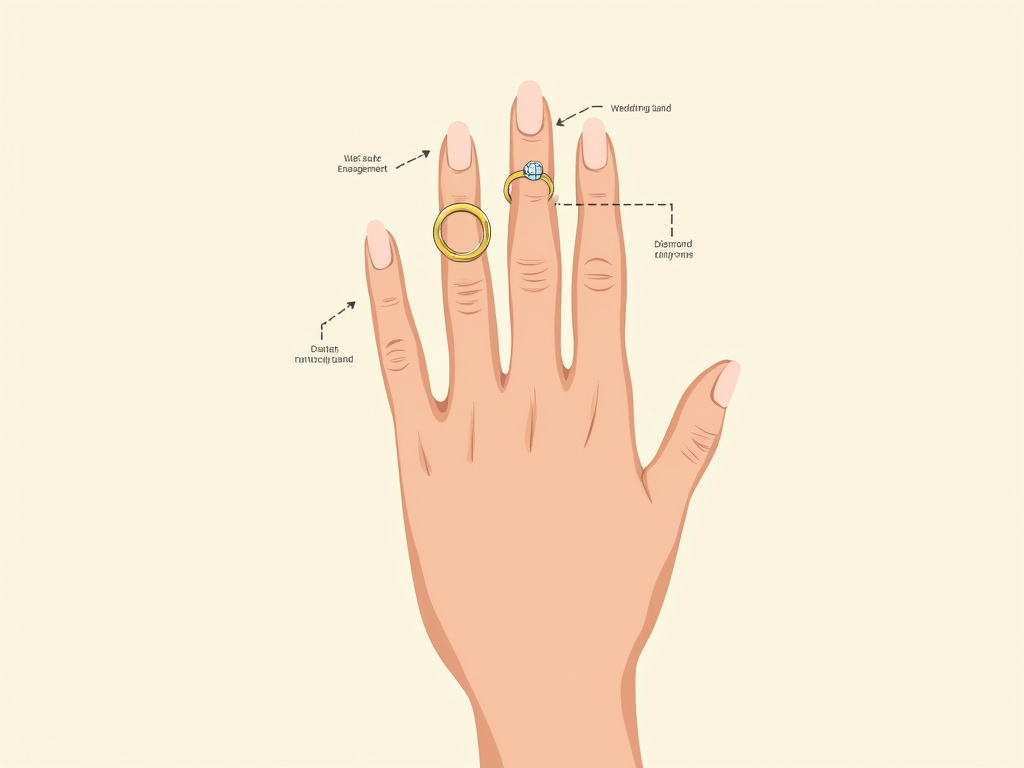
A third (or fourth) ring introduces a new variable, but the logic is consistent. The most meaningful band, your original wedding band, retains its place of honor closest to your heart. Your engagement ring stacks next. Any additional bands, like an anniversary or eternity band, are then worn on the other side of the engagement ring, farther from the heart.
So, from the base of your finger up: Wedding Band → Engagement Ring → Anniversary Band.
This preserves the foundational symbolism. A three-ring stack can be substantial. Ensure the combined width feels comfortable on your finger; a jeweler can advise if the shanks should be soldered together to prevent spinning and wear. When not wearing them, proper jewelry storage tips are critical to prevent the diamonds from scratching each other.
Caring for a Multi-Ring Stack
A stack isn’t just worn together; it’s maintained together with extra vigilance.
- Clean as a set, inspect as individuals. Soak the stack in warm water with a drop of mild dish soap. Gently brush with a soft toothbrush. Then, take them apart to check for loose stones, worn prongs, and built-up residue at the contact points, this is where damage starts unseen.
- Schedule professional check-ups. Have a jeweler inspect the entire stack every six months. The constant metal-on-metal contact can loosen settings faster than a single ring worn alone. This is especially vital for gemstone jewelry care, where stones like opals or emeralds are more vulnerable.
- Consider soldering. If you love the stack as a permanent unit and never wear the pieces separately, soldering them into one solid piece eliminates spinning, reduces interior wear, and protects the settings. It’s a permanent decision, so be sure.
- Understand metal migration. A 14k gold band will wear down faster than a platinum engagement ring when stacked. This is normal. You can manage the look with specific gold jewelry care for the band and a different polish for the platinum.
- Preventative storage is key. Never toss a stacked set into a jumbled box. The friction will cause fine scratches. Use a soft, lined ring box or individual pouches. For silver bands, which tarnish easily, consistent silver ring cleaning and good tarnish prevention tips will stop tarnish from transferring to other rings.
Frequently Asked Questions
Can I wear my wedding band on top of my engagement ring?
You can. This flips the traditional symbolism, but if your engagement ring has a lower profile and feels more secure against your skin, it’s a valid comfort choice. I’ve done this with a bezel-set ring that sat perfectly flat.
What if I only want to wear one ring?
The wedding band is the essential symbol of the marriage. Wearing it alone daily is incredibly common for practicality, safety in certain jobs, or simple preference. Your engagement ring can be for special occasions.
Do my rings have to be on my ring finger?
No. While the fourth finger is traditional, some choose the middle finger for fit or style. The meaning you carry in the ring transcends its location on your hand.
How can I stop my rings from spinning?
Spinning is common with stacks. Solutions include plastic ring adjusters, having the band(s) sized slightly tighter, or having small metal “speed bumps” soldered inside the shank. A proper fit is the best defense.
Should I insure my engagement ring?
Yes, absolutely. An appraised engagement ring insurance policy or a scheduled item on your homeowner’s/renter’s insurance protects against loss, theft, or damage. It’s a small cost for significant peace of mind.
Before You Go
The “correct” way to wear your rings is the way that feels authentic, protects the jewelry, and honors what they represent. Start with the traditional guide, wedding band first, left hand, engagement ring on top, as your foundation. It’s rooted in beautiful symbolism and practical ceremony logistics.
Then, make it yours. Choose a contoured band for that art deco halo. Wear your platinum band on your right hand because it fits better. Listen to your comfort. These rings are the physical markers of your love story, not its rulebook. Care for them diligently with appropriate cleaning, whether that’s a moissanite cleaning guide or a gentle polish for gold, store them safely, and wear them in a way that makes you smile every time you glance at your hand.
