
How Many Carats Should an Engagement Ring Be? (Data)
This post contains affiliate links. As an Amazon Associate, we earn from qualifying purchases.
The ideal engagement ring carat weight balances budget, finger proportion, and cut quality. The Knot’s 2024 study shows the average total ring weight is 1.7 carats, with a 1.8-carat center stone. Lab-grown diamonds average 2 carats, while mined diamonds hold at 1.6 carats. Your perfect size is less about a number and more about how it looks and lives on the hand.
We all start by googling the average. But that number is a mirage, pulled higher by the seismic shift toward lab-grown stones. I learned this the hard way when I helped my sister shop. She was fixated on “two carats,” nearly settling for a poorly cut stone that looked dull and small. We found a stunning 1.7-carat oval with an Ideal cut that looked, and sparkled, like it was over two carats.
Let’s move past the averages and into the reality of what carat weight means for your life, your budget, and her finger.
Key Takeaways
- The 2024 average total ring weight is 1.7 carats, with the center stone averaging 1.8 carats, driven by lab-grown diamonds hitting 2 carats.
- Carat is weight, not size. A diamond’s visual impact is governed by its cut and shape. A brilliant 0.9-carat stone can outshine a dull 1.2-carat one.
- On a size 6 finger, a 1-carat round covers ~45% of the finger’s width. Use this finger coverage metric, not just carat weight, to judge proportion.
- To maximize your budget, lock in an Excellent cut first, then consider elongated shapes and stones just below “magic sizes” (like 0.98 carats).
- Larger stones (3+ carats) demand higher color/clarity grades and a more robust setting. They also change how you wear and insure your engagement ring.
The average lab-grown diamond center stone purchased in 2024 was 2 carats, while the average mined diamond center stone remained at 1.6 carats for the third consecutive year. This 0.4-carat gap explains the overall average’s upward creep.
What’s the Average Engagement Ring Carat Size in 2024?
Let’s be honest, most couples start by Googling “average carat size.” Here’s what those 2024 numbers actually hide. The Knot’s latest data shows the total carat weight for an engagement ring is now 1.7 carats, with the center stone alone averaging 1.8 carats. Both figures are up from 2023.
This isn’t a story of everyone suddenly spending more. It’s the market splitting. Lab-grown diamonds, which offer significantly more carat for the cash, are pulling the average up. If your partner craves size and modernity, lab-grown is the rational choice. The ‘geological history’ of a mined diamond is, for most, a marketing romance. I advise my clients under 40 to go lab-grown for the carat leap; the cash saved can upgrade the honeymoon.
TL;DR: The 1.7-carat average is inflated by 2-carat lab-grown stones. Mined diamonds are steady at 1.6 carats.
Carat vs. Sparkle: Why Weight Can Lie
Carat measures weight, 0.20 grams per carat, to be exact. It doesn’t measure sparkle, fire, or how large a diamond looks. That magic comes from the cut. I learned this lesson with my first “upgrade.” I traded my grandmother’s 0.75-carat Old European cut for a “bargain” 1.1-carat modern round with a “Good” GIA grade. Within a month, the sparkle was gone; it looked like a glass chip next to her antique stone. I sold it at a loss.
Cut quality is the hill I’d die on, skip a meal before you compromise here. A heavier diamond doesn’t always appear larger if its weight is hidden in a thick girdle or deep pavilion, a point emphasized in the GIA diamond selection guide.
Shape is your second cheat code. Elongated shapes like ovals and pears have a larger surface area facing up than square shapes of the same weight. This “face-up” size is what your eye sees.
| Diamond Shape | Face-Up Appearance vs. 1-Carat Round | Visual Effect |
|---|---|---|
| Oval | Appears 10-15% larger | Maximizes coverage, elongates finger |
| Pear | Appears 8-12% larger | Creates a lengthening, elegant line |
| Emerald | Appears similar or slightly smaller | Highlights clarity with step cuts |
| Princess | Appears slightly smaller | Offers a modern, geometric look |
Your professional ring appraisal will note the carat weight, but the visual impact is what you live with daily. This is why a thorough jewelry appraisal process considers proportions and light performance, not just the number on the scale.
What Will It Actually Look Like? A Finger Coverage Guide
Forget abstract percentages. You need to visualize the stone on her finger. The standard reference is a size 6 finger (the U.S. women’s average). “Finger coverage” is the percentage of the finger’s width the diamond’s diameter covers.
A one-carat round brilliant diamond measures approximately 6.5mm in diameter. On a size 6 finger, that covers about 45% of the finger’s width from knuckle to knuckle. It’s noticeable but not overwhelming.
This table translates carat weight into real, visual metrics you can use.
| Carat Weight | Diameter (Round) | Finger Coverage (Size 6) | Style Impression |
|---|---|---|---|
| 0.50 ct | 5.2 mm | ~35% | Delicate, classic |
| 0.75 ct | 5.8 mm | ~40% | Substantial, versatile |
| 1.00 ct | 6.5 mm | ~45% | The standard “noticeable” stone |
| 1.50 ct | 7.4 mm | ~52% | Bold, a clear statement |
| 2.00 ct | 8.1 mm | ~57% | Luxurious, eye-catching |
| 3.00 ct | 9.3 mm | ~65% | High-impact, red-carpet |
If her finger is a size 4, a one-carat diamond will look significantly larger. On a size 8, it will appear more modest. Always consider proportion. A massive stone on a petite hand can look costumey, while a tiny stone on a large hand can get lost. Once you’ve found the right proportion, maintaining its beauty requires a solid diamond ring cleaning routine.
How to Strategically Stretch Your Carat Budget
You have three powerful levers to pull, but ignoring the first one guarantees regret.
- Lock in the cut, then adjust carat. If you compromise on cut to gain carat, you’ll lose the sparkle that makes a diamond look large. I’ve seen clients regret choosing a 1.2-carat ‘Good’ cut over a 1.0-carat ‘Excellent’, within a year, they were asking about re-cutting, which can cost $800 and risk weight loss. So, lock in the Excellent cut first. If your budget screams, shrink the carat, not the light performance.
- Choose a shape that faces up larger. If she loves the look of a one-carat round, a 0.85-carat oval will deliver a similar visual footprint for less money. This is a concrete, numbers-driven win.
- Shop just below “magic sizes.” The per-carat price jumps at whole and half-carat marks. A 0.98-carat diamond is visually identical to a 1.00-carat diamond but can cost 10-20% less. This standard piece of advice is detailed in the International Gem Society carat guide.
Common mistake: Prioritizing carat over cut to hit a round number, the stone will look smaller and duller within weeks, negating the point of “going bigger.”
For stones under 0.50 carats, you can safely prioritize size. At that scale, minor inclusions (SI1-SI2) and slightly warmer colors (J-K) are not easily seen, letting you maximize millimeter diameter on a tight budget.
The Realities of Choosing a Large-Carat Stone
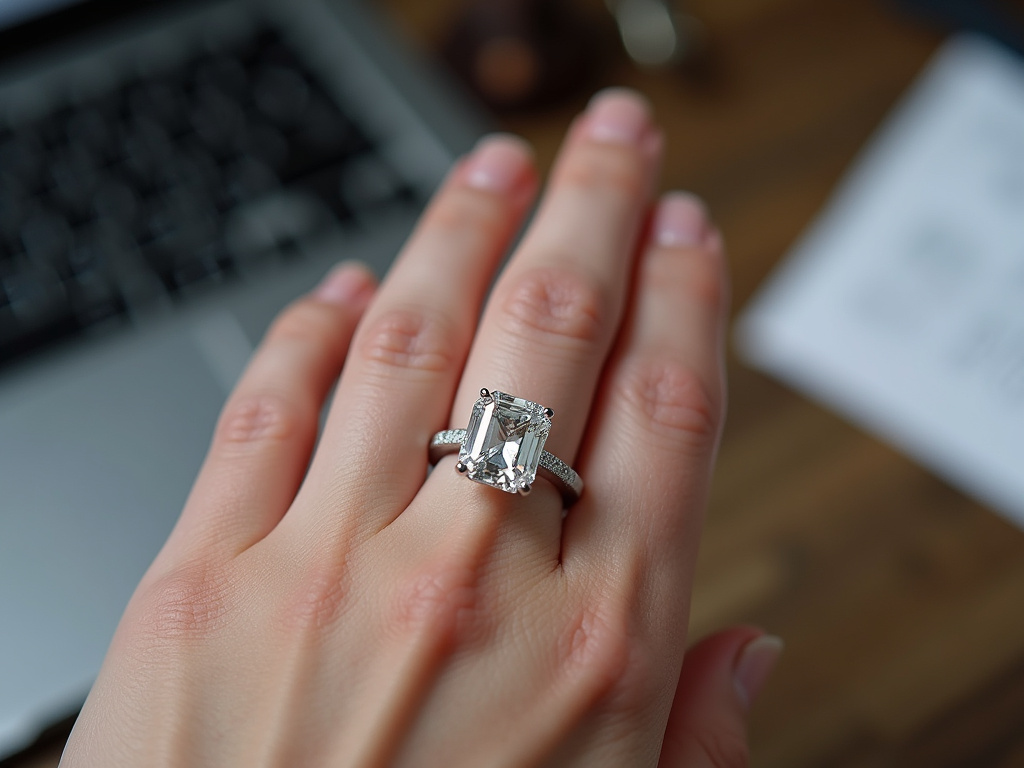
Bigger stones come with hidden costs and lifestyle changes that jewelers often gloss over.
First, the setting must be substantial. A delicate, skinny band looks unbalanced and risks bending under the weight of a 3-carat diamond. You need a heavier band or a robust halo, which adds cost. For a large stone set in gold, understanding gold jewelry care is key to maintaining the setting’s integrity.
Second, daily wear becomes a conscious act. A large stone catches on everything. You’ll develop a habit of sliding the ring so the stone faces your palm when using your hand. Some find this annoying within a month.
Third, and most critically, size amplifies flaws. For diamonds three carats or larger, the GIA recommends considering a higher color grade (G or better) and a clarity grade of VS2 or above. A slight yellow tint is subtle in a one-carat stone but obvious in a three-carat table.
Insurance premiums scale with appraised value. A standalone policy from a specialist like Jewelers Mutual often offers better agreed-value coverage than a homeowner’s rider. You must protect your ring’s value with a formal appraisal for insurance.
TL;DR: Large stones need robust settings, reveal color/clarity flaws, increase insurance costs, and change how you wear a ring daily.
Caring for Your Ring, Regardless of Carat
Once you’ve chosen the perfect stone, its care is non-negotiable. The principles are similar whether you have a classic solitaire or a statement piece, but the stakes feel higher with more carats.
For daily cleaning of any fine ring, I keep a Connoisseurs Dazzle Stik in my purse, its ammonium hydroxide-based gel is safe for both lab and mined diamonds. For a weekly deep clean, the ultrasonic in the iSonic Jewelry Cleaner D2000 works wonders, but never use it on fracture-filled stones or delicate gemstone jewelry care pieces like emeralds or opals.
If you choose a lab-created alternative like moissanite, follow a dedicated moissanite ring care routine, as some cleaners can dull its unique fire. For heirlooms or vintage finds, always consult a professional before attempting any home cleaning methods on vintage ring care pieces.
Finally, invest in proper jewelry storage. A fabric-lined box with individual compartments prevents scratches. Never toss your ring in a purse or on a nightstand, especially after applying hand cream or sunscreen.
Frequently Asked Questions
Is 2 carats too big for an engagement ring?
It depends entirely on finger size and lifestyle. On a size 8 finger, a 2-carat round covers about 57% of the width, a bold but proportionate look. On a size 4 finger, it covers nearly 70%, which can feel overwhelming for active daily wear. Consider her comfort and routine.
What carat size can I get for a $10,000 budget?
For a mined diamond with Excellent cut, VS2 clarity, and G color, expect 0.90 to 1.10 carats. For an identical lab-grown diamond, you can get 1.80 to 2.20 carats. Always prioritize cut first, then adjust carat to fit the budget.
Does a larger carat mean a less durable diamond?
No. A diamond’s hardness is a 10 on the Mohs scale, regardless of size. However, a larger stone has a larger surface area and may be more prone to chipping on the girdle if struck directly. A secure setting with proper prong thickness is crucial.
How can I make a 1-carat diamond look bigger?
Choose an Excellent or Ideal cut for maximum light return. Select an elongated shape like an oval or pear. Use a halo setting or a slender, paved band to create contrast. Keep the band and setting clean tarnished silver or polished white gold to maximize brilliance.
Should I buy a diamond just below one carat?
Yes, if you want to save significant money without sacrificing visual size. A 0.98-carat diamond is indistinguishable from a 1.00-carat diamond to the eye but sits below the “magic size” price cliff, often costing 10-20% less.
What Actually Matters
Forget the perfect carat number. Your real targets are finger coverage percentage and cut excellence. A brilliant 0.9-carat diamond that covers 42% of her finger will sparkle more and please longer than a dull 1.2-carat stone. Use the millimeter diameter chart to translate abstract weight into a visual you can picture.
If size is the dream, lab-grown diamonds have made two carats the new normal without breaking the bank. Just remember that with greater size comes greater responsibility, a need for higher quality grades, a sturdier setting, and a proactive plan to care for your diamond ring and determine a ring’s value for insurance.
The right carat is the one that fits her hand, your life, and a future of daily admiration. It’s not about keeping up with averages; it’s about finding the stone that makes her look down and smile, every single time.
