
How Should a Tennis Bracelet Fit: A Complete Sizing Guide
A tennis bracelet should fit so it sits comfortably on the wrist without sliding over the hand, allowing for a slight, intentional drape with movement. The ideal length is typically your wrist measurement plus 0.5 to 1 inch, adjusted for the bracelet’s carat weight, setting profile, and your personal comfort preference.
Most guides get this wrong by fixating on the old “one-finger rule.” They tell you to aim for a space that lets one finger slide between the bracelet and your wrist. That rule works for a rigid bangle, not a flexible chain of diamonds. A tennis bracelet that fits to that rule will spin freely and feel insecure the moment you move your arm.
Here’s how to measure your wrist correctly, translate that to a bracelet size that actually works, and avoid the three mistakes that leave people with a beautiful piece they never wear.
Key Takeaways
- Your wrist measurement is the number you get just above the bone, not loosely around the widest part.
- Add 0.5 inch for a snug, classic fit or 1 inch for a relaxed, dressy drape. High-profile settings need another 0.25 inch.
- Heavier carat weights (over 3 carats) look balanced on larger wrists (over 6.5 inches) but overwhelm petite ones.
- The “one-finger” test is for rigid bangles; a properly fitted tennis bracelet should not spin freely around your wrist.
- Fit preferences vary regionally: 7–7.5 inches is standard in Canada, while 6–7 inches is more common across Asia.
The Two-Finger Test (And Why It’s Wrong)
Forget the one-finger rule. It’s for bangles. A tennis bracelet is a flexible line of diamonds connected by a thin metal chain. If you can fit a finger underneath it easily, it’s already too loose. The chain will torque, the clasp will flip to the top of your wrist, and you’ll be constantly adjusting it.
Common mistake: Using the one-finger rule for a tennis bracelet, the piece spins with every gesture, the clasp digs into your wrist when it flips, and you risk snagging the setting on clothing within a week.
The correct test uses two fingers, but not how you think. Don’t try to slide them under the bracelet. Instead, make a fist. Your wrist muscles and bones expand. A well-fitted tennis bracelet will tighten just enough on your flexed wrist that you cannot easily slide two stacked fingers between the bracelet and your skin. On a relaxed wrist, it should sit with a slight gap, enough to allow the links to lie flat without biting, but not so much that it slides toward your hand.
TL;DR: The one-finger rule is for rigid bangles. A tennis bracelet should be snug enough that it doesn’t spin when you gesture, but loose enough to lie flat when your wrist is relaxed.
How to Measure Your Wrist for a Bracelet (The Right Way)
You need your true wrist size, not a guess. The spot matters.
Wrap a flexible measuring tape snugly, not tight, not loose, around your wrist, positioning it just above the protruding wrist bone. This is your baseline measurement. Do not measure loosely at the widest part of your hand or below the bone. That number will be too large, and you’ll order a bracelet that slides right off. If you don’t have a tape measure, use a non-stretch piece of string or ribbon, mark it, and then measure that length against a ruler.
Record that number to the nearest eighth of an inch. This is your foundational data point for every diamond bracelet fit recommendations chart you’ll consult.
The Snug vs. Drape Decision
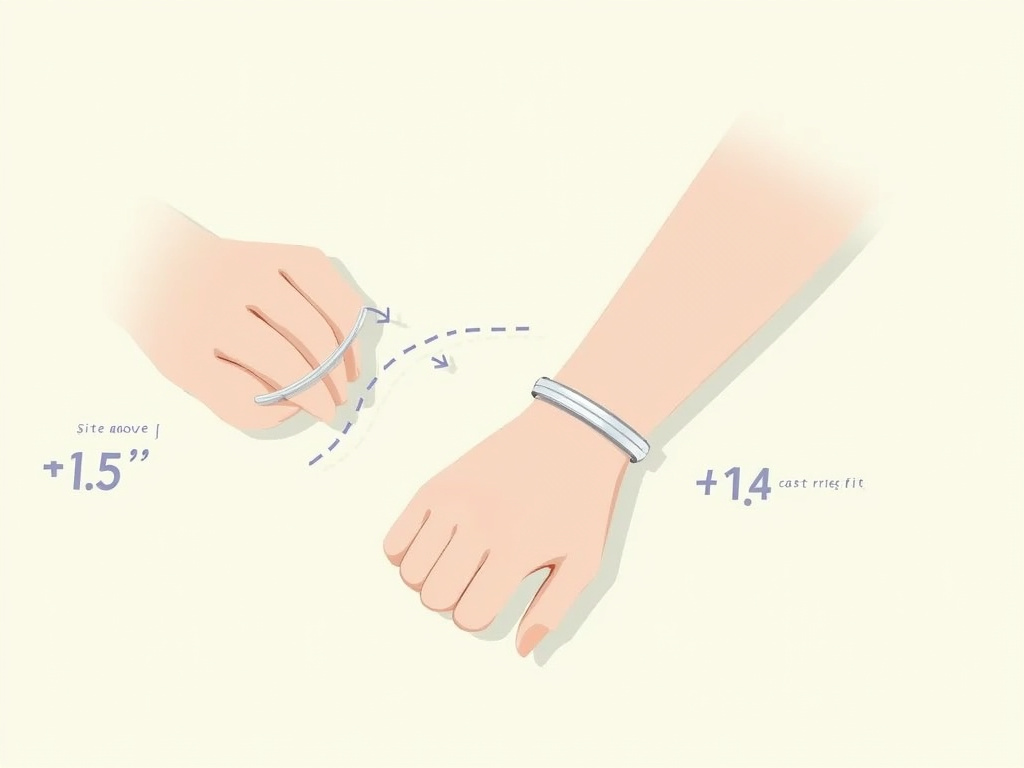
Your wrist measurement isn’t your bracelet size. It’s the starting point. Now you add length based on how you want the piece to feel and look.
| Wrist Measurement | Snug, Classic Fit (+0.5″) | Relaxed, Dressy Drape (+1″) | Best For |
|---|---|---|---|
| 6 inches | 6.5 inches | 7 inches | Petite frames, active daily wear |
| 6.5 inches | 7 inches | 7.5 inches | Standard comfort, versatile look |
| 7 inches | 7.5 inches | 8 inches | Statement piece, formal wear |
| 7.5 inches | 8 inches | 8.5 inches | Larger wrists, bold styling |
A snug fit (adding 0.5 inch) keeps the bracelet securely seated just above the wrist bone. It moves with you but doesn’t travel. This is the choice for everyday jewelry you don’t want to think about, or if your job involves a lot of hand movement.
A relaxed drape (adding 1 inch) lets the bracelet settle slightly lower on the wrist when your arm is at your side. It has a gentle swing when you move. This is the classic, elegant look seen in photographs and preferred for dressier occasions. It’s also kinder to delicate jewelry settings, as the extra slack reduces tension on individual links.
When Your Bracelet Style Demands Extra Room
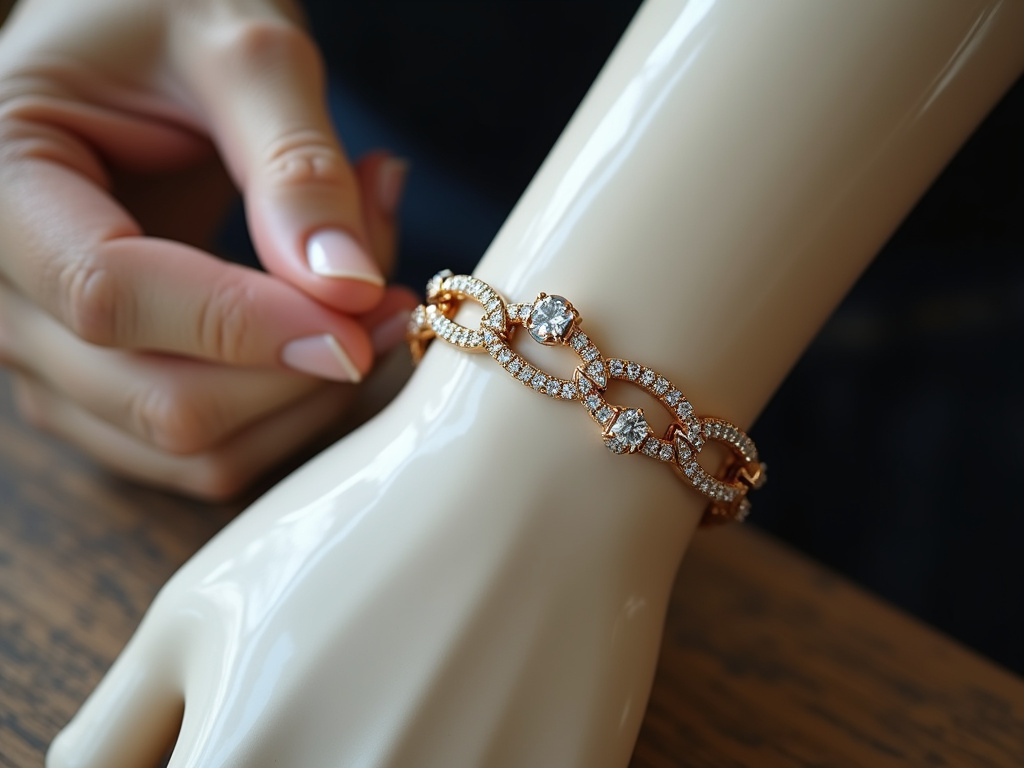
Not all tennis bracelets are created equal. The design itself can change the fit.
A bracelet with a bulky clasp or raised, high-profile settings might need an extra quarter-inch in length to sit comfortably and avoid flipping.
A dainty, low-profile tennis bracelet with a slim lobster clasp can fit true to size. But if the piece features a substantial box clasp or the diamonds are set in high, pronged baskets that stand off the chain, you need that extra space. Otherwise, the bulky element won’t lie flat and will constantly rotate to the top of your wrist. The same goes for bracelets with a stiffer, less flexible chain. Always err on the slightly longer side with these styles; a good jeweler can usually remove a link or two, but adding length is far more difficult and expensive.
TL;DR: Bulky clasps and high settings need an extra 0.25 inch added to your calculated length. Dainty, flexible designs can fit true to size.
The Carat Weight Proportion Rule
A 5-carat tennis bracelet on a 6-inch wrist doesn’t just look oversized. It feels wrong. The weight pulls and torques, making it uncomfortable and increasing the risk of snagging. Proportion matters.
For petite or small wrists (under 6 inches), lower carat weights (1-3 carats) and slimmer widths look proportionate and elegant. Heavier bracelets feel cumbersome and can look costumey.
For larger wrists (over 6.5 inches), higher carat weights (3 carats and above) and slightly wider designs create a balanced, intentional look. A very delicate bracelet on a larger frame can get visually lost.
Think of it as scaling. The gemstone jewelry care is the same, but the visual impact is different. A well-proportioned piece feels secure and looks like it belongs on you, not like you’re wearing someone else’s jewelry.
Regional Fit Preferences You Should Know
If you’re buying online or from an international jeweler, be aware that standard sizes aren’t universal. What’s standard in Toronto might be considered large in Tokyo.
In Canada and the United States, the most common bracelet size for women is between 7 and 7.5 inches. This aligns with the North American preference for a slightly looser, more relaxed fit.
In many parts of Asia, including Singapore, the average wrist size is smaller, and the common bracelet size ranges from 6 to 7 inches. A 7.5-inch bracelet ordered from an Asian retailer might be described as “large.” Always check the retailer’s specific size chart rather than assuming.
How to Test a Size Before You Buy (The String Method)
You’ve done the math. Now prove it. Before you spend hundreds or thousands, make a physical mock-up.
- Cut a piece of string, ribbon, or even a strip of paper to the exact length you’ve calculated for your desired fit (wrist size + added length).
- Form it into a circle and tape the ends together to simulate the bracelet’s circumference.
- Slip it onto your wrist and wear it for at least an hour while you go about your normal activities, type, cook, drive.
- Pay attention. Does it slide toward your hand when you gesture? Does the “clasp” area flip uncomfortably? Does it feel tight when you make a fist?
This $0 test saves you from the heartache of a return or an expensive resizing job. It’s the single most effective way to preserving gold jewelry and other fine pieces from the wear and tear of constant resizing.
3 Tennis Bracelet Fit Scenarios (And How to Fix Them)
Problem: The bracelet spins freely around your wrist.
Cause: It’s too long. You likely used the one-finger rule or measured your wrist loosely.
Fix: A jeweler can usually remove one or two links. For a permanent fix, have it sized down by half an inch.
Problem: The bracelet feels tight when you flex your hand or make a fist.
Cause: It’s too short, or you didn’t account for a bulky clasp sitting on top of your wrist bone.
Fix: If it’s only tight when flexing, this is often correct for a secure fit. If it’s genuinely uncomfortable, you’ll need a link added, which is more complex and may not be possible with all styles.
Problem: The clasp constantly flips to the top of your wrist.
Cause: The bracelet is too loose, or the clasp is too heavy for its length.
Fix: First, try sizing down slightly. If the problem persists with a well-fitted bracelet, consider having the clasp replaced with a lighter, slimmer style, a common remedy for maintaining silver bracelets with heavy box clasps.
Frequently Asked Questions
What if my wrist measurement is between standard sizes?
Always round up. It’s easier and less costly for a jeweler to remove a link than to add one. A bracelet that’s a quarter-inch too big is more comfortable than one that’s a quarter-inch too small.
Can I resize any tennis bracelet?
Most can be resized by adding or removing links, but there are limits. Bracelets with a continuous line of diamonds (no exposed chain between stones) are much harder and more expensive to resize. Always ask about resizing policy before purchase.
How do I account for wrist swelling?
If your wrists tend to swell slightly during the day or in heat, opt for the “relaxed drape” size (add 1 inch). This gives you a comfortable margin. For significant swelling, a bracelet with an extender chain provides the most flexibility.
Is the fit different for men’s tennis bracelets?
The principle is the same, snug but not tight, with a slight drape. Men’s wrists are larger on average, so common sizes range from 7.5 to 8.5 inches. The proportional rule still applies: a heavier, wider bracelet suits a larger wrist.
Will a properly fitted bracelet snag on clothing?
correct fit minimizes snagging. A bracelet that’s too loose flops around, increasing the chance of prongs catching on knitwear. A snug fit keeps the settings seated against your skin.
The Bottom Line
Measure your wrist above the bone, add half an inch for security or a full inch for drape, and then mock it up with string. Proportion the carat weight to your frame, and remember that bulky clasps need extra room. The right fit isn’t a vague rule of thumb, it’s the specific measurement that makes the bracelet feel like a part of you, not an accessory you’re babysitting. Get that right, and you’ve unlocked a piece you’ll wear for decades, not just for occasions.
