
What to Do With Your Wedding Ring After Divorce
After a divorce, you can wear your wedding ring by giving it a new purpose that honors your journey forward. Options include moving it to your right hand, redesigning it into new jewelry, storing it as an heirloom, or selling it. The crucial first step is a cooling-off period of six months to two years in a neutral, secure location.
I learned this the hard way. After my own separation, I shoved my grandmother’s emerald band into my nightstand, only to find myself absently sliding it back on during lonely evenings. It wasn’t a choice; it was a reflex. That’s when I understood the ring wasn’t just jewelry, it was a ghost. My work at TheJewelryNook has shown me that everyone’s path is different, but the first step is always the same: create space.
This isn’t about etiquette. It’s about a tangible object loaded with memory, and the practical, emotional work of deciding its fate. Let’s walk through the real timeline experts recommend, the specific costs and considerations of each option, and how to turn that piece of your past into something that fits your future.
Key Takeaways
- Begin with a mandatory “neutral zone” storage period of 6-24 months, as advised by psychologists like Dr. Nick Bach, to separate emotion from decision.
- Repurposing your ring through a jeweler is popular but requires a realistic budget of $200-$800+ for labor and a clear vision for the new piece.
- Passing the ring down as a modified heirloom can rewrite its story, but always involve the recipient in the design to ensure it’s worn, not stored.
- If you choose to sell, obtain a formal appraisal from a Graduate Gemologist (GIA) first to understand its true market value, which is often far below retail.
- Cultural context matters; in Orthodox traditions where rings are worn on the right hand, simply removing it is the common post-divorce practice.
What is the First Thing I Should Do With My Ring?
Do nothing. More precisely, place it somewhere you can’t see it. This isn’t avoidance; it’s strategy. Psychologists like Dr. Nick Bach recommend a “neutral zone” period of six months to two years. The goal is to let the raw, initial emotions, grief, anger, relief, settle so you can see the ring for what it is: an assembly of metal and stones, not the embodiment of your marriage.
The neutral zone is a storage concept where the ring is placed in a location devoid of emotional triggers, such as a safe deposit box or a rarely accessed drawer, for a period of 6-24 months. This creates physical and psychological distance, allowing for a decision based on clarity rather than immediate reaction.
I advise my clients to use a SentrySafe SFW205CUB fireproof safe at home or a bank safety deposit box. The act of deliberately placing it there and locking it away is a ritual. It says, “This is on pause.” Retrieving it becomes a conscious choice, not an accidental stumble during a vulnerable moment.
TL;DR: Lock the ring away for at least six months. Any permanent decision made before this cooling-off period is almost always an emotional reaction you’ll later regret.
How Do I Know When I’m Ready to Decide?
You’ll feel it. The ring will shift from a charged symbol to an object. When you can hold it and your first thought isn’t a flood of memory but a practical question, “Could this be a nice pendant?” or “Is the gold 14k or 18k?”, you’re ready. For some, that takes the full two years. For others, six months is enough. There’s no race.
Rushing this leads to the most common financial regret: selling a meaningful stone for a fraction of its worth in a moment of spite. I’ve seen clients walk into a pawn shop and accept 30% of a ring’s value because their only goal was to be rid of it. The financial loss later compounds the emotional sting.
Common mistake: Selling your ring within the first 90 days of divorce, you will likely accept a lowball offer because your goal is disposal, not value recovery. The loss of thousands of dollars often hits months later.
What Are My Practical Options for the Ring?
Once the neutral period passes, you have a concrete menu. Each path has a different cost, emotional footprint, and level of finality. Let’s break them down with real numbers and considerations.
| Option | Best For | Practical Consideration & Cost | Emotional Outcome |
|---|---|---|---|
| Wear on Right Hand | Those seeking immediate, cost-free change. | $0. Can be misread as a wedding band in some cultures. | Ambiguous. The ring stays, but its meaning shifts. |
| Repurpose & Redesign | Individuals who want to reclaim the materials into something new. | $200-$800+ for labor. Requires a trusted jeweler and a design vision. | Transformative. The past is literally reshaped. |
| Create a Modified Heirloom | Parents wanting to pass on value but change the story. | Redesign cost + potential professional ring appraisal for insurance. Must involve the recipient. | Legacy-building. The narrative changes from “my marriage” to “our family.” |
| Permanent Secure Storage | Anyone not ready to decide or who views it as a financial asset. | Cost of a safe deposit box (~$60/yr) or a home safe. Requires proper jewelry storage to prevent damage. | Deferred. The decision is postponed, preserving all future options. |
| Sell | Those needing liquidity or wanting total symbolic closure. | Requires a GIA appraisal ($50-$150) to avoid being lowballed. Expect 30-50% of original retail value. | Final. Severs physical and financial ties completely. |
Should I Just Wear It on My Other Hand?
Simply moving the ring from your left ring finger to your right is the easiest, instant option. In Western cultures, this signals a shift in status. But here’s the nuance most guides miss: in Russia, Greece, and other Orthodox traditions, the wedding ring is worn on the right hand from the start. For someone from that background, divorce means taking it off entirely. Wearing a “divorce ring” there would be confusing.
If you choose this path, commit to more frequent routine jewelry maintenance. Your right hand is typically your dominant, working hand, so the ring will be subject to more bumps, soap, and lotion. A simple at-home cleaning gold jewelry routine with mild dish soap and a soft brush will keep it presentable.
Is Repurposing the Ring Worth the Cost?
This is the choice I see most in my community, and the one I made myself. You walk in with a perfect circle of your past and leave with a sketch of something new. It’s alchemy. My own solitaire was reborn as a pendant on a 14k yellow gold Figaro chain from James Avery, and it catches the light now when I lean forward to talk, a touchstone for my own stories.
The cost is real. A local bench jeweler like The Clay Pot in Brooklyn might charge $250-$400 for a simple band melt and reset. For complex CAD-based redesigns mailed to a service like My Jewelry Repair, you’re looking at $600 and up. Budget for the labor, but also budget for the emotional tax of watching the torch melt the old setting. It’s cathartic, but it’s not free.
Common redesign paths include:
1. A pendant (the most popular choice, turning the focus inward).
2. A new ring style, like a signet or stackable band.
3. Earrings or a bracelet, ideal for rings with smaller accent stones.
Before any work, have the piece inspected. A loose prong could mean losing a diamond during the process. For delicate or antique pieces, consult a specialist in vintage jewelry cleaning and repair first to assess the integrity of the setting.
Can I Turn It Into an Heirloom Instead?
This is distinct from repurposing for yourself. The goal is to change the ring’s story for the next generation. You might reset the central stone into a necklace for your daughter’s graduation or melt the gold into cufflinks for your son.
The critical step most people skip? Asking the recipient if they want it. A design they love will be cherished; one forced upon them will live in a drawer. This process can be beautiful, transforming an object of a ended relationship into a gift of enduring family love. If the piece is valuable, a ring appraisal process is wise for insurance purposes before gifting.
What If I Just Want to Store It Forever?
Choosing proper jewelry storage is an active, respectful decision, not a passive one. It’s declaring, “This chapter is archived.” For a high-value piece you may sell later, use a bank safety deposit box. For sentimental items you can’t part with but don’t want to see, a quality home jewelry box with anti-tarnish lining is key.
This approach pairs perfectly with preventing jewelry tarnish to ensure the metal is pristine if you or an heir ever retrieves it. Think of it as curating your own history museum. The ring isn’t hidden in shame; it’s preserved with intention.
How Do I Sell My Ring Without Getting Ripped Off?
Selling is the cleanest break, converting symbol into capital. Never sell without a professional appraisal from a Graduate Gemologist (GG). The sentimental value is zero in the marketplace. The GIA report number becomes your leverage, detailing the diamond’s 4Cs and the metal quality. This $50-$150 report protects you from predatory buyers who will offer a fraction of its worth.
Expect to receive 30-50% of what was paid at retail. That’s the reality of the wholesale jewelry market. Use the appraisal to negotiate with reputable buyers or to set a fair price for a private sale.
Common mistake: Aggressively cleaning an antique ring before an appraisal, harsh chemicals or ultrasonic cleaners can damage old glue or fragile settings, like those in Art Deco filigree, potentially lowering its value to a collector.
What is a Divorce Ring and Should I Get One?
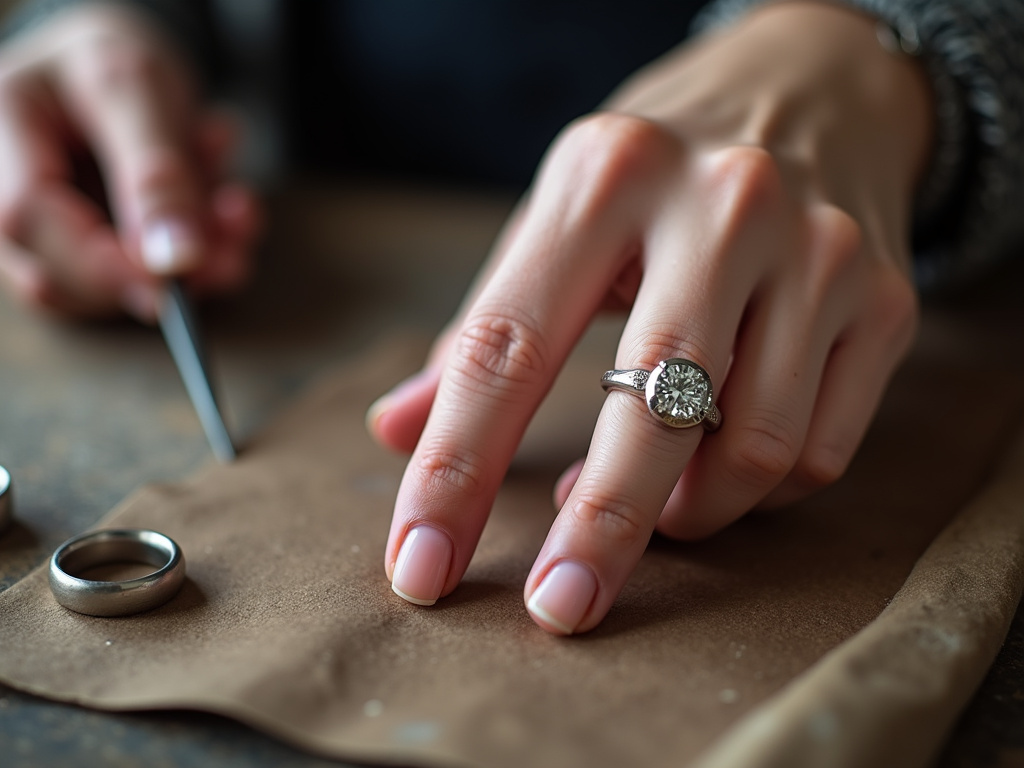
A divorce ring is a new piece you buy for yourself, marking an end and a beginning. It’s a powerful symbol of self-love. If you go this route, skip traditional bridal jewelers. Look to designers specializing in symbolic, self-purchased pieces.
Brands like Wendy Brandes offer “Woman Warrior” rings with talismanic designs. Mejuri markets its “Dome Signet” and other right-hand rings specifically for self-celebration, with styles starting around $250. The key difference from an engagement ring? The design is often about protection or direction, a bezel-set stone facing you, a compass motif, rather than presentation to a partner.
If you choose a stone like moissanite for its durability and brilliance, learn the specific moissanite ring care it requires to keep its fire. For gemstone choices, research gemstone jewelry care, as stones like opals or turquoise have specific needs.
Frequently Asked Questions
How do I clean my ring before storing or redesigning it?
The method depends entirely on the material. For a standard diamond, a soft brush with mild dish soap and warm water is safe for a home cleaning for diamonds. For a gemstone ring, you must identify the stone first, opals and pearls are water-sensitive. When in doubt, take it to a professional. You can find guides on cleaning gemstone rings and silver ring cleaning on my site.
Is it bad luck to keep your wedding ring after divorce?
Superstitions are personal. Practically, there’s no “luck” involved, only your emotional relationship to the object. If it causes pain, keeping it is unhelpful. If it’s neutral or holds positive family history, keeping it is perfectly fine.
What finger do you wear a divorce ring on?
Typically the right ring finger. This differentiates it from the left-hand wedding band and aligns with the cultural concept of a “right-hand ring” as a symbol of independence.
Can I just throw my wedding ring away?
You can, but I’ve never had a client who did this and didn’t later regret the impulsiveness. The ring has monetary and material value. Even donating it allows that value to do good. Destruction is the most permanent and least reversible option.
My family is pressuring me to keep/sell the ring. What should I do?
Your family isn’t wearing it. This is one of the first, and most important, decisions you make solely for yourself post-divorce. Thank them for their concern, then follow your own timeline and intuition. The ring’s future is your call.
The Bottom Line
That ring on your finger, or in your drawer, is just metal and stone. You gave it all its meaning, and you get to decide what that meaning is now. The process of choosing, whether it becomes a right-hand companion, a transformed pendant, a future heirloom, or a sold asset, is a powerful step in reclaiming your own narrative.
Move it from a symbol of what was to a token of what is, or remove it entirely. There’s no universal right answer, only your answer. Take the time to find it.
