
Is Brass Good for Jewelry? What the Specs Actually Mean
Brass is a good jewelry metal when you match a specifically engineered alloy and a robust plating system to your needs. Modern, lead-free formulations like KITZ Corporation’s dezincification-resistant brass are designed for body contact, while generic brass can release nickel at rates up to 98 µg/cm²/week. The answer depends entirely on the material specification.
Choosing brass jewelry shouldn’t feel like a gamble. That warm, gold-like piece you adore could last for years, or it could leave a green mark on your skin in a week. The difference isn’t luck, it’s material science, and most advice never gets past the vague warnings.
My own journey with brass began with a disaster. Last spring, I bought a “hypoallergenic” gold-plated locket from a popular Etsy shop, advertised with “3-micron plating.” After three weeks of daily wear, the bail wore to a brassy shine. My dermatologist confirmed a nickel reaction from the exposed base metal, a $120 bill and a lesson I won’t forget. Let’s make sure you don’t have to learn that way. This guide is your decoder ring for the alloy recipes, plating thicknesses, and lab data that separate costume jewelry from a crafted piece.
Key Takeaways
- Jewelry-grade brass is a precise alloy, typically 58–66% copper with zinc, tin, and bismuth. “Brass” alone tells you nothing about its safety or durability.
- Skin reactions are caused by metal ion release. A 2015 peer-reviewed study found nickel release from US jewelry samples as high as 98 µg/cm²/week, far exceeding safe limits.
- True hypoallergenic brass is a multi-layer system: a nickel-free base, a proper underplate, a thick top layer (≥0.5 µm), and sometimes a sealant. The label alone is meaningless.
- Plating thickness dictates lifespan. Fashion plating at 0.1–0.3 µm wears through quickly; premium plating at 0.5–1.0+ µm can last for years with proper care.
- Regulations are not uniform. The EU has stricter nickel limits, especially for piercings, and children’s jewelry carries separate, stricter lead and cadmium rules.
What Makes Brass “Good” for a Specific Piece?
Good isn’t a universal grade. It’s a question of fit. A statement cocktail ring worn twice a year has a different job than everyday hoop earrings. For the ring, good might mean bold looks on a budget. For the hoops, it demands skin safety, comfort, and resistance to wear and sweat.
Modern brass formulations for jewelry manufacturing contain 58.0–66.0 wt% copper with zinc as the primary balance. Strategic additions include tin (0.3–3.0 wt%) for strength, bismuth (0.5–2.5 wt%) for lead-free machinability, and trace elements like phosphorus or silicon.
This spec, sourced from manufacturer patent analyses, is your baseline. For example, KITZ CORPORATION’s Dezincification-Resistant Brass is engineered specifically for body contact. Its optimized composition (Cu 58.0-63.2%, Sn 0.3-2.0%, Bi 0.7-2.5%, P 0.05-0.15%) achieves a corrosion rate below 0.5 mdd in synthetic sweat, a quantifiable measure of longevity. If a listing just says “brass,” you’re looking at a mystery metal. That vagueness directly influences the brass tarnishing process, which accelerates with less stable, cheaper alloys.
TL;DR: High-quality brass jewelry starts with a disclosed, lead-free alloy recipe designed for corrosion resistance, not just an attractive color.
The Tangible Trade-Offs: Brass Pros and Cons
Let’s talk brass like we’re discussing a vintage car. Stunning, affordable, but it demands your attention. The softness that allows for that beautiful filigree on my favorite 2018 necklace also meant its clasp gave out after one too many tugs. The repair cost more than the piece.
| Aspect | The Clear Advantage | The Real-World Limitation |
|---|---|---|
| Cost & Style | Delivers a rich, warm gold-like aesthetic at a fraction of the cost of precious metals. Perfect for experimenting with trends. | Lower price often reflects mass production and very thin platings. You’re trading material value for design accessibility. |
| Workability | Excellent for intricate casting and detailed designs. Alloys like DOWA MINING CO LTD’s High-Strength Fine-Grain Brass (grain size ≤10 µm) enable complex spring mechanisms. | This same malleability means findings like clasps and earring posts can bend or weaken with rough handling. They’re the first point of failure. |
| Durability | Stronger than pure copper or silver. Can be formulated for high tensile strength (>550 MPa) for specific components. | Softer than stainless steel or tungsten. Prone to fine scratches, and any plating will eventually wear through at friction points. |
| Skin Interaction | Lead-free, nickel-free alloys exist and are safe for most. A thick, intact plating forms an effective barrier. | Unplated brass reacts with skin acids, often causing a green skin reaction. Allergic reactions are possible if nickel is present and exposed. |
The pros win if you want variety without a huge investment. The cons simply dictate your care routine. That beautiful, detailed piece needs a strategy for proper jewelry storage to prevent the scratches that accelerate wear.
Common mistake: Assuming a “gold-plated” finish is uniform. The plating on the inside curve of a ring band or the post of an earring is often thinner. These high-friction spots wear through in weeks, exposing the base metal.
What Lab Tests Reveal About Metal Release
Forget speculation. Skin reactions are chemistry. Metals release ions when exposed to sweat, and those ions trigger allergies or discoloration. A pivotal 2015 peer-reviewed study in Contact Dermatitis tested 96 US jewelry samples using the standardized EN 1811:1998 synthetic sweat method. The numbers tell a stark story.
| Metal | Release Range Found | Regulatory/Safe Limit Context |
|---|---|---|
| Nickel | 0.01 – 98 µg/cm²/week | The EU limit for prolonged skin contact is 0.5 µg/cm²/week. The high-end samples released nearly 200 times this limit, explaining severe allergic reactions. |
| Cobalt | 0.02 – 0.5 µg/cm²/week | Often used with nickel in alloys. While lower in this study, it remains a potent allergen for sensitized individuals. |
| Lead | 0.03 – 2718 µg/cm²/week | The extreme high end is a serious health risk. For context, California’s Proposition 65 limit is 0.5 µg per day. |
The takeaway is critical: “brass” as a category is meaningless for safety. Two visually identical brass rings can have release profiles worlds apart. This variability is precisely why a dedicated tarnish prevention methods routine is a health practice, not just about keeping things shiny.
TL;DR: Laboratory data proves metal release can vary by a factor of thousands. Your safety hinges on the specific alloy, not the generic metal name on the tag.
Is “Hypoallergenic Brass” Real or Just Marketing?
You’ll see the label everywhere. Sometimes it’s honest engineering. Often, it’s a hollow promise slapped on a nickel-containing base with a whisper-thin top coat. True hypoallergenic brass is a built system.
- The Base: A verified nickel-free brass alloy. This is non-negotiable.
- The Underplate: A barrier layer (like palladium) to stop base metal migration.
- The Top Layer: The visible gold, silver, or rhodium. Thickness is king, 0.5 µm is a functional minimum.
- The Seal: Sometimes a lacquer, especially on costume pieces, for an extra barrier.
If any link fails, the claim collapses. The most common failure is a nickel-containing brass base under a gold layer thinner than 0.3 µm. Sweat penetrates the microscopic pores, reaches the nickel, and you have a reaction. The piece is gold-plated, but it’s also a nickel-delivery device.
Dry it. I mean, really dry it, like you’re polishing a prized vintage camera lens. That one damp spot you miss on your plated brass ring after cleaning? That’s where the green bloom starts, trapped under the band against your skin. Trust me, I’ve ruined a favorite piece that way.
This is why gentle, mindful cleaning fashion jewelry is non-negotiable. You’re preserving that critical plating barrier.
Your Checklist for Choosing Skin-Safe Brass Jewelry
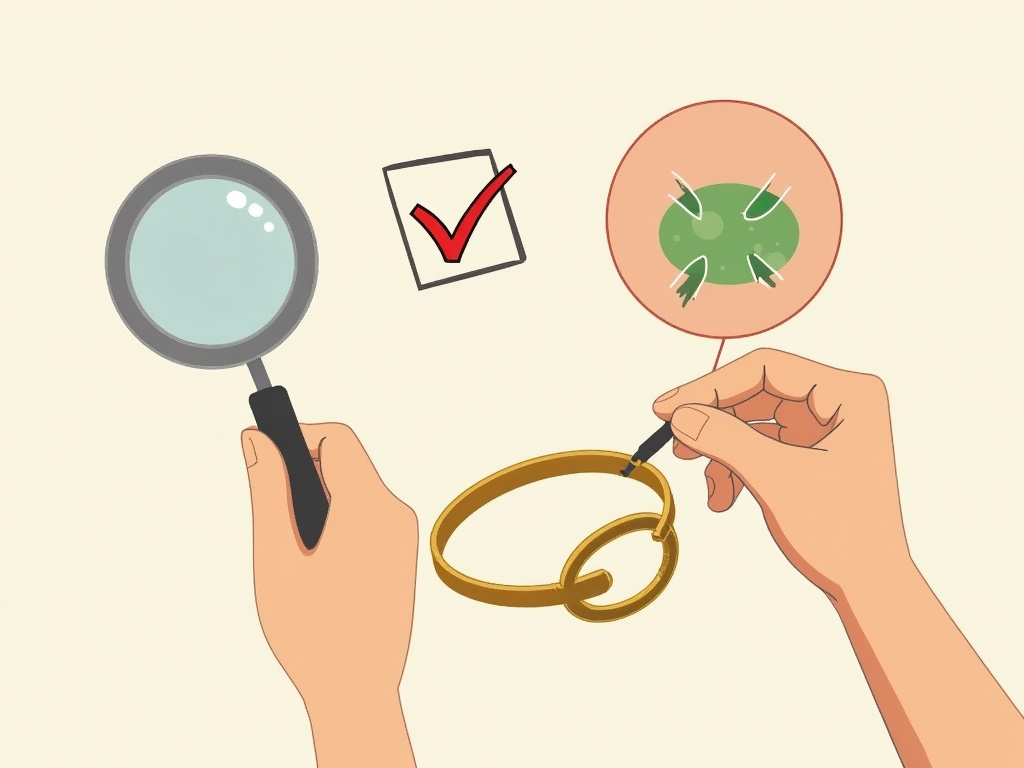
Don’t guess. Vet. This checklist transforms abstract advice into a concrete pre-purchase inspection. Skip a step, and you’re accepting a specific risk.
- Decode the Description. Look for “Nickel-Free Alloy,” “REACH/Prop 65 Compliant,” or branded alloys like “KITZ Dezincification-Resistant Brass.” “Gold-toned metal” is a red flag. If you skip this, you’re gambling on the metal content. I did, and ended up with a bracelet that left a precise rash pattern on my wrist for weeks.
- Interrogate Plating Thickness. For frequent-wear pieces, ask the seller: “What is the plating thickness in microns?” No answer means assume 0.1-0.3 µm flash plating, meant for display, not durability.
- Inspect the High-Friction Points. Look at earring posts, clasp interiors, ring bands. Are they a different, harder metal like surgical steel? Good sign. The same plated brass? They’ll wear through first and demand specific tarnish removal methods.
- Identify a Protective Coating. Some pieces have a clear lacquer sealant. It feels slightly plasticky. Know if yours has one, as it changes your cleaning tarnished jewelry approach, never use abrasives on it.
- Start Low-Risk. New to brass or have sensitive skin? Don’t start with earrings or a tight ring. Try a pendant. It’s the only way to learn how your unique chemistry interacts with that specific alloy.
How to Care for Brass to Make It Last (Really)
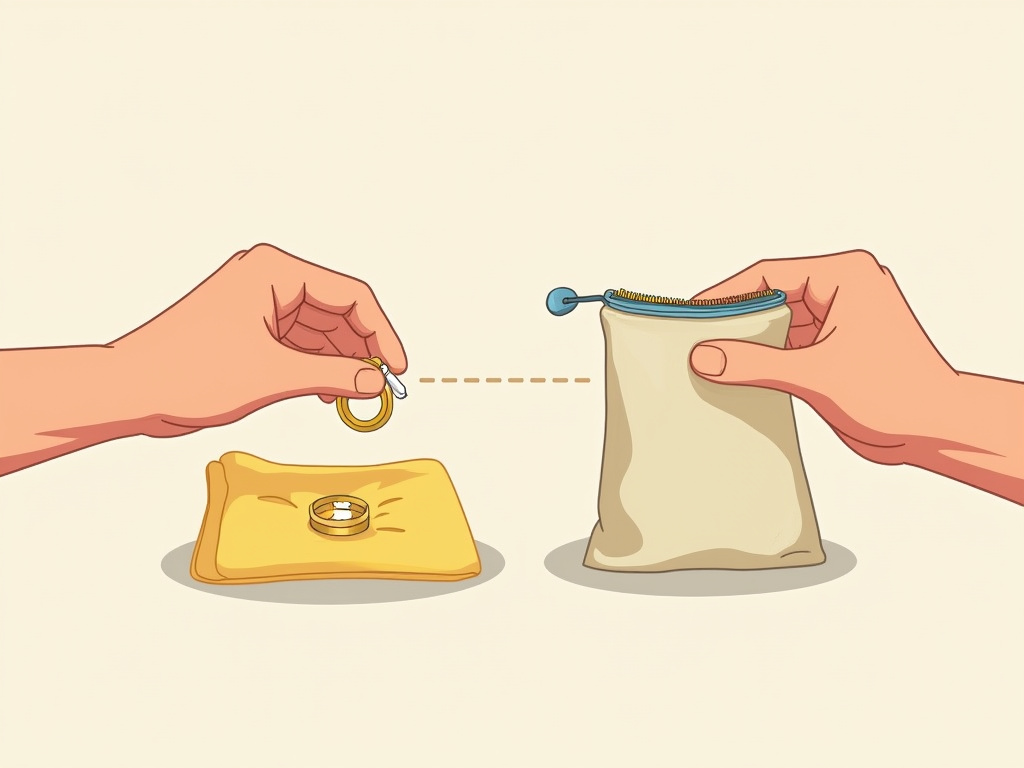
Care is the bridge between a piece that lasts a season and one that becomes a staple. The rules fork for plated vs. unplated.
For Unplated, Solid Brass
- Clean with mild soap, water, and a soft cloth. For stubborn tarnish, a paste of lemon juice and baking soda works, rinse and dry immediately. It’s similar to copper tarnish removal.
- Dry like it’s surgical equipment. Any residual moisture accelerates tarnish. Pat, don’t rub, with a lint-free cloth.
- Store with an anti-tarnish strip in a dry place. Never let pieces jumble together; they will scratch.
For Gold or Silver-Plated Brass
- Clean primarily with a dry polishing cloth. If you must wet clean, use a dedicated baking soda jewelry cleaner made into a paste, apply with a light touch, rinse instantly, and dry thoroughly.
- Avoid wearing it in water. Full stop. Take it off before showers, swimming, or workouts. Chlorine and salts are plating assassins.
- Store each piece separately in a soft pouch. This prevents the scratches that breach the plating and lead to preventing jewelry tarnish becoming a futile battle.
Common mistake: Using chemical dips or ultrasonic cleaners on plated brass. They don’t clean, they strip. You’ll be left with a dull, exposed base metal that tarnishes rapidly and can cause reactions.
How Brass Stacks Up Against Other Metals
This isn’t about good vs. bad, but right tool for the job. When should you spend more?
| Comparison | Best For | Think Twice If You Need |
|---|---|---|
| Brass vs. Sterling Silver | A warmer, gold-like look at a lower cost. Intricate, vintage-inspired designs. | A brighter, cooler shine and inherent tarnish resistance. Higher material value for heirlooms. |
| Brass vs. Stainless Steel | Detailed casting and a warmer aesthetic. Artisan-made, complex pieces. | Extreme durability, scratch-resistance, and guaranteed hypoallergenic properties (with 316L steel). |
| Brass vs. Gold-Filled | Experimenting with trends and occasional-wear statement pieces. | A “forever” piece for daily wear. Gold-filled material has a gold layer comprising at least 5% of total weight, lasting decades. |
If you need a piece for daily abuse and have sensitive skin, a tarnish-resistant jewelry metal like titanium or stainless steel is a safer long-term bet. If you want to play with bold fashion, brass delivers brilliantly.
Frequently Asked Questions
Does brass jewelry turn your skin green?
Yes, unplated brass often does. It’s a harmless chemical reaction between copper in the alloy and acids in your sweat, forming copper carbonate. A thick, intact plating prevents it completely.
Is brass jewelry safe for sensitive skin?
It can be, but selection is paramount. You need verified nickel-free alloy brass, ideally with a high-quality, thick plating (≥0.5 µm). Avoid unplated brass entirely if you’re sensitive. Always, always check for material disclosures.
How long does gold-plated brass jewelry last?
The plating thickness is everything. A thin flash plating (0.1–0.3 µm) can wear off at friction points in weeks of daily wear. Quality plating (0.5–1.0+ µm) with proper care can look great for 1-3 years before showing significant wear.
Can you shower with brass jewelry?
Don’t. Soap, hot water, and shampoo accelerate tarnishing on unplated brass and degrade the protective plating on plated pieces. It’s the fastest way to shorten your jewelry’s life.
What’s the difference between brass, bronze, and copper jewelry?
All are copper-based but differ in composition and color. Brass is copper + zinc (yellow-gold). Bronze is copper + tin (darker, reddish-brown). Copper is nearly pure (bright reddish-pink). Their care routines, like copper jewelry care, are similar, but bronze and copper are generally softer.
The Bottom Line
Brass is good for jewelry when you treat it as a category of engineered materials, not a single, simple metal. That warm, affordable piece can be a long-term companion if it’s built with a thoughtful alloy and a robust finish. Your job is to look past the attractive color and find the specification.
Seek out lead-free, nickel-free alloys from makers who disclose them. Demand meaningful plating thickness for anything you plan to wear more than occasionally. And commit to a simple, dry storage routine, it’s the single most effective thing you can do to preserve the life and look of any plated jewelry. When you respect the material science behind brass, it rewards you with lasting style without the precious metal price tag.
