
The Real Story Behind Jelly Bracelet Color Meanings
The rumored meanings behind jelly bracelet colors, like red for a lap dance or black for intercourse, were part of a widespread urban legend, not a real teen code. This “sex bracelet” panic, fueled by media reports in 2003, led to school bans despite sociologists finding 193 contradictory lists and no evidence of an actual game.
I still have mine. Tucked in a memory box with other Y2K relics is a tangled nest of neon plastic, a specific translucent purple one from Claire’s and a glittery blue “Silly Bandz” knockoff from Limited Too. To me, they were just cheerful junk jewelry. But in the fall of 2003, that purple bracelet got me a detention. A teacher, armed with a photocopied list from a concerned parent, declared it a “disruptive accessory” linked to kissing. The consequence? A note on my record and missing the 8th-grade Halloween dance. That incident taught me how adult fear can warp a simple fashion trend into a full-blown myth.
This article isn’t about that myth. It’s about the anatomy of a moral panic, how a TIME magazine article and a single note on a school bus spiraled into a national story. We’ll look at the supposed “Snap” game, the chaotic color charts, and why this legend felt so true. Most importantly, we’ll ground it in the tactile reality: the cool, slightly oily snap of the plastic, the stacks from mall kiosks, and what they actually meant on our wrists.
Key Takeaways
- The “sex bracelet” scare was a classic moral panic, catalyzed by a specific 2003 TIME magazine article and not by actual, widespread teen behavior.
- Academic research by sociologists Joel Best and Kathleen Bogle documented 193 different lists of color meanings, proving no universal code ever existed.
- The legend claimed a “Snap” game where breaking a bracelet obligated the wearer to perform a sexual act, a concept teens largely dismissed as rumor.
- While black was most consistently rumored to mean intercourse, other colors like green, purple, and glitter variants had wildly inconsistent associations.
- For most teens, these were cheap accessories from stores like Claire’s and Limited Too, worn for fashion, not as signals.
What Sparked the Jelly Bracelet Sex Code Panic?
The story didn’t start in school hallways. It was printed in a national magazine. On October 27, 2003, TIME published an article titled “Parents: Brace Yourselves,” detailing a “risque new twist” where jelly bracelets conveyed a sexual code. It named the game “Snap” and gave specific, alarming meanings: red for a lap dance, blue for oral sex. This piece became the primary source for every worried parent and school administrator.
The 2003 TIME magazine article “Parents: Brace Yourselves” is cited as the catalyst for the national panic, providing concrete color-act associations that were repeated uncritically by local news and school memos, transforming a rumor into reported fact.
Almost simultaneously, the domain sex-bracelets.com was registered, becoming a repository for user-submitted and increasingly exaggerated color lists. Then, a single, tangible piece of “evidence” appeared: a note found on a school bus at a local middle school, listing colors and acts, was tipped to an official by a concerned mother. This trifecta, major media, a dedicated website, and a physical note, created an undeniable narrative. Schools, including Fort McCoy in Marion County, Florida, and Alachua Elementary School, swiftly enacted bans by the end of 2003.
The panic resonated because it fit a pattern. Adults saw kids wearing masses of colorful, cryptic bands and assumed a secret language. The bracelets were cheap, ubiquitous, and visually overwhelming, perfect ingredients for an urban legend. By 2005, outlets like CBS News had cemented the “sex bracelet” label, creating a feedback loop where the bans themselves seemed to confirm the rumor’s truth.
TL;DR: The legend was manufactured by a 2003 TIME magazine report and amplified by a school bus note and new websites, leading to reactive school bans before most teens had even heard of the “game.”
How Was the “Snap” Game Supposed to Work?
The mechanics of the legend were simple and designed to provoke anxiety. According to the spreading story, wearing a colored jelly bracelet was an open invitation. If someone approached and snapped the bracelet off your wrist, you were obligated to perform the sexual act associated with that color. This was the core of the “Snap” game.
The concept leveraged the bracelets’ physical property, their satisfying, audible pop when broken, and turned it into a point of no return. In theory, it used social pressure and public spectacle to enforce “rules.” But did anyone actually play?
Common mistake: Believing the Snap game was a real, widely practiced teen ritual, sociologists found no evidence of widespread practice, and multiple teens interviewed at the time, like 15-year-old Roby Behrens, called them “a fashion thing.”
The evidence for actual gameplay is virtually nonexistent. In the same TIME article that spread the fear, teenager Roby Behrens stated, “It’s a fashion thing. You don’t need them to have sex, but people do use them to kiss or get to third base.” His quote highlights the chasm between rumor and reality. For most, they were just accessories. The legend, however, began to alter behavior. As one YouTube recollection notes, “Did people actually do this? No. But did guys actually try to break them off once the rumor was out? Yeah.” The story itself became the catalyst for actions that adults then misinterpreted as proof.
So, What Did the Jelly Bracelet Colors Actually Mean?
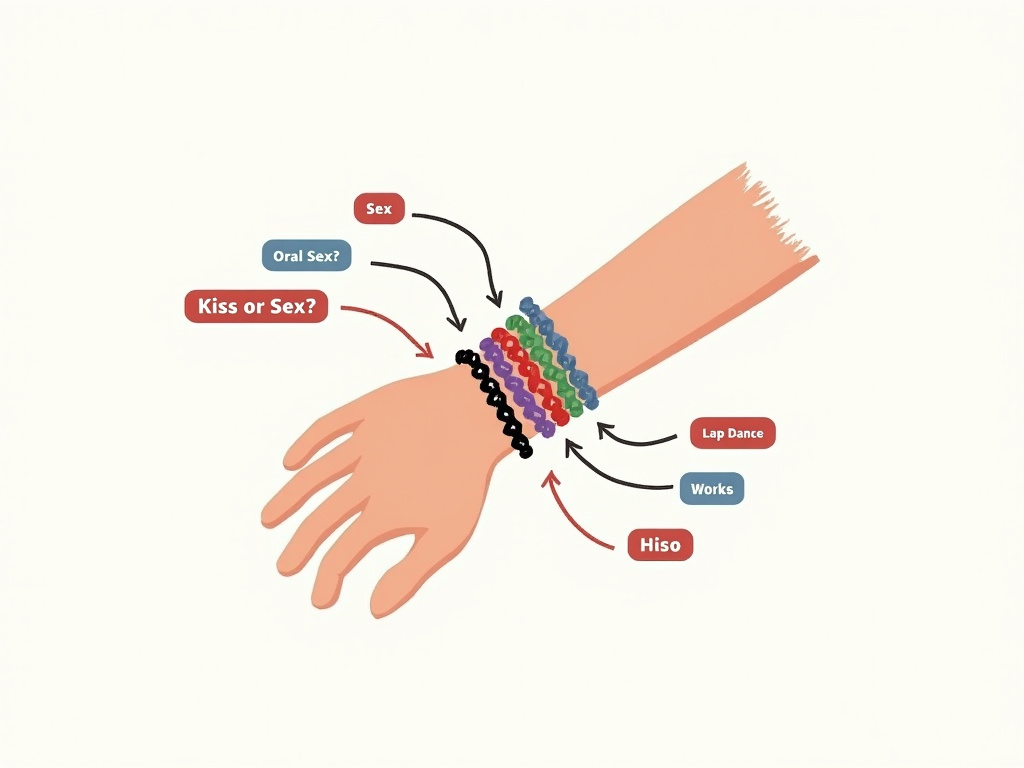
Here’s the collector’s insight you won’t find in a snippet: there was no real answer because there was no real code. If you search for a “gel bracelet Wikipedia article” today, you’ll find chaos. Sociologists Joel Best and Kathleen Bogle studied this systematically, collecting every list they could find from news reports, school memos, and websites. Their definitive finding? They compiled 193 different lists, featuring 48 different colors.
The only near-universal association was black, which almost always meant sexual intercourse. For other colors, consensus vanished. Green was frequently listed, but fewer than half the sources that included it assigned it to cunnilingus. Purple might mean kissing in one list and sex in another. Red’s link to lap dances was somewhat consistent, largely because it was copied from the original TIME article.
The sheer inconsistency is the proof it was folklore. A real, practiced subcultural code would have stabilized. This one mutated with every retelling, especially online. Glitter variants spawned a whole sub-legend of their own, glittery blue for anal sex, glittery green for “69”, inventions that reflected the panic’s escalation, not teen behavior.
| Color | Most Common Rumor | A Wild Alternate Meaning | Consensus Level |
|---|---|---|---|
| Black | Sexual Intercourse | “Missionary” sex | Very High |
| Blue | Oral Sex | Anal Sex (if glittery) | Medium |
| Red | Lap Dance | Lap Dance | High |
| Green | Oral Sex (on a girl) | “69” (if glittery) | Low |
| Yellow | Hug | Hug | Medium |
| Purple | Kissing | Sexual Intercourse | Very Low |
| Pink | Give a Hickey | Flash a Body Part | Low |
| Clear | Willing to Do Anything | Willing to Do Anything | Medium |
| Orange | Kiss | Kiss | Medium |
This table illustrates the chaos. It wasn’t a language; it was a game of telephone. The Wikipedia documentation on jelly bands aggregates this research, showing how the myth grew in the telling.
TL;DR: Alleged color meanings were all over the map. Black consistently meant intercourse, but for colors like green and purple, you’d find dozens of conflicting “meanings” across the 193 documented lists.
Why Did This Particular Legend Spread and Stick?
Moral panics require a perfect storm: a vulnerable group (children), an enigmatic symbol (color-coded plastic), and a perceived threat (hidden sexual activity). The jelly bracelet story had all three. It also bloomed in the early days of widespread internet use, where a local rumor could become a global concern in weeks.
Adults struggled to interpret a baffling teen trend. A wrist stacked with 20 bright bands from Claire’s or Jane’s Jewels kiosks looked like a complex semaphore system. The simpler, mundane truth, they were just affordable, colorful fun, was less compelling than the narrative of a secret sexual underworld.
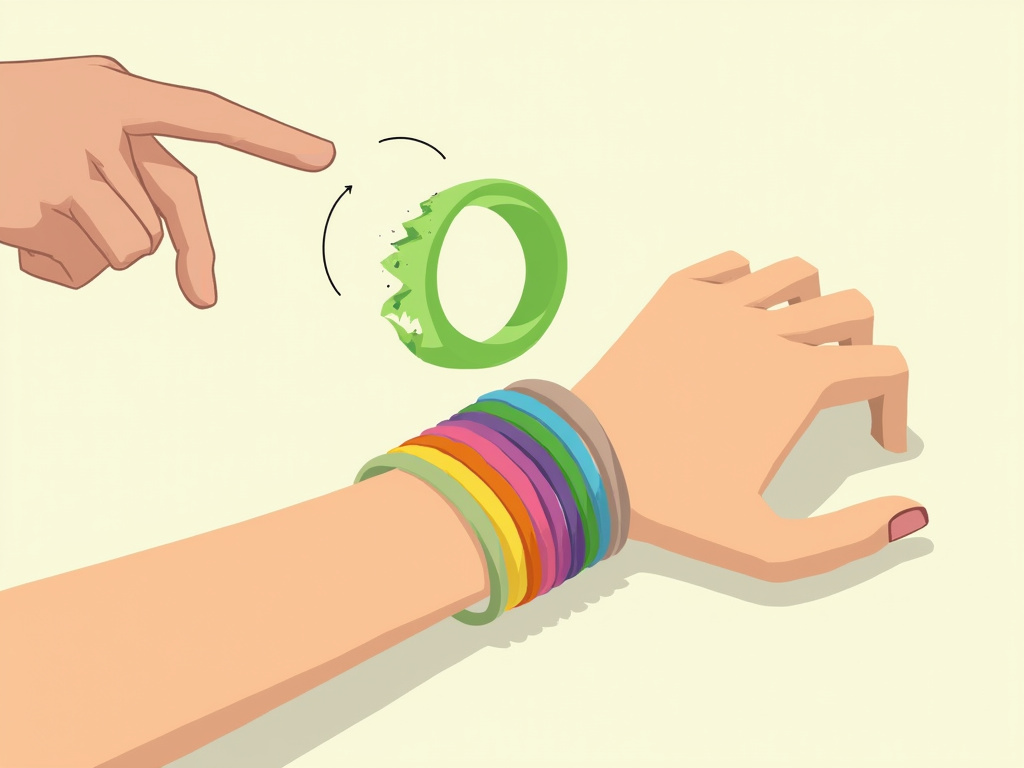
So if the game wasn’t real, why did the story stick so hard? (Ever notice how the best urban legends always have a grain of plausible physical detail?) The bracelets could snap. That tangible, audible pop was hijacked by the myth, giving a mundane action a sinister edge. Schools, acting from a duty to protect, banned first. These bans were reported in local news, which cited national outlets like TIME, creating a self-validating loop. If schools were banning them, the story must be real.
The legend also exploited a timeless anxiety: that adults are perpetually behind youth culture. The idea that kids had a whole secret language right under our noses was a seductive explanation for the inexplicable. It transformed a simple tarnish-resistant jewelry fad into a social crisis. Furthermore, the bracelets were the perfect scapegoat, tangible, visible, and easy to confiscate. Addressing complex social pressures around teen sexuality is hard; banning a piece of plastic is simple.
How Should You Care for Vintage Jelly Bracelets Today?
For collectors or nostalgia seekers, a bag of vintage jelly bracelets is a time capsule. Caring for them requires specific knowledge, as the plastic from that era can degrade. Here’s a practical guide to preserving these pieces of fashion history.
First, understand the material. Most were made of PVC, which can become sticky as plasticizers leach out over time. This isn’t dirt; it’s chemical breakdown.
Cleaning Process:
- Mix a solution of 50% isopropyl alcohol and 50% lukewarm water.
- Gently wipe each bracelet with a soft, lint-free microfiber cloth dampened with the solution. The alcohol cuts the sticky residue without clouding the plastic.
- Rinse briefly with clean water and pat dry immediately with another soft cloth.
- Let air dry completely flat before storing.
Before you start: Avoid harsh chemicals, abrasive scrubs, or soaking. These can permanently cloud, scratch, or warp the soft plastic. Never use boiling water, as it can melt or deform the bracelets instantly.
For storage, the goal is to prevent stress and tangling. Unlike metal chains that need preventing jewelry tangles in a box, these plastics are best laid flat.
| Storage Method | Pros | Cons | Best For |
|---|---|---|---|
| Flat in a Divided Tray | Prevents pressure points; easy to see colors. | Takes up more space. | A small, prized collection. |
| Hanging on a Multi-Peg Rack | No stress on any single bracelet; displays well. | Can stretch older, brittle plastic over time. | Sturdier, thicker bands. |
| Loose in a Soft Pouch | Simple, space-efficient. | Can lead to tangling and hidden pressure points. | Bulk storage of many bracelets. |
Common mistake: Storing them wound tightly together, the constant pressure at the stress points is why so many eventually snapped, which ironically fueled the “game” myth about their disposability. For other plastic or costume pieces, similar cleaning costume jewelry principles apply: gentle cleansers and mindful storage.
Frequently Asked Questions
Did any teenagers actually follow the jelly bracelet color code?
No credible sociological evidence supports widespread practice. For the vast majority, they were a fashion accessory bought by the bagful at mall stores. The “Snap” game was an urban legend propagated by media and adult anxiety, not a real teen ritual.
Why were schools so quick to ban them?
Administrators acted on alarming reports from major media outlets like TIME and CBS News, which presented the color-code rumor as established fact. Facing parental concern and wanting to preempt risk, many issued blanket bans. These policies then reinforced the public perception that the threat was genuine.
What is the most commonly remembered color meaning?
Across nearly all the rumored lists, a black jelly bracelet was consistently said to signify a willingness to have sexual intercourse. This was the closest thing to a “standard” in the myth, though it’s crucial to remember it remained part of the folklore, not a real signal.
Are jelly bracelets making a comeback?
They peaked in mainstream popularity in the early-to-mid 2000s and faded. Like many Y2K trends, they experience periodic niche revivals, often appreciated purely for their nostalgic, early-internet-era aesthetic, stripped of the controversial legend.
Can the plastic cause skin discoloration?
It’s possible, especially with cheaper metals used in clasps or metal charms on some versions. The green marks come from a reaction between skin acidity and copper or nickel alloys. If this is a concern, look for hypoallergenic jewelry concerns and stick to pure plastic styles.
Before You Go
The jelly bracelet color code was a story, not a reality. It was a narrative constructed from a few media reports, amplified by fear, and solidified by school bans, a classic moral panic. The existence of 193 different “decoder” lists is the clearest proof there was no consensus, only contagious rumor.
If you uncover a stash today, treat them as a slice of early-2000s fashion archaeology. Clean them with the gentle care you’d use for any maintaining costume pieces, store them without stress, and appreciate them for what they were to most of us: a cheap, colorful, and utterly innocent way to accessorize. The real lesson isn’t about a secret language; it’s about how easily a vibrant trend can be misunderstood and mythologized when we forget to listen to the people actually wearing it.
{
“@context”: “https://schema.org”,
“@type”: “HowTo”,
“name”: “How to Decode the Jelly Bracelet Color Urban Legend”,
“step”: [
{
“@type”: “HowToStep”,
“name”: “Identify the core legend”,
“text”: “The urban legend claimed that wearing a colored jelly bracelet signaled a willingness to perform a specific sexual act if someone broke the bracelet off your wrist.”
},
{
“@type”: “HowToStep”,
“name”: “Recognize the Snap game”,
“text”: “The rumored game was called ‘Snap.’ A person would approach, snap the bracelet, and the wearer was supposedly obligated to perform the act associated with that color.”
},
{
“@type”: “HowToStep”,
“name”: “Consult conflicting color charts”,
“text”: “Compare any found color list against the 193 different versions documented by sociologists. Black almost always meant intercourse, but other colors like green, purple, and red had wildly varying meanings.”
},
{
“@type”: “HowToStep”,
“name”: “Check the source and date”,
“text”: “Any definitive list you find likely originates from the 2003-2005 media panic. Look for citations to TIME Magazine’s 2003 article ‘Parents: Brace Yourselves’ or the CBS News report ‘Fun Fashion, Or Sex Signal?'”
},
{
“@type”: “HowToStep”,
“name”: “Separate myth from fashion”,
“text”: “Understand that for the vast majority of teens, the bracelets were a simple fashion accessory. The sexual code was an urban legend spread by adults and media, not a practiced game.”
}
]
}
{
“@context”: “https://schema.org”,
“@type”: “FAQPage”,
“mainEntity”: [
{
“@type”: “Question”,
“name”: “Did any teenagers actually follow the jelly bracelet color code?”,
“acceptedAnswer”: {
“@type”: “Answer”,
“text”: “No credible sociological evidence supports widespread practice. For the vast majority, they were a fashion accessory bought by the bagful at mall stores. The “Snap” game was an urban legend propagated by media and adult anxiety, not a real teen ritual.”
}
},
{
“@type”: “Question”,
“name”: “Why were schools so quick to ban them?”,
“acceptedAnswer”: {
“@type”: “Answer”,
“text”: “Administrators acted on alarming reports from major media outlets like TIME and CBS News, which presented the color-code rumor as established fact. Facing parental concern and wanting to preempt risk, many issued blanket bans. These policies then reinforced the public perception that the threat was genuine.”
}
},
{
“@type”: “Question”,
“name”: “What is the most commonly remembered color meaning?”,
“acceptedAnswer”: {
“@type”: “Answer”,
“text”: “Across nearly all the rumored lists, a black jelly bracelet was consistently said to signify a willingness to have sexual intercourse. This was the closest thing to a “standard” in the myth, though it’s crucial to remember it remained part of the folklore, not a real signal.”
}
},
{
“@type”: “Question”,
“name”: “Are jelly bracelets making a comeback?”,
“acceptedAnswer”: {
“@type”: “Answer”,
“text”: “They peaked in mainstream popularity in the early-to-mid 2000s and faded. Like many Y2K trends, they experience periodic niche revivals, often appreciated purely for their nostalgic, early-internet-era aesthetic, stripped of the controversial legend.”
}
},
{
“@type”: “Question”,
“name”: “Can the plastic cause skin discoloration?”,
“acceptedAnswer”: {
“@type”: “Answer”,
“text”: “It’s possible, especially with cheaper metals used in clasps or metal charms on some versions. The green marks come from a reaction between skin acidity and copper or nickel alloys. If this is a concern, look for hypoallergenic jewelry concerns and stick to pure plastic styles.”
}
}
]
}
