
What Do Bracelet Colors Mean? A Guide to Messages & Alerts
This post contains affiliate links. As an Amazon Associate, we earn from qualifying purchases.
Bracelet colors hold vastly different meanings based on context. A purple plastic hospital wristband signals a Do Not Resuscitate order, while a purple beaded bracelet often shows support for Alzheimer’s awareness. Yellow typically means “fall risk” in a hospital but symbolizes hope or happiness elsewhere. The crucial rule is to never assume, always identify the context, material, and any engraved text first.
I learned the hard way that color is a language, and fluency matters. Early in my collecting, I found a stunning 1920s glass beaded bracelet dyed a deep indigo. Assuming the threads were cotton, I gave it a gentle soak. The dye from the silk core bled everywhere, staining the milky opalescent beads a murky grey. That ruined heirloom taught me to look beyond the hue, to the material, the construction, the very feel of a piece, before I assign it any meaning or care.
This is the heart of decoding bracelets: color is just the first word in a much longer sentence. A nurse isn’t seeing “purple”; she’s seeing a specific vinyl band with a certain clasp, in a specific room, and her training kicks in. A friend isn’t seeing “yellow”; she’s seeing the embroidery floss you chose, the pattern you tied, and the memory you shared. Let’s translate both languages.
Key Takeaways
- Hospital purple is a command, not a suggestion. Following an American Hospital Association standard, it universally signals a Do Not Resuscitate (DNR) order in U.S. clinical settings, a point the FDA reinforced in 2021 due to dangerous confusion.
- There is no single global hospital color code. While many facilities adopt the AHA’s palette, individual hospitals can and do set their own systems, always verify the facility’s specific policy.
- The material tells the first part of the story. Single-use plastic snap bands are hospital-issued. Engraved metal like stainless steel denotes a permanent medical alert. Woven thread, beads, or decorative metals belong to the personal, symbolic realm.
- Symbolic colors borrow from awareness ribbons. Pink for breast cancer, green for mental health, teal for ovarian cancer, these meanings are cultural and can overlap, often clarified by charms or engraved text.
- Care is dictated by material, not color. Using the wrong cleaning method can permanently destroy the bracelet’s message, whether it’s a medical ID or a treasured friendship token.
What does a purple hospital bracelet mean?
In August 2021, the FDA issued a letter to medical device manufacturers warning that non-standard use of purple wristbands could lead to potential confusion and inappropriate medical treatment, following a complaint where a band’s meaning was misinterpreted.
You walk into a patient’s room. On their wrist is a purple band. In that moment, you’re not interpreting a color, you’re executing a protocol. In most U.S. hospitals, that specific shade of purple, printed on that slightly stiff, single-use vinyl, means Do Not Resuscitate.
The push for this clarity started in 2008. The American Hospital Association looked at a patchwork of facility-specific codes and recommended a national standard to reduce lethal errors. Their goal was simple: a traveling nurse could enter any hospital and understand the alerts without hesitation.
Common mistake: Assuming all hospitals use the same colors, adoption of the AHA standard is still uneven. Misinterpreting a band can alter a care plan in seconds, a risk highlighted in toolkits like the Colorado Hospital Association’s 2017 implementation guide.
The AHA’s recommended palette provides a critical baseline. Here’s what you’re most likely to encounter:
| Color | Standard Meaning | Immediate Action Required |
|---|---|---|
| Purple | Do Not Resuscitate (DNR) | Confirm the order in the chart. Do not initiate CPR or advanced cardiac life support. |
| Red | Allergy Alert | Check the chart for specific allergens before administering any medication, food, or contrast dye. |
| Yellow | Fall Risk | Implement fall precautions: bed alarm on, non-slip socks, frequent checks, and a clear path to the bathroom. |
| Pink | Restricted Extremity | This arm is not for blood draws, IVs, or blood pressure checks. Use the opposite limb. |
| Green | Latex Allergy | Use only latex-free gloves, catheters, and equipment in all patient contact. |
TL;DR: In a hospital, purple = DNR, red = allergy, yellow = fall risk. But always double-check the facility’s policy, it’s not a universal law.
Why can’t I trust the color alone?
The AHA’s 2008 recommendation was just that, a recommendation. There is no federal law mandating these colors. The FDA letter to industry on wristbands exists precisely because variation persists. Some hospitals use purple for “special care instructions.” Others might use orange for DNR.
This is why material is your first clue. That flimsy, non-stretchy plastic with a snap clasp is a hospital-issued alert. A decorative beaded or metal bracelet is not. The first step is always context: Is this a clinical setting?
If you are a patient or family member, ask. “What does this colored band mean for my care?” If you are a caregiver in an unfamiliar facility, locate their color-code policy, it’s often posted in nursing stations. That five-minute check is a non-negotiable step.
How do symbolic bracelet colors differ from medical ones?
Strip off the hospital band? The color language flips entirely. Purple isn’t a stop sign anymore. Now it’s a memory. (My grandmother’s Alzheimer’s bracelet was a simple lavender bead strand, she’d fiddle with it when she got anxious.) This system borrows from awareness ribbons and personal sentiment, not clinical protocol.
A pink ribbon means breast cancer awareness; a pink bracelet extends that symbol onto your wrist. It’s a statement, a fundraiser, a quiet nod to a shared experience. The same goes for green (mental health), blue (autism awareness), and teal (ovarian cancer). But unlike the hospital’s rigid code, here ambiguity is often the point. A single color can represent multiple causes.
A Guide to Common Symbolic Colors
These meanings are cultural, not clinical. They overlap and evolve.
- Pink: Breast cancer awareness, love, femininity.
- Red: Love, passion, HIV/AIDS awareness, heart disease awareness.
- Orange: Multiple sclerosis awareness, ADHD awareness, enthusiasm, creativity.
- Yellow: Happiness, hope, suicide prevention (often with a semi-colon symbol), support for deployed troops.
- Green: Mental health awareness, growth, environmentalism.
- Blue: Trust, loyalty, child abuse prevention, autism awareness.
- Purple: Alzheimer’s disease awareness, spirituality, domestic violence awareness.
- White: Peace, purity, lung cancer awareness.
- Black: Strength, mourning, melanoma awareness.
These bracelets often include charms, engraved words, or specific patterns to clarify intent. A plain blue braided cord might mean trust between friends. A blue bracelet stamped with a puzzle piece signifies autism support. This is where personal care becomes crucial; a tarnished silver awareness charm loses its symbolic power. Regular silver jewelry cleaning with a product like Connoisseurs Dazzle Drops keeps the message legible, while proper jewelry storage solutions in Pacific Silvercloth pouches can prevent tarnish in the first place.
What happens when medical and symbolic meanings collide?

This is the dangerous overlap. An elderly person with Alzheimer’s wears a purple beaded awareness bracelet. They’re admitted to a hospital that uses purple for DNR. A rushed staff member might see the color and make a catastrophic assumption.
The rule is simple: Hospital-issued bands override everything else. Clinical staff are trained to look for the official, single-use band and should remove personal bracelets upon admission to prevent this confusion. If you have a loved one going into the hospital, either remove their symbolic bracelets or explicitly tell every caregiver, “This purple bracelet is for Alzheimer’s awareness, not a DNR order.”
This overlap is precisely why the FDA got involved. Their guidance stresses that purple should be reserved only for DNR status in a medical context. It’s a warning to manufacturers, hospitals, and to us as wearers.
What is the personal meaning behind friendship bracelet colors?
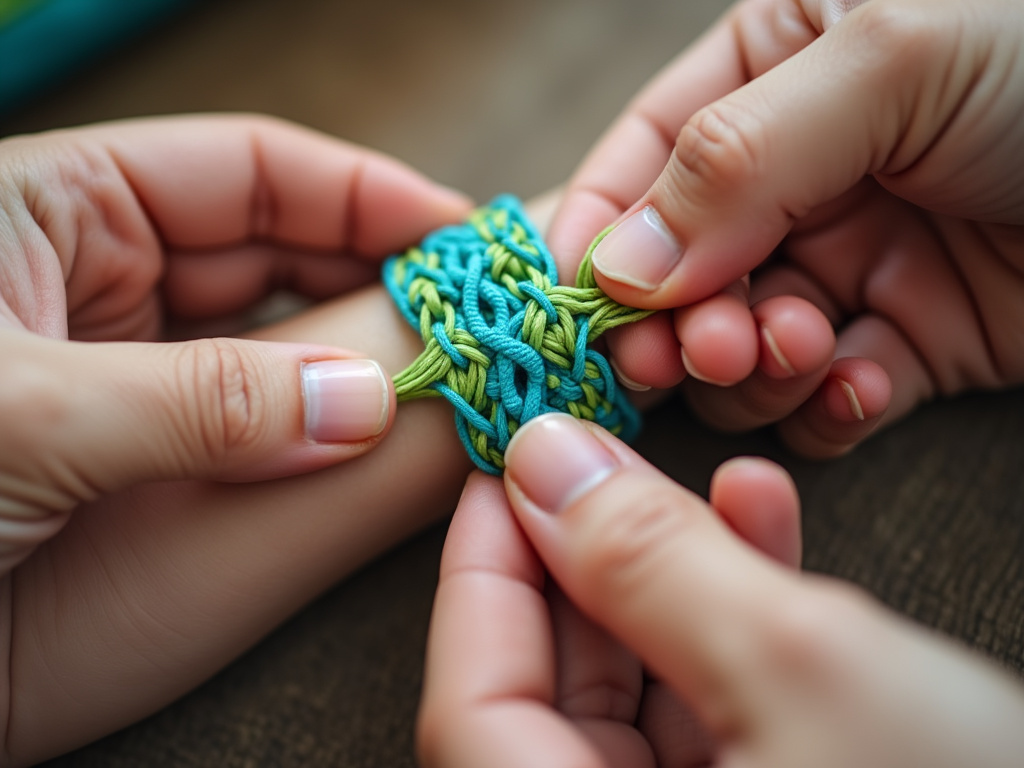
Walk through any summer camp or craft fair, and you’ll see them: intricate patterns woven from embroidery floss, tied onto friends’ wrists. The friendship bracelet revival is in full swing, and its color language is intimate and private.
Unlike awareness ribbons, the meaning here is often invented. Two friends might choose specific colors that represent an inside joke, a shared favorite song, or a memory. The act of tying the bracelet onto someone else’s wrist, with the promise not to remove it, is the real ritual. The colors are just the medium.
I made a friendship bracelet with alternating green and blue threads for a friend moving across the country. Green for the growth we’d had, blue for the sadness of the distance. She wore it until the threads frayed and snapped months later, long after the move. The meaning wasn’t in a public cause; it was in that slow unraveling, a private countdown of missing someone.
While there are common suggestions, red for love, yellow for joy, blue for trust, they are not rules. The true meaning is in the knot, the time, the intention. This is the polar opposite of the hospital’s rigid code.
How should I clean different types of colored bracelets?
A bracelet’s meaning lasts only as long as the bracelet itself. Dirt, sweat, and tarnish can obscure engravings and discolor threads. Your cleaning approach must be dictated by material, not sentiment. Using the wrong method can erase the message you’re trying to preserve.
Here’s a diagnostic table to match the problem to the proper care:
| Bracelet Type | Correct Cleaning Method | What Happens If You Use the Wrong Method |
|---|---|---|
| Hospital Plastic Band | Do not clean. Replace it. | Cleaning with alcohol or soap can dissolve the ink, making the color code and patient info illegible. |
| Engraved Medical ID (Stainless Steel) | Mild soap, warm water, soft-bristled toothbrush for engravings. Dry immediately with a microfiber cloth. | Soap residue builds up in the engraving, hiding critical text. Leaving it wet promotes water spots on even stainless steel. |
| Silver Awareness Bracelet | Use a dedicated silver polish like Goddard’s Silver Polish or a paste of baking soda and water. Rinse and dry thoroughly. | Tarnish turns the metal black, making any engraved ribbons or symbols impossible to see. Abrasive cloths can scratch the surface. |
| Gold-Plated or Gold-Tone | Damp cloth only. Avoid all chemicals, even mild soap. | Harsh cleaners strip the thin gold layer, revealing the base metal underneath and completely changing the bracelet’s color and meaning. |
| Woven Thread (Friendship) | Spot clean only with a cloth dampened with water and a drop of castile soap. Air dry flat on a towel. | Immersing it causes threads to bleed dye and knots to swell and deform, irrevocably ruining the pattern and the memory it holds. |
TL;DR: Metal needs polishing, thread needs spot cleaning, and hospital bands should never be cleaned, just replaced.
Material-Specific Care Instructions
For metal medical IDs and awareness bracelets, keeping engravings legible is key. After general jewelry cleaning with soapy water, dry thoroughly. For tarnished jewelry, a targeted approach is needed. A tarnished copper bracelet requires a different solution (often lemon juice and salt) than a tarnished silver bracelet. The best strategy is preventing jewelry tarnish altogether with anti-tarnish strips and proper storage.
Delicate pieces demand gentler methods. For beaded bracelets with stones, use a soft, dry cloth. Many gems are porous and can be damaged by water; consult a guide for gemstone jewelry care. For fashion pieces, cleaning costume jewelry often means just a wipe with a dry cloth, as plating can be thin. When in doubt, a soft brush and mild dish soap are safe for most gold jewelry cleaning needs, provided you dry the piece immediately.
What steps should I take if I’m unsure of a bracelet’s meaning?
You see a colored band on someone’s wrist. Before you act or assume, follow this sequence.
- Identify the context. Is this a hospital room or a coffee shop? Hospital plastic is clinical. Decorative metal or thread is personal.
- Inspect the material and details. Is it a single-use plastic snap band? Is there engraved text like “DNR” or “ALLERGY”? Is there an awareness ribbon charm or a woven pattern?
- Refer to the applicable code. In a healthcare setting, find and use the facility’s specific color-code chart. Do not guess. In a personal context, consider common symbolic meanings or ask the wearer.
- When the stakes are high, ask directly. If a patient’s care is involved, ask the charge nurse or check the medical chart. If it’s a friend’s bracelet, you can simply say, “I love your bracelet, does the color have a special meaning?”
The worst thing you can do is see a color, decide you know what it means, and act. In a medical setting, that action could be wrong. In a personal one, you might miss a chance to connect over a story. When I’m curating pieces for TheJewelryNook, I always ask the story first. The color is just the beginning.
Frequently Asked Questions
What does a purple bracelet mean?
In a hospital, a purple plastic wristband universally signals a Do Not Resuscitate (DNR) order, per American Hospital Association standards. Outside clinical settings, a purple bracelet, especially beaded or woven, typically shows support for Alzheimer’s disease awareness, spirituality, or domestic violence awareness. Context is everything.
What does a yellow bracelet mean?
In healthcare, yellow designates a fall risk, triggering specific safety protocols. Symbolically, yellow represents happiness, hope, or suicide prevention awareness, often featuring a semi-colon symbol.
What does a red bracelet mean?
Red is a high-alert color. In hospitals, it warns of life-threatening allergies. In personal contexts, it symbolizes love, passion, or awareness for HIV/AIDS or heart disease.
Are hospital bracelet colors the same everywhere?
No. While many U.S. hospitals follow AHA guidelines, there is no single global mandate. Individual hospitals, and even units within a hospital, can have their own systems. The FDA’s 2021 letter addressed the risks of this very inconsistency.
How can I tell if a bracelet is a medical alert or just symbolic?
Medical alert bracelets are typically engraved metal (stainless steel, titanium) or have a standardized medical emblem. Hospital admission bands are single-use, printed plastic. Symbolic bracelets are often woven thread, beads, or decorative metals and may feature awareness charms.
How do I clean a bracelet without ruining it?
The method is 100% material-dependent. Metal IDs need gentle soap and water; silver requires polish; woven thread should only be spot-cleaned. Never immerse delicate or costume jewelry cleaning in water, and always dry pieces thoroughly after any DIY tarnish removal attempt.
The Bottom Line
Bracelet colors speak a silent, dual language. In a hospital, that language is a strict, life-saving code. Outside, it’s a fluid dialect of memory, support, and private connection. The most important skill you can develop is knowing which language you’re reading.
Start with the material, that single-use plastic snap, that engraved stainless steel, those hand-woven threads. Let that tell you the context. Then, look for the clarifying details: the stamped text, the charm, the pattern. And when it truly matters, ask. That moment of verification, whether with a chart or a friend, transforms a guess into understanding. It’s how we ensure the stories we wear, from the direst medical directives to the most tender friendships, are read exactly as they were intended. Keep those stories clear with the right care, so their meanings endure.
