
Discover What a Wedding Ring Symbolizes in History & Today
This post contains affiliate links. As an Amazon Associate, we earn from qualifying purchases.
A wedding ring symbolizes an unending circle of commitment, representing fidelity, eternity, and the legal and emotional union between partners. Its placement on the left hand’s fourth finger stems from the ancient Roman belief in the ‘vena amoris’ or ‘vein of love’ thought to run directly to the heart.
Most people think the meaning stopped evolving in ancient Rome. They see the circle, they hear ‘vein of love,’ and they check the box. The real story is messier. That little band has been a legal contract, a public claim of ownership, a financial transaction, and even a forbidden object replaced by a thimble.
This guide traces the symbol from woven reeds to platinum, separating romantic myth from historical fact. You will see how the ring’s meaning has been rewritten by religion, law, and sheer practicality for over five millennia.
Key Takeaways
- The circular shape is the oldest symbol, representing eternity with no beginning or end, a concept first recorded in ancient Egypt over 5,000 years ago.
- The meaning radically shifted from a Roman token of ownership to a medieval Christian symbol of mutual fidelity and a legal seal for marriage contracts.
- Specific historical moments changed the object itself: Puritans gave thimbles, 16th-century lovers engraved “posy” poems inside bands, and 19th-century superstitions declared it unlucky to ever remove the ring.
- For many people, from electricians to actors, the ring’s greatest symbolism is honoring the marriage by not wearing it, due to legitimate safety risks.
- Proper care, like following a trusted diamond ring care guide, is a modern symbolic act of preserving the commitment it represents.
The Core Symbolism: Eternity, Fidelity, and Union
The ring’s power lives in layers. At its most basic, the shape says everything. A circle has no beginning and no end. This is the concept of eternity. Ancient Egyptians, over five millennia ago, were the first to formalize this idea with rings made of braided hemp or reeds. The material was perishable, but the symbol was permanent. They placed this endless circle on the fourth finger of the left hand, believing a special vein ran directly from that finger to the heart. They called it the ‘vena amoris.’
The wedding ring’s primary symbolic function is as a circular, public token representing an unbreakable, eternal bond of fidelity between two people, often sanctified by legal or religious ceremony.
Fidelity is the next layer. The ring is a physical pledge of faithfulness. In medieval Europe, the ring’s role in the church wedding ceremony transformed it into a sacred vow. Giving the ring became part of the sacrament. This merged the ancient symbol of eternity with a religious promise before God and community. The ring turned the private promise into a public fact.
Finally, the ring signifies union. It is the tangible proof of two lives merging into a single partnership. This is where the cultural history of the wedding ring shows its legal teeth. For centuries, the ring’s exchange was a legally binding act, a seal on a contract. The 1549 Book of Common Prayer explicitly linked the ring to a transfer of wealth, with the groom saying, “This gold and silver I give thee,” after placing the ring. The ring was both romantic symbol and financial instrument.
TL;DR: The ring is a three-part symbol: its circle means eternity, its exchange vows fidelity, and its history enforces a legal and emotional union.
A Timeline of Changing Meanings
The ring’s symbolism is not a static plaque on a museum wall. It is a living tradition that has been argued over, rejected, and reinvented. Each era left its mark.
The ancient Romans adopted the Egyptian idea but swapped symbolism. Their rings were often iron, speaking less of love and more of permanent, unbreakable control. The ring represented a legal claim of ownership by the husband over the wife. It was a business transaction made visible.
The medieval church Christianized the symbol. The ring became central to the marriage sacrament, moving the focus from a civil contract to a spiritual covenant. Gold became standard, reflecting the purity and permanence of the vow before God. This era also popularized the “posy ring” in the 16th century, a band engraved inside with a short love poem or ballad. Shakespeare mentioned them. The symbolism became intimate, hidden, and personal.
Then came the Puritans in the mid-17th century. They saw rings as pagan frivolity linked to church ritual. They reportedly banned them. In their place, a man might give his betrothed a thimble. Many women, practical and symbolic, would later cut off the thimble’s top to wear the band as a ring. The meaning persisted even when the object was forbidden.
The 19th century introduced new superstitions. In the West, it became considered actively unlucky to remove a wedding ring once placed on the finger in church. Losing a ring was thought to portend evil or death. The object itself gained magical weight.
| Era | Primary Symbolism | Common Material | Key Shift |
|---|---|---|---|
| Ancient Egypt (3000+ BCE) | Eternal, unending love & connection to heart | Hemp, Reeds | Establishes circular shape & finger lore |
| Ancient Rome | Legal ownership, permanent claim | Iron | Shifts from love to civil control |
| Medieval Europe | Sacred vow, mutual fidelity before God | Gold | Church adopts & sanctifies the ritual |
| Puritan Influence (17th C.) | Rejection of ritual; practicality | Thimble (modified) | Symbol survives object’s prohibition |
| Victorian Era (19th C.) | Luck, superstition, public respectability | Gold, Gemstones | Ring becomes an unlucky-to-remove talisman |
TL;DR: Symbolism evolved from eternal love to ownership, to sacred vow, to forbidden object, and finally to a superstition-laden token of luck, reflecting each era’s values.
Why the Left Hand’s Fourth Finger?
The tradition is almost universal in the West, but its origin is anatomical myth. The story of the ‘vena amoris’ is persistent poetry. Ancient Egyptians and Romans genuinely believed a specific vein ran directly from the fourth finger on the left hand to the heart. Placing the ring there created a direct physical link to the seat of emotion. Modern anatomy knows no such singular vein exists. The symbolism, however, was cemented.
The practical reason might be simpler. For most people, the fourth finger is the least used and most protected finger on the non-dominant hand. For a right-handed majority, wearing a precious metal ring on the left hand’s fourth finger meant it was less likely to be damaged during daily work. The tradition protected the asset.
Common mistake: Assuming the “ring finger” tradition is universal, in many Orthodox Christian, German, Norwegian, and Indian cultures, the ring is worn on the right hand. The left-hand tradition is dominant but not global.
The choice of hand also carries meaning. The left hand has historically been associated with the heart, which sits slightly left of center in the chest. The right hand was often linked to oaths and public vows (as in raising a hand to swear). Placing the marriage symbol on the left side subtly prioritized the private, heartfelt commitment over the public pledge.
More Than Love: Legal, Financial, and Protective Roles
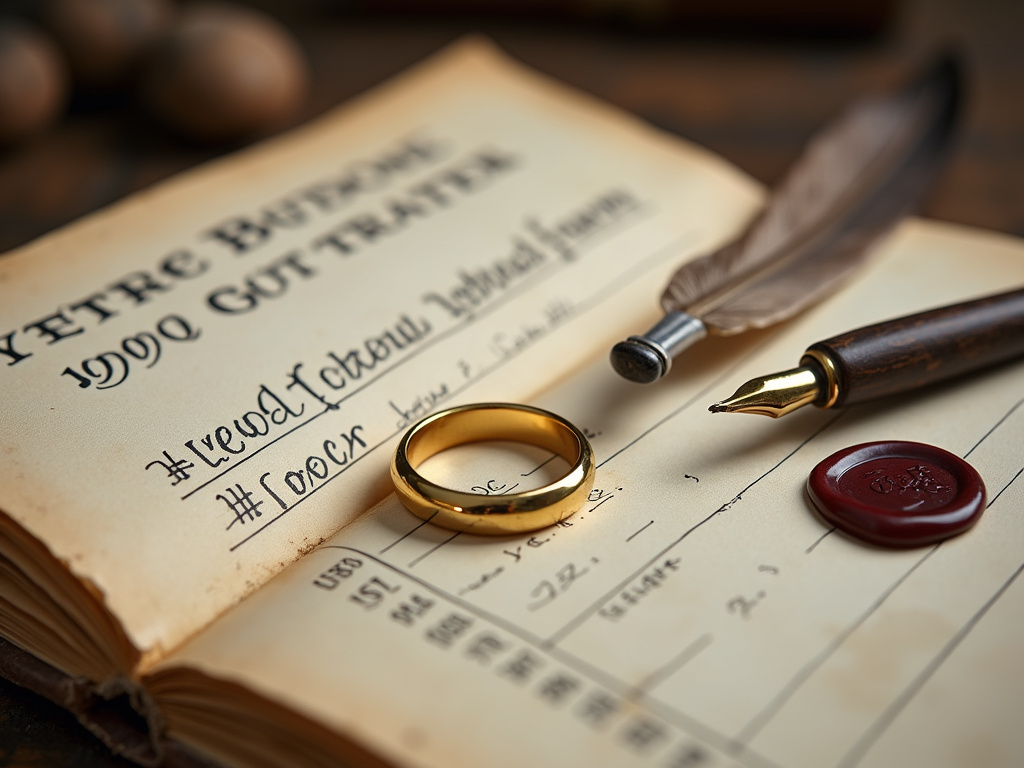
To view the ring only as a romantic symbol is to miss half its history. For centuries, its primary function was contractual.
In Roman law, the ring was part of the marriage agreement. It sealed the deal. A stark example survives in an old German conditional exchange formula: “I give you this ring as a sign of the marriage which has been promised between us, provided your father gives with you a marriage portion of 1000 Reichsthalers.” The ring was contingent on the dowry. This evolution of the wedding band from contract to love token is a central thread in its history.
The ring also served as emergency financial security. In a time when women had limited property rights, the wedding band was often the most valuable object a wife personally owned. It was a liquid asset she could sell or pawn in crisis. The shift to precious metals like gold and silver, highlighted in the 1549 Book of Common Prayer ritual, formalized this role. The groom’s gift of “this gold and silver” was literal wealth transferred to the bride.
Today, the protective role is different but just as serious. For individuals in certain trades, not wearing the ring is the act of care.
- Electricians and machinists: Risk of degloving injuries or electrical conductivity.
- Healthcare workers and chefs: Hygiene protocols and risk of tearing gloves.
- Police officers and athletes: Risk of catching the ring and causing injury.
- Actors: Character authenticity and costume changes.
For these individuals, the ring’s symbolism is honored by its safe storage, perhaps on a chain around the neck, not by its dangerous wear. This practical respect is a modern form of the ring’s protective meaning.
What Different Styles and Materials Symbolize
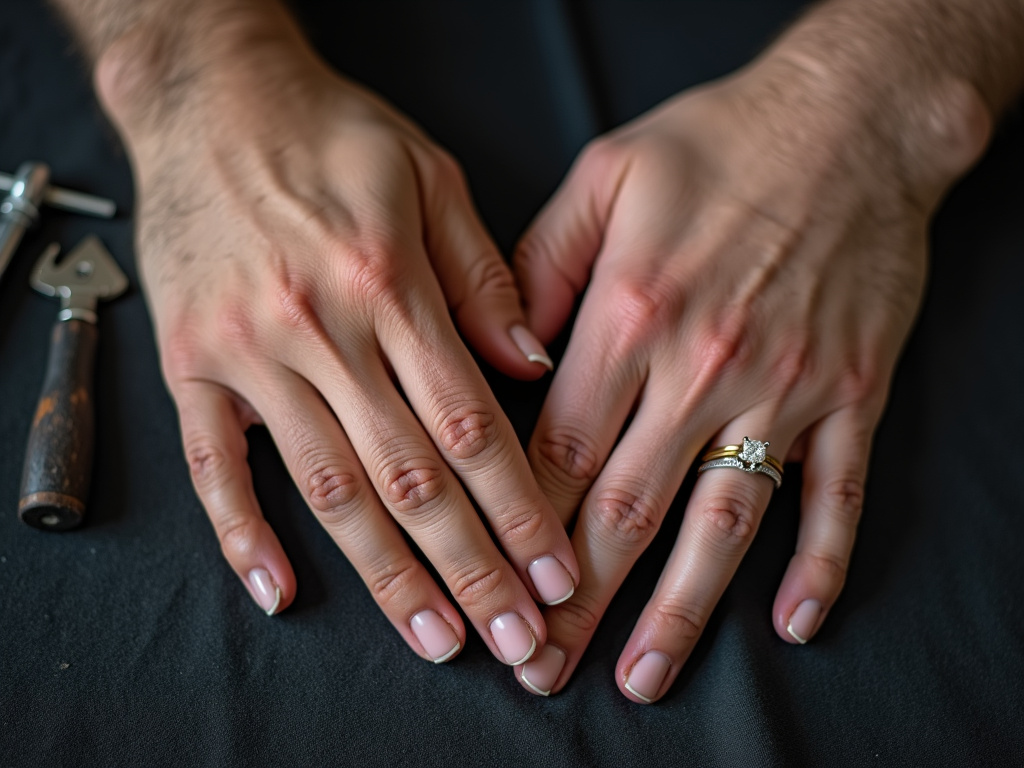
The ring’s design whispers its own subtext. The metal, the stones, and the style are a language.
Gold is the classic. Its incorruptibility symbolizes permanence and purity. Yellow gold speaks to tradition and warmth. White gold or platinum offers a modern, sleek look, often symbolizing strength and contemporary values. Silver, while less common for wedding bands due to its softness, can symbolize clarity and calm.
Gemstones add narrative. The classic diamond, with its unmatched hardness, represents enduring strength and inviolable commitment. The late-19th century “Toi et Moi” (French for “you and me”) ring, featuring two gems set side by side, explicitly visualized two individuals choosing to share a single life. A gemstone care guide is essential for preserving these symbolic stones.
The style of the band itself holds meaning. A simple, unadorned band emphasizes the purity of the promise and the equality of the partners. An elaborately engraved or diamond-paved band can symbolize celebration, abundance, and the weaving together of complex lives. A man’s wider band versus a woman’s narrower one is a fading tradition, with many couples now choosing matching unisex styles to symbolize true partnership.
| Element | Traditional Symbolism | Modern Interpretation |
|---|---|---|
| Plain Gold Band | Purity, simplicity, eternal love | Focus on commitment over ornament; gender-neutral |
| Diamond Band | Strength, invincibility, value | Celebration of resilience; a personal milestone marker |
| Two-Tone Metal | Union of two different individuals | Blending of personalities or family traditions |
| Engraved Inscription | Private, intimate message (modern ‘posy ring’) | Personalization; a secret known only to the couple |
| Matching Partner Bands | Equality in the partnership | Rejection of gendered norms; visual unity |
Choosing a ring is the first act of writing your own story into this long history. Protecting that choice requires knowledge, from the ring appraisal process for insurance to daily gold jewelry maintenance.
When the Ring Itself Tells a Story
Some rings carry meaning beyond the universal. They become archives of specific lives.
There is the recorded case of a German peasant who wore the wedding rings of four late wives. Each band was a chapter, a life shared, a loss endured. The ring was not just a symbol of a current union but a memorial to love that had existed. Conversely, a 19th-century source notes a German-born widow who had her husband’s wedding ring blessed after his death and wore it herself. The ring transformed from a mutual symbol into a sacred relic of remembrance.
For modern couples, this personal symbolism is often crafted. It could be a ring forged from inherited family metal, weaving a new promise into an old lineage. It could be a custom engraving of coordinates, a date, or a fingerprint. This turns the band into a singular artifact, impossible to replicate. The care for such an object becomes paramount, guided by specific knowledge like moissanite ring care for a modern stone or silver ring cleaning for a vintage find.
I have a friend, a sculptor, whose wedding band is a simple, hammered titanium ring he made himself. It’s scuffed and scratched from years in the workshop. He says the imperfections are the point, the marriage lives in the real, messy, creative work of life, not in a pristine display case. His ring symbolizes the act of making, not just the state of being.
These stories remind us that the grand historical symbolism, eternity, fidelity, union, finally lands in the particular. Your ring means what you and your history make it mean. Preserving that story involves practical steps: understanding jewelry insurance policies and implementing proper jewelry storage to prevent loss or damage.
Frequently Asked Questions
Does a wedding ring have to be a circle?
Virtually all traditional wedding rings are circular, as the shape is the foundational symbol of eternity. While some modern designs may play with open circles or other forms, they are exceptions. The circle’s endlessness is the core symbolic concept from which all other meanings flow.
What does it mean if someone doesn’t wear their wedding ring?
It can mean many things, and panic is rarely warranted. For many in hands-on professions, electricians, nurses, mechanics, it’s a critical safety precaution. For others, it might be comfort during travel, weight gain, or simple forgetfulness. It only becomes a potential symbol of marital disconnection if it’s part of a broader pattern of distancing behavior.
Why did Puritans replace rings with thimbles?
Puritans in the mid-17th century rejected wedding rings as pagan symbols and unnecessary church ritual. The thimble was a practical, useful gift that symbolized a wife’s domestic role. The irony is that many women subverted the rule by cutting off the thimble’s top to wear the base as a ring, reclaiming the symbolic band.
What is the symbolism of a man’s wedding ring?
Historically, men did not commonly wear wedding rings in the West until the 20th century, particularly after World War II, when soldiers wore them as reminders of home. Today, a man’s wedding ring carries the same symbolic weight as a woman’s: a public commitment to fidelity, partnership, and equality in the marriage.
Is it bad luck to take off your wedding ring?
This is a 19th-century Western superstition that held it was unlucky to remove a ring once placed on the finger in church. For practical general jewelry cleaning and safety, removing your ring is not only acceptable but necessary. The symbolism lives in the commitment, not in the constant physical presence of the metal.
Do all cultures wear wedding rings on the left hand?
No. This is a dominant Western tradition. In many Orthodox Christian cultures (Greek, Russian), as well as in Germany, Norway, and India, the wedding ring is traditionally worn on the right hand’s fourth finger. The museum guide to wedding ring origins details these global variations.
The Bottom Line
A wedding ring is a dense object. It carries the weight of 5,000 years of human hopes, contracts, and beliefs. It is an eternal circle, a vow of fidelity, a legal seal, a financial token, and a safety hazard. Its journey from a woven reed in Egypt to a platinum band today shows how we continually pour new meaning into old forms.
Your ring symbolizes what you and your partner decide it does, informed by all this history but not bound by it. Choose it with intention. Understand that its care, through cleaning gold jewelry or securing engagement ring insurance, is a modern ritual that honors that choice. In the end, the most profound symbolism is the one you build together, day by day, with or without the band on your finger.
