
What Finger Does a Class Ring Go On? Tradition & Style Tips
This post contains affiliate links. As an Amazon Associate, we earn from qualifying purchases.
A class ring is traditionally worn on the ring finger of the right hand. This convention distinguishes it from wedding bands worn on the left. However, specific institutions like the United States Naval Academy mandate the left hand, and all have precise rules for how the crest faces before and after graduation.
Most advice stops at “right hand, personal preference.” What gets missed is that your own alma mater might have a published rulebook with a different answer, and that skipping the orientation ritual strips the ring of half its meaning. This isn’t just jewelry; it’s a contract with your past.
As someone who has handled hundreds of vintage class rings for TheJewelryNook, I’ve seen the confusion etched into the metal itself, from rings worn on the wrong finger, sized incorrectly, or cleaned with the wrong solution. Let’s get it right from the start.
Key Takeaways
- The right-hand ring finger is the standard, a practical choice to avoid confusion with wedding bands.
- Your school’s rule overrides everything. The USNA requires the left hand; Yale specifies the right. Always check official sources.
- Orientation is more meaningful than placement. Before graduation, the crest faces you. After, it faces the world as a public badge.
- Choosing another finger, like the middle finger, is a conscious style statement with different symbolic weight.
- Long-term care is non-negotiable. A poor fit or harsh cleaning can permanently damage the crest and stones.
What is the Traditional Rule for Wearing a Class Ring?
You slide the ring onto your right ring finger. This is the consensus starting point from major manufacturers and cultural guides. The logic is functional. In many Western cultures, the left ring finger is culturally reserved for marriage symbols. Placing your class ring on the right hand prevents visual confusion and keeps that social signal unambiguous.
The class ring is worn on the right ring finger to distinguish it from engagement and wedding rings worn on the left. This practice follows cultural norms where the left hand signifies personal vows, while the right hand is associated with public oaths and achievements.
The right hand itself carries historical weight for oaths and public identity. You raise your right hand to swear an oath. Wearing your academic achievement there frames it as a public declaration, not a private bond.
TL;DR: Start with the right ring finger. It’s the practical default that respects marital symbolism and frames your achievement as a public oath.
Do Specific Schools Have Different Rules?

The “personal preference” line dissolves when your institution has a regulation. For service academies and many universities, the ring is part of the uniform. Ignoring their protocol isn’t a style choice; it’s a breach of tradition.
The United States Naval Academy’s Midshipmen Uniform Regulations are explicit. Chapter 3, Section 3110 states the class ring “should be worn on the third finger of the left hand.” This follows the belief in a vena amoris, a vein connecting that finger to the heart. The regulation also details the turning ritual: the class crest faces inward until graduation.
Yale University provides a different, equally specific rule through its Yale Associated Student Agencies FAQ. It notes the Yale Ring is “traditionally worn on their ring finger of their right hand.” Their turning tradition is also precise: “The Yale seal faces the wearer while pursuing their degree and upon graduation, the ring is turned with the Yale seal facing out.”
Other institutions, like West Point, have their own nuanced customs, well-documented in the broader Wikipedia class ring entry. The takeaway is singular: you must consult your own school’s official resources or alumni association guides.
| Institution | Official Hand | Pre-Graduation Orientation | Key Consideration |
|---|---|---|---|
| U.S. Naval Academy | Left hand | Class crest faces inward | Part of uniform code; non-graduates must return ring. |
| Yale University | Right hand | University seal faces inward | Turning ceremony is tied to graduation. |
| Common Tradition | Right hand | Crest faces inward (if observed) | Default when no school rule exists. |
Common mistake: Assuming your high school or college has no specific rule, many do, but they’re buried in old handbooks or alumni site FAQs. Skipping this research means you might miss a meaningful tradition tied to your ring.
Why Does the Ring’s Orientation Matter So Much?
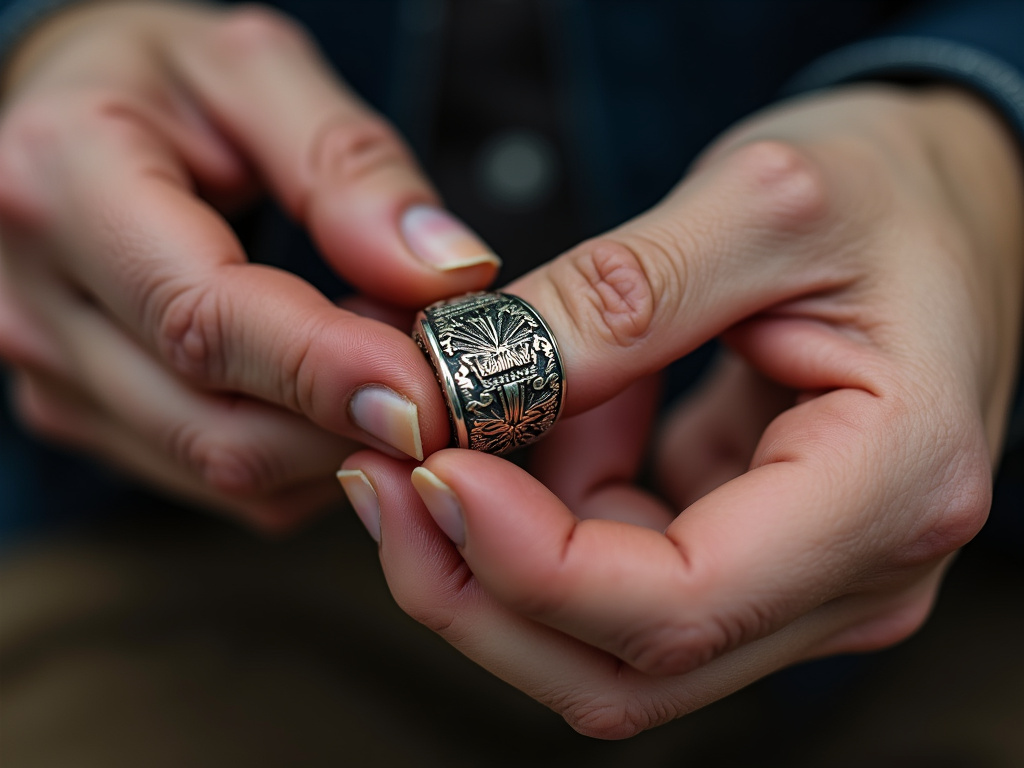
Where you put the ring is geography. Which way the crest points is the story. The nearly universal tradition is to wear the ring with the class crest or school seal facing you during your studies. Upon graduation, you physically turn it around so the emblem faces outward.
This act is a non-verbal transition. The inward orientation symbolizes internalizing the lessons, values, and struggles of your education, a private reminder of the work in progress. Turning it outward is a ceremonial gesture. It signals that your education is complete and you are now a representative of that institution in the world.
I learned this the hard way. Early in my collecting, I purchased a stunning 1985 Balfour signet-style class ring from an estate sale. The crest was worn nearly smooth on one side. The seller, an alumna, explained she’d never performed the turning ceremony, wearing it crest-out for 40 years. The constant friction against her desk had eroded the detailed. The ring was a testament, but one with half its story literally rubbed away. That’s when I realized orientation isn’t just symbolism; it’s a preservation tactic.
What Are the Best Alternative Fingers to Wear a Class Ring?
The ring and middle fingers of either hand are acceptable alternatives, chosen often for comfort or statement. My own heavy 10-gram Balfour ring felt powerful on my middle finger in college, until it snagged on every wool sweater I owned that winter. The takeaway: if you’re a fidgeter, maybe stick to the ring finger.
- Middle Finger: Symbolizes balance and responsibility. A large, bold class ring can sit well here visually, making a deliberate departure from tradition.
- Pinky Finger: Historically linked to communication. A signet-style ring can work, but the fit is often awkward and can look costumey unless specifically designed for the pinky.
- Index Finger & Thumb: Generally not recommended. The index finger symbolizes authority, which can seem presumptuous. The thumb is for statement pieces about action; a class ring there can appear oddly aggressive.
The choice to move away from the ring finger should be intentional. It often means the ring’s personal significance outweighs its traditional social function. If you go this route, ensure a proper fit. A ring that’s even a half-size too large will spin, striking your other knuckles and leading to “hammering” that can dent the crest over 5–10 years.
How Do You Ensure a Proper and Safe Fit?
A proper fit has a specific feel: a distinct pop as it passes the knuckle, followed by a secure, cool weight on the base of your finger. If you have to wiggle it, it’s too tight. If it spins freely when you shake your hand, it’s a liability.
- Get Professionally Sized: Visit a jeweler when your hands are at a normal temperature, not cold or swollen. For wide-band signet styles, they may recommend sizing down a half-size or using sizing beads to prevent spinning.
- Test the Fit: The ring should slide over your knuckle with firm, smooth resistance. It must not constrict the finger when making a fist or in warm weather.
- Consider the Band: Wide class ring bands (common in men’s styles) often feel tighter than a standard wedding band of the same size. Always account for band width.
Before you start: Never force a ring over a swollen knuckle. This can cause injury or get the ring stuck, requiring a professional cutter for removal. If your finger size fluctuates, consider a slightly looser fit or a ring with an open shank.
A poor fit isn’t just uncomfortable; it accelerates wear. A tight ring stresses the metal at its thinnest points. A loose ring spins, banging the crest against everything from door frames to steering wheels, eventually flattening the design.
What is the Right Way to Clean and Maintain a Class Ring?
Your cleaning routine must match your ring’s materials. Using the wrong method can strip finishes, loosen stones, or scratch metal.
For Gold Rings (10k, 14k, 18k):
Monthly, soak the ring for 15 minutes in warm water with a drop of Dawn Ultra dish soap (the original blue formula, not citrus versions). Gently scrub with a soft-bristle brush, like a goat hair Connoisseurs Delicate Jewelry Brush, to get under the crest. Rinse under lukewarm water and dry thoroughly with a microfiber cloth. This is part of basic gold jewelry care. Skipping the drying step can leave water spots and, in hard water areas, mineral deposits.
For Sterling Silver Rings:
Silver tarnishes from exposure to air and sulfur. Weekly, gently rub the ring with a Sunshine Polishing Cloth (its impregnated rouge is designed for crevices). For heavier tarnish, use a paste of baking soda and water, but avoid this on oxidized (blackened) details. For a deep clean, follow our specific guide for cleaning a silver ring.
For Rings with Gemstones:
Avoid ultrasonic cleaners and harsh chemicals. For most stones, a soft toothbrush with the soapy water solution mentioned above is safe. Pay attention to gemstone jewelry care; porous stones like opals or turquoise should only be wiped with a damp cloth.
| Problem | Likely Cause | Safe Fix | What to Avoid |
|---|---|---|---|
| Dull, filmy gold | Buildup of lotions, oils, and soap. | Soap soak & gentle brush scrub. | Abrasive cleaners or toothpaste. |
| Black tarnish on silver | Reaction with sulfur in air or materials. | Sunshine Polishing Cloth. | Over-polishing, which removes silver. |
| Loose stone | Prong wear or impact damage. | Stop wearing it. Take to a jeweler for repair. | DIY glue or continued wear. |
| Scratches on high-polish surface | Contact with harder materials or other jewelry. | Professional polishing by a jeweler. | Attempting to buff out deep scratches yourself. |
Finally, have a dedicated home for it. When not worn, store it in a soft, anti-tarnish pouch or a compartment in a dedicated jewelry storage box. This prevents scratches and is a key step in preventing jewelry tarnish. Never toss it loose into a bag or drawer.
Frequently Asked Questions
Can I wear my class ring on my left hand if I’m not married?
You can, but I advise against it. The social signal is strong. I’ve fielded countless awkward ‘Congratulations!’ comments from clients who wore a class ring on their left ring finger. Unless your school requires it (like the USNA), the right hand avoids this confusion entirely.
What if my school doesn’t have a specific rule?
In the absence of an official policy, default to the standard tradition: right-hand ring finger, crest facing you until graduation, then turned outward. You can also adopt the custom of a similar institution you admire.
When do you officially start wearing your class ring?
Most schools have a “Ring Dance” or “Ring Ceremony,” typically in the junior or penultimate year. That event is the formal start date. Wearing it before is generally considered bad form. The USNA ring may be worn starting with the Ring Dance at the end of the 2/C (junior) year.
Do you have to turn the ring at graduation if it has no crest?
The physical turning ritual is for rings with a distinct orientation, like a raised crest or one-sided seal. If your ring is symmetrical, the ceremony isn’t physically applicable. The symbolic intent, of internalizing your education and then presenting it, still stands.
How do I know if my ring is valuable beyond sentiment?
Sentimental value is primary. For monetary value, factors include the metal weight (e.g., a heavy 10k gold men’s ring), gemstone quality, and the maker (Balfour, Jostens, Herff Jones). For a definitive answer, get a professional ring appraisal from a certified gemologist.
Before You Go
The correct finger is the one your school’s tradition dictates. If none exists, the right ring finger is the default that sidesteps social assumptions. But the deeper truth is that the “where” is less critical than the “how.” Wearing the ring with the crest correctly oriented, facing you during the journey, facing the world after, is what honors the tradition fully.
It’s a piece meant to last a lifetime, so care for it with intention. A proper fit prevents damage, and correct cleaning your ring preserves its detail. Whether it’s a simple band or an ornate crest, your class ring is a tactile piece of personal history. Wear it with the story it deserves.
