
What Is a Jewelry Hallmark? A Guide to UK Law & Punishments
A jewelry hallmark is a legally required stamp placed by an independent government-appointed office, guaranteeing the purity of precious metals like gold, silver, platinum, and palladium. In the UK, the Hallmarking Act 1973 makes it an offense to describe an unmarked article as made of these metals or to supply one without the stamp. The hallmark consists of three compulsory marks: the maker’s mark, the metal purity mark, and the assay office mark.
Most people think a hallmark is just a nice little stamp. They miss the legal weight behind it. In Britain, selling a gold ring without that stamp isn’t just bad practice, it’s a criminal offense under a 1973 law. The stamp isn’t a decoration. It’s a contract.
This guide walks through what each mark means, where to find them, and what happens when they fade or aren’t there. You’ll see why a missing stamp on an heirloom piece isn’t just mysterious, it could mean the piece predates the law or falls below a specific weight threshold.
Key Takeaways
- In the UK, selling an un-hallmarked item described as gold, silver, platinum, or palladium is illegal under the Hallmarking Act 1973.
- Every UK hallmark must have three marks: the Sponsor’s Mark (maker), the Fineness Mark (purity number inside a shape), and the Assay Office Mark (testing office).
- Minimum weight exemptions exist: gold under 1 gram, silver under 7.78 grams, platinum under 0.5 gram, and palladium under 1 gram do not require a hallmark.
- International rules vary wildly. The US allows verbal purity claims, Italy uses voluntary manufacturer marks, and Switzerland only mandates hallmarks for watch cases.
- Faded or missing stamps on older pieces don’t prove fakery. Wear over decades can erase them, and pre-1973 items weren’t required to carry them.
The Three Marks Every UK Hallmark Must Have
The Sponsor’s Mark is the maker’s registered initials or symbol. The Fineness Mark is a millesimal number (like 750 for 18K gold) inside a shape denoting the metal. The Assay Office Mark is the symbol of the office that tested the piece, a lion for London, a castle for Edinburgh, an anchor for Birmingham.
Look for a cluster of tiny symbols. They’re not random. They’re a sequenced guarantee.
The first mark is the Sponsor’s Mark. This is the jeweler or manufacturer’s registered symbol. It might be two letters in a fancy font or a simple geometric shape. This mark ties the piece to a specific entity. If you have a problem with the metal’s purity, you know who made it.
The second is the Fineness Mark. This is the purity number stamped inside a shape that tells you the metal type. The number is a millesimal figure, parts per thousand.
* A 750 inside a rectangle means 75% gold, or 18 karat.
* A 925 inside an oval means 92.5% silver, sterling standard.
* A 950 inside a pentagon means 95% platinum.
The shape matters. A rectangle is for gold, an oval for silver, a pentagon for platinum, and a trapezoid for palladium. Mixing them up is like reading a map wrong.
The third is the Assay Office Mark. This is the symbol of the government-appointed office that tested and stamped the piece.
* A lion passant for London.
* A castle for Edinburgh.
* An anchor for Birmingham.
* A rose for Sheffield.
Missing one of these three marks in the UK means the piece is not legally hallmarked. It cannot be sold as precious metal.
TL;DR: A UK hallmark is a three-part stamp: who made it, how pure it is, and who verified it. Missing one part means the piece isn’t legally recognized as precious metal.
Where You’ll Actually Find Them
On rings, look inside the band. That’s the most common spot. The stamping is often on the flat inner surface, opposite the setting. Use a loupe. The marks are millimeters tall.
Necklaces and chains hide the hallmark on the clasp. Check the inside of the toggle, the barrel of a spring ring clasp, or the flat part of a lobster claw. Sometimes it’s on the end link right before the clasp. Bracelets follow the same rule, look at the clasp or the inside of a solid band.
Common mistake: Assuming a missing hallmark on earrings means fake metal, the posts and backs are too small to stamp cleanly, so many legitimate small earrings are exempt by weight.
Earrings are the trickiest. The post or the back of a stud might carry a mark, but often they don’t. A pair of small gold studs might weigh under the 1 gram threshold for gold. They’re exempt. Don’t panic if your tiny heirloom earrings have no stamp. They might still be real.
Bangles and cuff bracelets often stamp the inside of the band, away from any decoration. Pendants might stamp the back of the setting or the loop. Look everywhere.
The UK Law and Its Exceptions
The Hallmarking Act 1973 is the backbone. It states that describing an un-hallmarked article as wholly or partly made of platinum, gold, palladium, or silver, or supplying such an article, is an offense. This covers all trade, online shops, market stalls, gallery sales.
There are exemptions. Small items fall below minimum weight thresholds.
* Gold: 1 gram.
* Silver: 7.78 grams.
* Platinum: 0.5 gram.
* Palladium: 1 gram.
A piece weighing less than these amounts does not require a hallmark, even if it’s solid precious metal. That’s why a tiny gold bead or a thin silver wire might have no stamp.
Other exemptions exist for specific articles like watch cases, certain types of wire, and items meant for medical use. The full list is in the official UK hallmarking guidance notes. If you’re dealing with a piece that seems exempt, that document is your reference.
The British Hallmarking Council mandates that dealers display an approved notice explaining hallmarks. Online sellers can show Notice A or Notice B as a PDF or short film. If a UK business selling you a precious metal item doesn’t provide that information, they’re not fully compliant.
| Metal | Minimum Weight Requiring Hallmark | Common Fineness Marks |
|---|---|---|
| Gold | 1 gram | 375 (9K), 585 (14K), 750 (18K) |
| Silver | 7.78 grams | 925 (Sterling), 958 (Britannia) |
| Platinum | 0.5 gram | 950, 900 |
| Palladium | 1 gram | 950, 500 |
International Recognition: The Convention Hallmark
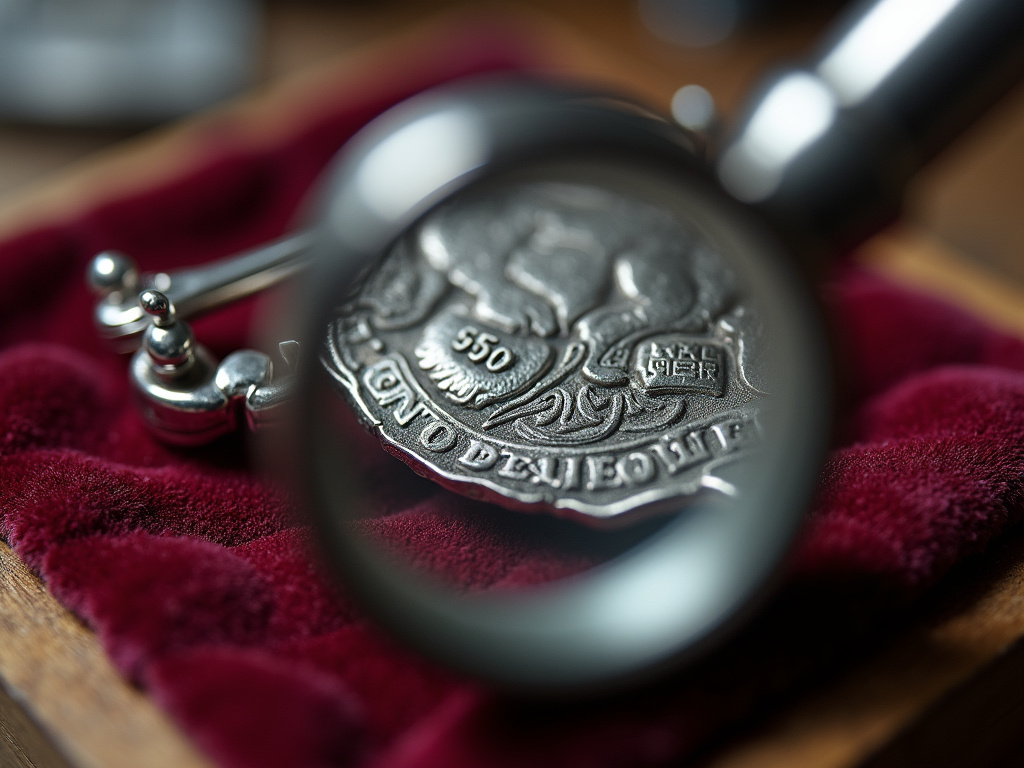
The UK has been part of the International Convention on Hallmarks since 1975. Assay Offices here can strike the Convention Hallmark (CCM), recognized by all 22 other signatory countries. Conversely, Convention Hallmarks from those countries are legally recognized in the UK.
The CCM for gold is a balance scales superimposed on two intersecting circles. Seeing that mark on a piece bought in France or Germany means its purity is valid in Britain without a UK assay office stamp. It’s a passport for precious metal.
This matters if you inherit a piece from abroad or buy online from an international seller. A Convention Hallmark replaces the need for a local assay office mark. The other two marks, maker and fineness, will still be present.
I inherited a platinum brooch from my grandmother, bought in Switzerland in the 1960s. It had no UK marks, just a 950 and a maker’s symbol I didn’t recognize. I assumed it was fake. A jeweler pointed out the Swiss assay mark, a bear, and explained it was a Convention Hallmark. The piece was solid platinum, exempt from UK stamping because it was stamped under the convention before the 1973 Act. I learned that day that marks tell a story older than the law.
Not all countries are signatories. The US, Italy, India, and China have their own, often voluntary, systems.
How the Rest of the World Marks Jewelry
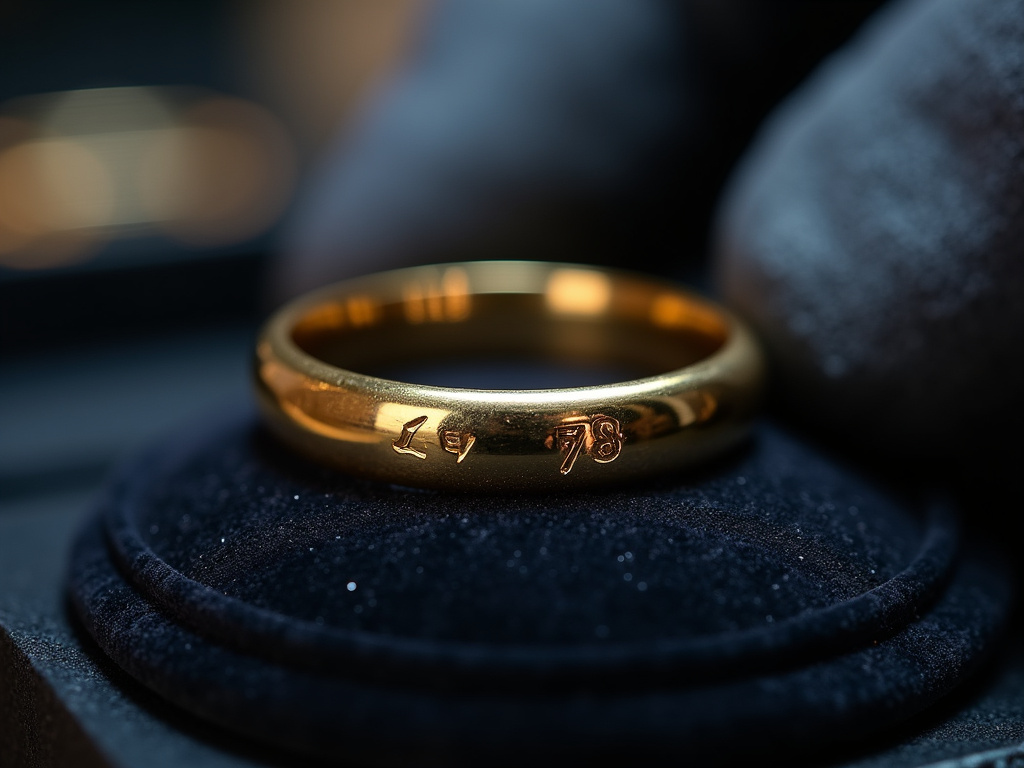
The US National Gold and Silver Marking Act of 1906 focuses on metal purity indicated in karats for gold and parts per thousand for silver. Crucially, caratage may be identified by independent signage or verbal information, it does not have to be marked on the piece itself. If marked, it must also have a trademark stamp.
Italy uses voluntary manufacturer marks. Their system consists of a number and the first two letters of the region, like 1 AR for Arezzo. India and China also rely on manufacturer marks to attest to origin and caratage. There’s no independent assay office verification in these countries unless the maker chooses to submit the piece.
Switzerland makes hallmarking optional for jewelry, except for metal watch cases. A Swiss gold ring might have no state stamp, just the maker’s mark and a purity number. That’s legal there.
This variance explains why an online purchase from an Italian seller might only show “750” and “1 AR”. It’s real 18K gold, but it doesn’t have the UK’s trio of stamps. It won’t be illegal to sell in Italy, but bringing it into the UK for resale would require a UK hallmark.
| Country | Hallmarking Requirement | Key Mark | Recognition in UK |
|---|---|---|---|
| United Kingdom | Mandatory (Hallmarking Act 1973) | Sponsor’s Mark, Fineness Mark, Assay Office Mark | Full legal recognition |
| United States | Mandatory if marked, otherwise verbal | Karat mark (e.g., 14K) + trademark | Not recognized without UK assay |
| Italy | Voluntary manufacturer marks | Number + region code (e.g., 1 AR) | Not recognized without UK assay |
| Switzerland | Optional for jewelry, mandatory for watch cases | Maker’s mark + purity number | Convention Hallmark recognized |
When Hallmarks Fade or Are Missing
Wear erases stamps. A ring worn daily for thirty years will have its inner band polished smooth. The hallmark, pressed into the metal, can fade to a shadow. This doesn’t mean the piece is fake. It means it’s old.
Some regions or countries simply don’t have stringent hallmarking laws. Independent designers might not stamp their creations, either because their pieces are below weight thresholds or because they operate in a voluntary system. Additionally, vintage or antique items might predate current hallmarking regulations. A silver brooch from 1920 won’t have a modern UK hallmark.
If you’re uncertain, professional jewelers have tests. Acid tests, electronic gold testers, X-ray fluorescence spectrometers. These methods give a conclusive reading of the metal’s composition. They’re the final answer when visual inspection fails.
Common mistake: Polishing a piece with a faded hallmark to “bring out the stamp”, aggressive polishing can erase the last traces of the stamp entirely, making professional verification impossible.
For insurance or resale, a verified hallmark is necessary. If the stamp is gone, you’ll need a professional appraisal to document the metal content. That appraisal report becomes the new guarantee.
Gold Karat Marks vs. Millesimal Numbers
Gold purity is measured in karats or parts per thousand. The karat system divides 24 parts. 24K is pure gold. 18K is 18 parts gold, 6 parts alloy, 750 parts per thousand.
The millesimal system is universal. It’s the number stamped inside the shape on the hallmark.
* 375 = 9K (37.5% gold)
* 585 = 14K (58.5% gold)
* 750 = 18K (75% gold)
* 916 = 22K (91.6% gold)
* 999 = 24K (99.9% gold)
Pure 24K gold is too soft for everyday jewelry. You’ll find it mainly in investment-grade bars and coins. For jewelry, 18K (750) and 14K (585) are the most common. 9K (375) is the minimum karat legally called “gold” in the UK, it’s more durable due to higher alloy content.
Other letters accompany karat marks, especially in the US.
* P stands for plumb gold, meaning the purity is exactly as stamped. 10KP is exactly 41.7% gold.
* GP signifies gold plated, a base metal with a thin gold layer.
* GF denotes gold filled, a thicker gold layer constituting at least 5% of the item’s weight.
* GE or GEP refers to gold electroplated.
* HGE means heavy gold electroplate.
These marks tell you the construction, not just the purity. An 18KGP piece is not solid 18K gold. It’s gold-plated with 18K gold. The value difference is substantial.
Silver, Platinum, and Other Metals
Sterling silver is marked 925. That’s 92.5% silver, 7.5% copper. The copper adds strength. Britannia silver is 958, 95.8% silver, slightly purer than sterling. It’s a British standard from the late 17th century.
Silver-plated items may carry marks like EPNS (electroplated nickel silver). This means the piece is base metal coated with a thin silver layer. It looks like silver but isn’t.
Platinum items bear 950 (95% platinum) or 900 (90% platinum). Platinum’s natural white sheen doesn’t fade or tarnish. It’s dense and durable. The hallmark is a mark of luxury and resilience.
Palladium, a lighter platinum-group metal, is marked 950 or 500. Its hallmark uses a trapezoid shape for the fineness mark.
What to Do With an Unmarked Piece
First, weigh it. If it’s a tiny gold stud earring, it might be under 1 gram. It’s exempt. No stamp needed. If it’s a substantial ring or necklace with no stamp, the next step is verification.
Take it to a jeweler for testing. An acid test or electronic tester will confirm the metal. If it’s genuine precious metal but unmarked due to age, wear, or origin, you have two paths.
1. Keep it as an heirloom with a verification certificate from the jeweler.
2. If you plan to sell it in the UK, you must have it hallmarked by an assay office. That process involves submitting the piece, paying a fee, and waiting for the stamp.
For insurance purposes, especially for an engagement ring insurance policy, a hallmark or a recent professional appraisal is mandatory. Insurers need a documented guarantee of value.
I once bought a silver pendant from a market stall in Italy. It had a “925” stamp but no other marks. Beautiful piece. When I tried to sell it back in London, the buyer refused, no UK assay office mark. I had to send it to the Birmingham assay office, pay a fee, and wait three weeks for the anchor stamp to be added. The stall seller hadn’t mentioned that. Now I check for the trio of marks before buying abroad.
Storage matters for preserving both the piece and its marks. Proper jewelry storage in a dry, separate environment prevents abrasive contact that can wear down stamps. For silver, preventing tarnish is key, as tarnish can obscure hallmarks. Tarnish-resistant jewelry made from platinum or palladium avoids that problem entirely.
Cleaning an unmarked or faded piece requires care. General cleaning jewelry methods work, but for delicate or antique items, follow vintage jewelry cleaning guidelines to avoid eroding the metal surface where a stamp might linger.
Frequently Asked Questions
Is a hallmark required in the United States?
No. The US National Gold and Silver Marking Act of 1906 requires purity disclosure, but it can be verbal or on signage. A stamp on the piece is optional. If a stamp is present, it must also include a trademark. This differs fundamentally from the UK’s mandatory independent assay.
What if my jewelry has no hallmark at all?
First, check its weight against the UK exemptions. If it’s above the threshold, it might be vintage (pre-regulation), from a country with voluntary marking, or the stamp has worn away. Get it tested by a jeweler. Without a hallmark, you cannot legally sell it in the UK as precious metal.
Can I add a hallmark to an old piece?
Yes. You can submit an unmarked piece to a UK assay office for hallmarking. They will test the metal, verify its purity, and apply the three compulsory marks. There is a fee, and the process takes several weeks.
What does “925” mean on silver jewelry?
925 is the millesimal fineness mark for sterling silver. It means the piece is 92.5% pure silver, with the remaining 7.5% usually being copper for strength. This is the global standard for sterling silver.
Are hallmarks on gold-plated items legal?
Yes, but they must accurately describe the item. A gold-plated piece should be marked with “GP” or “GEP” alongside the karat of the plating layer (e.g., 18KGP). Marking it as solid gold without the plating indicator is illegal under the Hallmarking Act 1973.
Before You Go
A hallmark is not a decorative stamp. It’s a legal guarantee of purity, enforced by the Hallmarking Act 1973 in the UK. Three marks tell you who made it, how pure it is, and who verified it. Missing one means the piece isn’t legally hallmarked.
International rules vary. The US allows verbal purity claims. Italy uses voluntary maker marks. Switzerland only mandates stamps for watch cases. A Convention Hallmark acts as an international passport.
Faded or missing stamps on older pieces don’t mean fakery. Wear over decades can erase them. Items below weight thresholds are exempt. Get a professional verification if you’re unsure.
For insurance, sale, or simply knowing what you own, those tiny marks are the story. Read them.
