
Tennis Bracelet | The True Story Behind the Name
A tennis bracelet is a flexible, lightweight bracelet featuring a single, continuous line of individually set diamonds or gemstones, connected by a thin metal chain or links. Its defining characteristic is a seamless, flowing appearance often described as a ‘river of stones.’
Most people assume the name is just a marketing term for a sporty look. The real story is much more specific, and it involves a timeout, a lost diamond, and a famous athlete’s offhand comment that stuck.
Let’s trace the path from a 1980s tennis match to today’s jewelry box staple, covering what makes the design unique, how to spot quality, and the simple rules for keeping it secure.
Key Takeaways
- The name “tennis bracelet” originates from a 1987 US Open match where Chris Evert’s diamond line bracelet fell off, pausing play.
- True tennis bracelets use individual prong or bezel settings for each stone on a flexible linked base, unlike rigid bangles or solid cuffs.
- Modern versions use lab-grown diamonds, moissanite, and colored gemstones, making the style accessible beyond traditional diamond budgets.
- Its delicate construction demands specific proper jewelry storage and gentle general jewelry cleaning to prevent loss.
- The design is versatile, equally suited for daily wear with a t-shirt or as the focal point of formal evening wear.
What Exactly Is a Tennis Bracelet?
Forget any imagery of rackets or balls. The core of a tennis bracelet is its construction: a series of gemstones, each held in its own small setting, linked together to form a flexible band. This is not a solid metal cuff or a bangle. It drapes.
The settings are usually four-prong or bezel. Prong settings lift the stone and allow more light to enter, maximizing sparkle. Bezel settings wrap a thin metal rim around the stone’s girdle, offering superior protection against snags and impacts. The metal links between each setting are deliberately thin and often doubled or boxed for strength, creating the signature fluid movement.
A tennis bracelet is a type of flexible jewelry consisting of a line of gemstones, typically diamonds, set individually with uniform spacing and connected by short, linked segments of precious metal. The design emphasizes a continuous, unbroken visual flow of stones around the wrist.
This structure is what failed spectacularly in 1987. A clasp or link gave way, and the entire line of stones fell apart. That incident is the entire reason we call it a tennis bracelet today.
TL;DR: It’s a flexible line of individually set stones on linked metal, not a solid band. The flexibility and individual settings are what define it.
The “Tennis Chain” Confusion
You might hear the term “tennis chain.” This is different. A tennis chain is a necklace using the same design principle, a line of individually set stones, but it’s worn around the neck. The name borrows from the bracelet’s popularity.
Calling a bracelet a “tennis chain” is technically incorrect. The bracelet came first. The necklace style followed. If a jeweler mixes up the terms, they’re either new or being sloppy with the history.
The Real Story: How a Lost Bracelet Named a Style
The origin isn’t a myth. It’s a documented moment in sports and jewelry history.
In the 1987 US Open, tennis champion Chris Evert was playing a match. She was wearing a diamond line bracelet, a popular style at the time often called an “eternity bracelet” or simply a “line bracelet.” During a volley, the bracelet’s clasp or a link failed. The bracelet came apart and the diamonds scattered across the court.
Evert immediately called a timeout. The game halted. Players, ball boys, and officials got on their hands and knees to search for the stones in the green clay. They found them all.
Later, in interviews, she referred to the incident and the bracelet, calling it her “tennis bracelet.” The press picked up the phrase. It was catchy, evocative, and tied to a celebrity. The name stuck almost overnight in jewelry circles.
| Era | What It Was Called | Key Differentiator |
|---|---|---|
| Pre-1987 | Line Bracelet, Eternity Bracelet | A generic descriptive term; known but not iconic. |
| 1987 (US Open) | Chris Evert’s Bracelet | The incident creates a specific, named reference point. |
| Post-1987 | Tennis Bracelet | The celebrity-coined name becomes the standard industry term. |
The story underscores the bracelet’s classic vulnerability: a single weak point can fail. Modern designs address this with safety chains, double-lock clasps, and reinforced soldering at each link. But the 1987 incident remains a perfect, if expensive, lesson in why construction quality matters.
What Defines a Quality Tennis Bracelet?
Not every line of stones qualifies. The difference between a piece that lasts decades and one that fails in a season is in the details you can’t see in a marketing photo.
First, the metal. The links connecting each setting must be substantial enough to withstand daily flexion but thin enough to remain flexible. Look for “box” or “figure-eight” links rather than simple oval loops. These distribute stress.
Second, the settings. Each stone should be set evenly and securely. Prongs must be thick enough to hold the stone, not just tiny wires. A bezel should be smooth and continuous with no gaps. Gaps catch on sweaters and weaken the metal.
Finally, the clasp. A lobster clasp is standard, but a safety chain is non-negotiable for a valuable piece. This is a short chain that attaches to both sides of the bracelet next to the clasp. If the main clasp pops open, the safety chain catches the bracelet before it falls off your wrist. It’s the single best investment you can make.
Common mistake: Choosing a bracelet with a flimsy, single-spring clasp and no safety chain, the bracelet is lost within a year, usually at a moment when you don’t feel it go.
Stone Quality and Modern Alternatives
The classic tennis bracelet uses diamonds. The GIA diamond quality guide outlines the 4Cs (Cut, Color, Clarity, Carat) that determine value. For a tennis bracelet, cut is paramount because it dictates the sparkle of each individual stone in the line. Color and clarity can be slightly lower (SI1-SI2 clarity, J-K color) since the stones are small and viewed together, but the cut should be Excellent or Very Good.
Today, you aren’t limited to diamonds.
* Lab-grown diamonds: Identical in composition and optics to mined diamonds, often at a lower cost.
* Moissanite: Offers more fire (rainbow flashes) than diamond at a fraction of the price.
* Colored Gemstones: Sapphires, rubies, or emeralds create a bold, personalized look. This requires specific gemstone jewelry care as some gems are sensitive to heat and chemicals.
The best choice depends on your budget and how often you’ll wear it. For daily wear, durability is key, diamond, sapphire, and moissanite lead. For occasional wear, you can explore softer stones like emerald or tanzanite, accepting they’ll require more careful cleaning gemstone pieces.
How to Wear and Care for a Tennis Bracelet
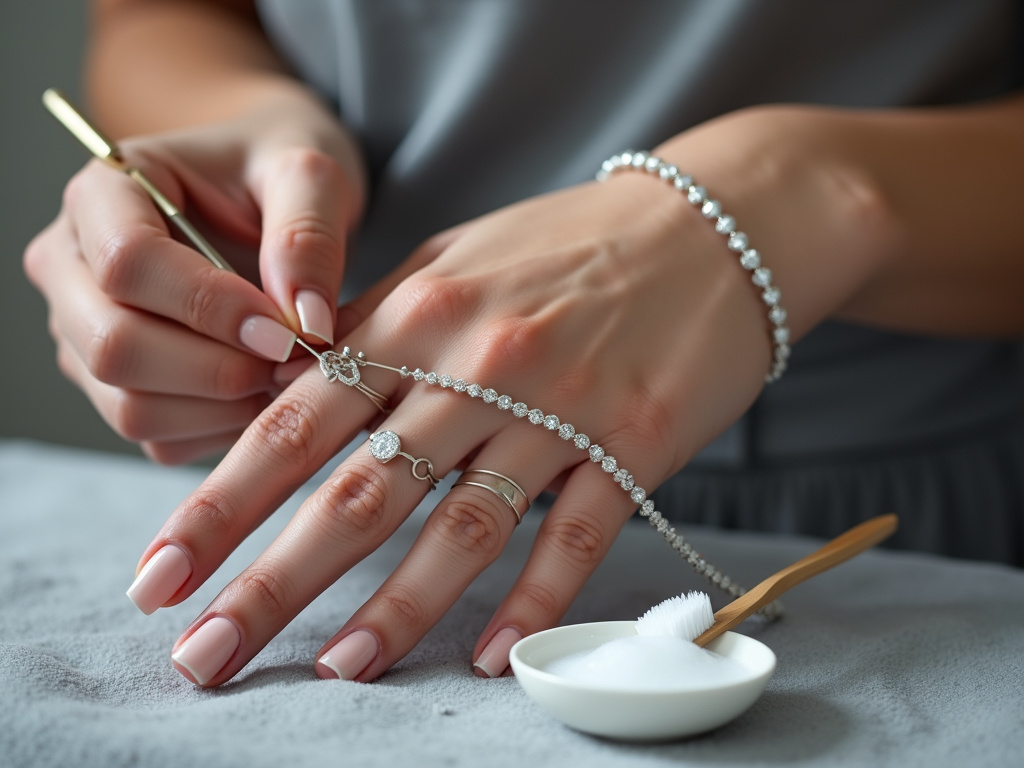
Its versatility is its superpower. The same bracelet can dress up a casual outfit or complete a black-tie look. The rule is fit and balance.
It should sit snugly enough that it doesn’t spin wildly around your wrist, but loose enough that it doesn’t indent your skin. You should be able to slip one finger comfortably between the bracelet and your wrist. A too-tight bracelet stresses the links. A too-loose one is a snag hazard.
I prefer to wear a tennis bracelet on my left wrist, alone. Stacking it with other bracelets, especially heavier bangles, scratches the metal links and can knock prongs out of alignment. The stones are set to be the star, let them.
For care, the routine is simple but non-negotiable.
- Put it on last, take it off first. This avoids contact with perfume, hairspray, and lotions, which cloud stones and degrade metal over time.
- Clean it monthly. Use a soft toothbrush, warm water, and a drop of mild dish soap. Gently scrub the underside of the settings where grime accumulates. This simple routine jewelry care keeps it sparkling.
- Store it flat and alone. Never toss it into a jumbled jewelry box. Use a soft pouch or a dedicated compartment in a lined box. This is the essence of preventing jewelry tarnish and preventing stones from scratching each other.
- Get it checked. A jeweler should inspect the prongs and clasp every six to twelve months. They’ll tighten any loose settings, a five-minute service that prevents a five-thousand-dollar loss.
TL;DR: Wear it snug but not tight, clean it gently every month, store it alone, and get the prongs checked professionally twice a year.
The Professional Inspection Most People Skip
You cannot reliably check the prongs yourself. They wear down microscopically. A jeweler uses a loupe to examine each setting for lifting, thinning, or cracks. They’ll also test the clasp’s spring tension.
Skipping this because the bracelet “looks fine” is how stones fall out. You rarely see a prong break before it fails. It just lets go. Schedule the inspection when you change your clocks or during your annual professional jewelry appraisal review. It costs very little compared to replacing a lost diamond.
Tennis Bracelet vs. Other Classic Bracelets
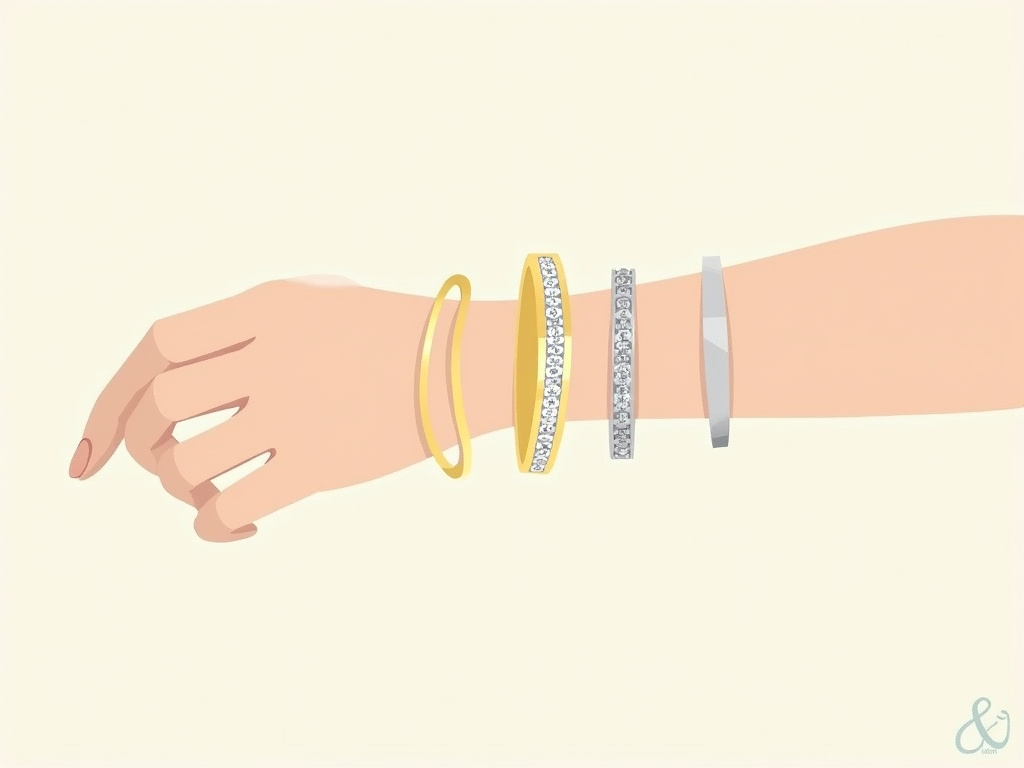
It’s helpful to know what a tennis bracelet is not. This clarifies its unique place.
| Bracelet Type | Construction | Best For | Key Difference |
|---|---|---|---|
| Tennis Bracelet | Individual stones on a flexible link chain. | Everyday elegance, versatility, sparkle. | Flexible, fluid, defined by the line of stones. |
| Bangle | Rigid, continuous band of metal. | Making a bold, sculptural statement. | No clasp, slipped over the hand; no stones or few. |
| Cuff Bracelet | Rigid band with an open gap. | Easy on/off, often more casual or artistic. | Open ends; doesn’t fully encircle the wrist. |
| Chain Bracelet | Metal links only, no stones. | Layering, a subtle metallic accent. | The focus is on the metalwork, not gemstones. |
| Eternity Band | Continuous circle of stones set into metal. | Symbolic (e.g., wedding), often worn on fingers. | Meant for fingers, not wrists; settings are usually channel or pave. |
The tennis bracelet wins for comfort and adaptability. A bangle is rigid. A cuff can catch. A tennis bracelet moves with you, which is why it transitioned from a high-fashion item to an everyday luxury.
Frequently Asked Questions
Did Chris Evert really lose her bracelet during a match?
Yes. It happened at the 1987 US Open. Her diamond line bracelet came unclasped, scattering stones on the court. Play was officially paused while she and others searched for them. This incident is the direct origin of the name, as confirmed by the Cambridge Dictionary definition and multiple sports archives.
Can I wear a tennis bracelet every day?
You can, but you must commit to the care routine. Daily wear exposes it to bumps, chemicals, and sweat. This makes monthly gentle cleaning gold jewelry or silver jewelry cleaning (depending on the metal) and bi-annual professional checks essential. For a truly carefree daily option, consider tarnish-resistant jewelry in platinum or stainless steel.
What’s the difference between white gold and platinum for the setting?
White gold is an alloy plated with rhodium for a bright white finish; the plating wears off every 12-18 months, requiring re-plating to maintain color. Platinum is naturally white, denser, and more durable, developing a soft patina over time instead of wearing away. Platinum costs more upfront but has lower long-term gold jewelry maintenance costs.
How do I know what size to get?
Measure your wrist snugly with a soft tape measure. Add 0.5 to 0.75 inches (1.3 to 1.9 cm) to that measurement for a comfortable fit. A jeweler can do this precisely. The bracelet should not slide over your hand when clasped; it must be put on and taken off using the clasp.
Can I shower or swim with my tennis bracelet on?
No. Soap scum builds up behind the settings, dulling the stones. Chlorine and saltwater corrode the metal, especially at the solder points of the links. Over time, this corrosion is a leading cause of tarnish removal methods needs and can weaken the structure enough for a link to fail.
Are there affordable alternatives to diamond tennis bracelets?
Absolutely. High-quality cubic zirconia (CZ) set in sterling silver is a classic affordable option. Moissanite in silver or white gold offers incredible durability and fire. Lab-grown diamonds are also bringing the cost of the real thing down significantly, making a true diamond line more accessible than ever.
Before You Go
A tennis bracelet is more than a sparkly accessory. It’s a piece of jewelry history born from a very public, very human moment of a lost treasure. That story informs its design: beautiful but delicate, meant to be worn and enjoyed, but respected.
Choosing one means paying attention to the hidden details, the link construction, the clasp security, the setting integrity. Wearing one means adopting a simple care habit: clean it, store it properly, and get it checked. That discipline keeps the stones on your wrist and out of the grass.
Whether you choose diamonds, sapphires, or moissanite, the effect is the same: a river of light circling your wrist. It’s a quiet statement that doesn’t shout. It just sparkles, steadily, through whatever game you’re playing.
