
What Is an Earring Post? A Complete Guide to Fit & Function
An earring post is the thin metal stem that passes through a pierced earlobe or cartilage, securing the decorative front of a stud earring with a backing. Its thickness (gauge) and length are critical specs that determine whether an earring feels comfortable, stays secure, and supports its weight properly.
Most of us only think about the post when it fails. A too-short post digs a painful trench. A too-thin post lets a favorite gemstone droop sadly by lunchtime. But when the post is right, you forget it’s even there.
My own obsession with posts started with a pair of my grandmother’s amethyst studs. The original 22g posts were like toothpicks, bending under the weight until one snapped clean off when it caught on my sweater. The $85 repair bill to have them re-tipped with 16g posts taught me a lasting lesson: the sparkle is nothing without a strong spine. Let’s build that foundation.
Key Takeaways
- Gauge is counterintuitive: A lower number means a thicker post. Standard 22g (0.6mm) is delicate; 16g (1.3mm) provides serious support for heavier stones.
- Length is personal and measurable: Don’t guess. Use calipers to measure your earlobe’s thickness and add 2mm for the backing. My lobes are 5.8mm, so I seek out 8mm posts.
- Heavy designs demand systemic upgrades: A large stone needs a thicker post (16g minimum) paired with a locking back, not just a tighter grip.
- Material is a biocompatibility choice, not just color: For my sensitive ears, implant-grade titanium from brands like Neometal is non-negotiable. It’s the piercer’s gold standard for a reason.
- The backing is part of the security system: A butterfly back is the fast food of earring hardware, convenient but unreliable. For security, look for screw-on Euro locks or threadless labret systems.
What Exactly Is an Earring Post?
Look past the gemstone. The post is the functional engineering that makes a stud earring wearable. It’s the precision component that transfers the weight of the jewelry to your earlobe and backing system without causing pain or damage.
The earring post is a cylindrical metal wire, typically ranging from 0.6mm (22 gauge) to 1.6mm (14 gauge) in thickness. Its length, measured from the setting to the tip, usually falls between 6mm for standard lobes and 10mm for cartilage applications. Common materials include 316L surgical steel, gold alloys, and implant-grade titanium (F-136).
Its job is threefold: to pass through the piercing without friction, to hold the earring perpendicular to your earlobe, and to anchor the entire assembly securely. When a post fails, you feel it long before you see it, a constant, nagging pinch that ruins the experience of wearing beautiful jewelry.
TL;DR: The post is the functional stem of a stud earring. Ignoring its specs leads to discomfort, drooping, and lost jewelry.
How Do I Measure Post Gauge and Why Does It Matter?
Gauge refers to the thickness of the post, and the numbering system trips everyone up. It works in reverse: a lower gauge number means a thicker post. A 22g post is a wispy 0.6mm, common for initial piercings. A 16g post is a substantial 1.3mm.
Why does this tiny measurement matter so much? A post that’s too thin for its load becomes a flex point. I learned this with those amethyst studs. The weight of the stone causes the post to bend forward over time, that’s drooping. It doesn’t just look bad; it strains the setting and presses the backing unevenly into your skin.
For stability, professional resources like Stuller’s bench jeweler articles advise moving to a 16g or 14g post for larger stones. The thicker metal resists bending, which is a core principle of preventing jewelry damage. Mechanical stress is a silent killer of fine settings.
Common mistake: Putting a heavy 10mm stone on a thin 22g post. The earring will begin to droop visibly within weeks, and the constant forward pressure can warp the setting or snap the post at the base.
| Gauge | Diameter (mm) | Best Use Case | Risk If Mismatched |
|---|---|---|---|
| 22g | 0.6 mm | Initial lobe piercings, ultra-lightweight studs | Bends easily, cannot support weight. |
| 20g | 0.8 mm | Standard lightweight studs, everyday diamonds | May droop with stones over 5mm. |
| 18g | 1.0 mm | Versatile mid-weight studs, some cartilage | Good balance for most non-statement pieces. |
| 16g | 1.3 mm | Heavier statement stones, secure cartilage piercings | Professional standard for supporting weight. |
| 14g | 1.6 mm | Very large settings, industrial piercings | Provides maximum stability for heavy designs. |
What’s the Right Post Length for My Ears?
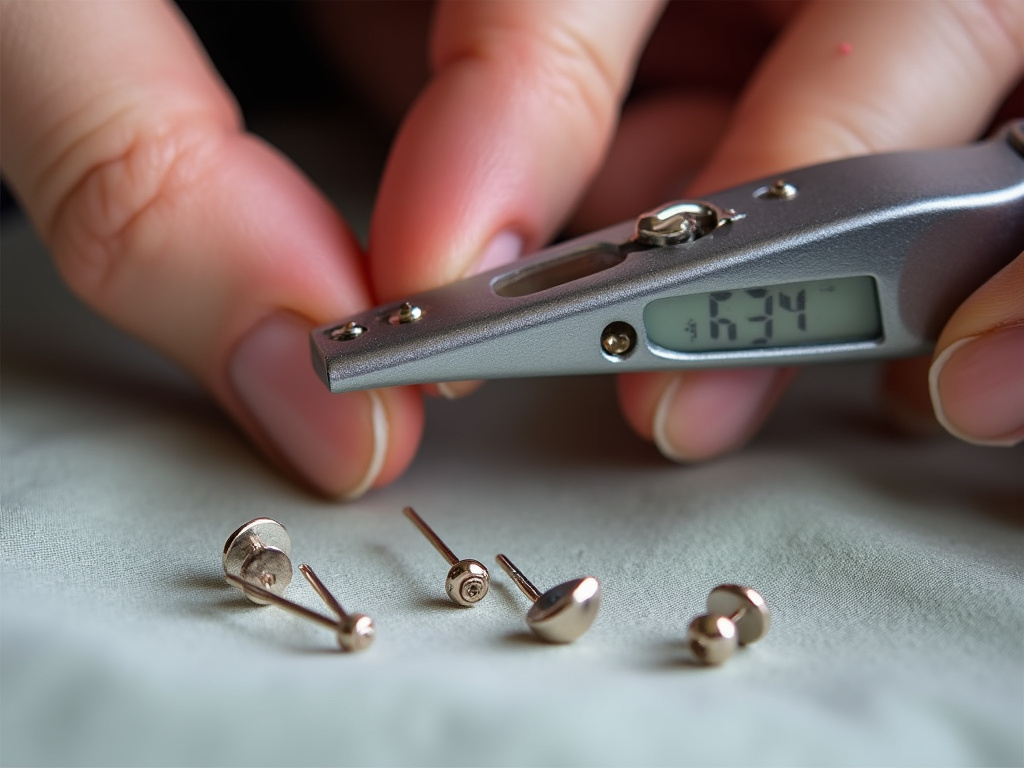
If gauge is about strength, length is all about fit. And a bad fit feels like a constant, nagging pinch. Standard lengths are 6mm (1/4″), 8mm (5/16″), and 10mm (3/8″).
Most off-the-rack studs come with 6mm posts, assuming “average” lobes. But earlobes are as unique as fingerprints. A post that’s too short doesn’t just leave a red mark; it creates a specific, tender dent you can feel with your fingertip. The backing compresses the tissue, which can actually encourage the piercing to tighten uncomfortably.
Finding your length isn’t guesswork. Here’s a pro trick: Use a digital caliper (a $10 tool from any hardware store) to measure your earlobe’s thickness while wearing a comfortable earring. Add 2mm to account for the backing. That’s your ideal post length. My own lobe measures 5.8mm, so I always seek out 8mm posts.
For fresh piercings, adequate length is non-negotiable to accommodate swelling. This is a cornerstone of proper piercing aftercare. A piercer will start you with a longer post and downsize later, never try to heal with a snug fit.
Which Post Material Is Best for Sensitive Ears?
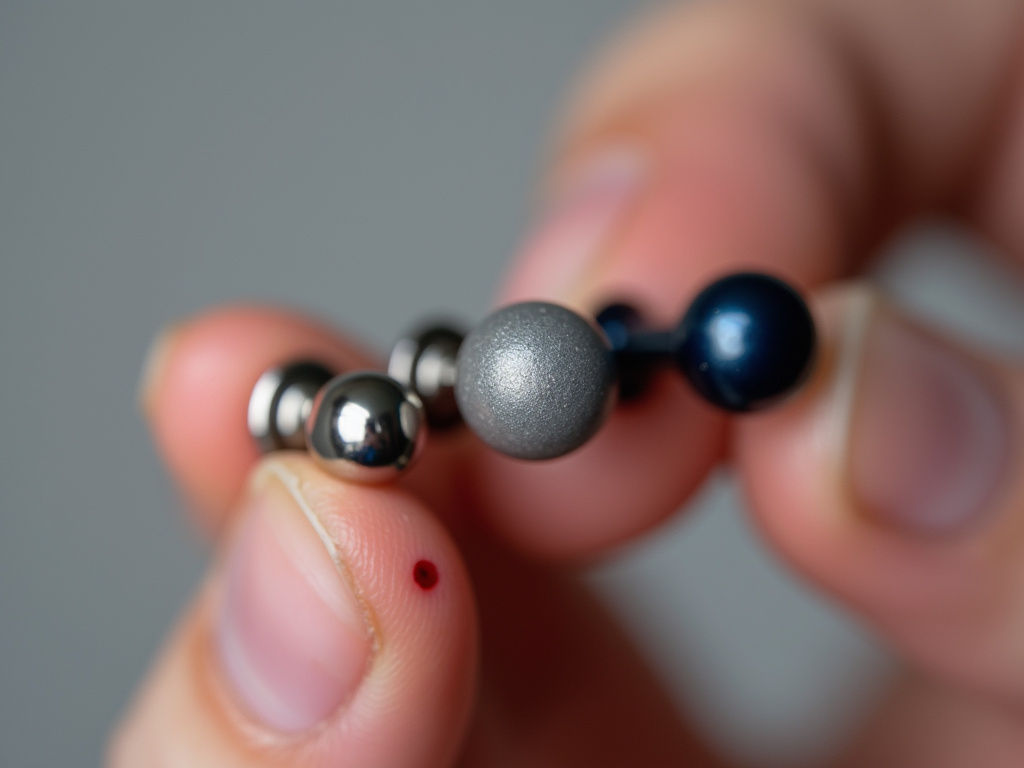
Surgical steel. It’s everywhere. (Heck, my first pair of studs were steel.) But for my money, the real upgrade is implant-grade materials. This isn’t just about color; it’s about what your body tolerates 24/7.
For my own sensitive lobes and cartilage piercings, I exclusively use threadless titanium labret posts from brands like Neometal. Their F-136 titanium is the actual gold standard, biocompatible, nickel-free, and lightweight. The friction-fit front means I can change tops without twisting the post in the piercing, which was a game-changer for my healing industrial.
Niobium is another fantastic, hypoallergenic option often used for colored decorative posts. Gold alloys (14k or 18k) are beautiful for everyday wear, but ensure they’re nickel-free if you’re sensitive. Sterling silver is soft and can tarnish at the point of contact, which irritates skin, making consistent silver jewelry care a must if you wear it.
My personal take: After my 2018 helix piercing rejected a steel post (leaving a small, permanent scar), I won’t put anything but implant-grade titanium in my ears. The upgrade cost is less than a dermatologist visit to treat the irritation.
Choosing the right material simplifies your general jewelry care routine. A hypoallergenic post means less worry about reactions, so you can focus on keeping things clean and sparkling.
How Do I Secure an Earring Post Properly?
The post alone is just a stem. The backing is its partner in security. This is a system, and a weak link fails the whole chain. Let’s move past the butterfly back, it’s the disposable cup of the jewelry world.
For true security, especially with weight, you need a mechanical advantage. Look for:
1. Screw-on Euro Locks: Tiny threaded backs (like ones from Blomdahl) that physically screw onto a threaded post. Two-handed operation, zero chance of falling off.
2. Threadless Labret Systems: A friction-fit pin (from brands like Neometal) clicks into the hollow post. Incredibly secure and low-profile, ideal for cartilage.
3. Quality Friction Backs: Solid cylinders with internal silicone grips. Far superior to butterfly backs for medium-weight everyday wear.
Matching the backing to the earring’s weight is critical. A heavy gem on a butterfly back is an accident waiting for the first hair brush or pillow. Investing in proper backs is the cheapest insurance for your favorite pieces.
| Problem | Likely Cause | Professional Fix & Cost |
|---|---|---|
| Earring droops forward | Post gauge too thin for stone weight. | Have a jeweler replace the post with a thicker gauge (16g+). Cost: $25-$50. |
| Backing won’t stay on | Worn backing or post groove is smooth. | Replace backing first. If problem persists, a jeweler can add a solder bead to the post. Cost: $15-$30. |
| Persistent redness/itching | Material allergy or tarnish/skin buildup. | Switch to titanium post. Implement strict cleaning ear piercings routine. |
| Post snapped off | Metal fatigue from stress on thin gauge. | Post must be re-tipped or replaced via laser welding or soldering. Cost: $35-$85. |
Common mistake: Trying to fix a drooping earring by tightening a butterfly back. This only increases painful pressure on the earlobe. The real fix is a thicker post.
Can I Replace or Repair a Damaged Post?
Yes, but know when to call a pro. For a broken post on a valuable or sentimental pair, take them to a jeweler. A standard repair involves soldering or laser-welding a new post on, ask for “implant-grade titanium, 16g, 8mm” to get exactly what you need. This typically runs $25-$50.
For costume jewelry, you can find replacement post-and-back kits at craft stores and use strong epoxy. The result won’t be heirloom-quality, but it can salvage a favorite fashion pair. Always let adhesives cure fully before wearing, and keep them away from the skin contact point.
Whether DIY or professional, repairing a post is a perfect time to upgrade. Moving from a thin, irritating post to a thicker, hypoallergenic one can resurrect a pair you thought were doomed. It’s also a smart step in a broader jewelry care routine to extend the life of your accessories.
TL;DR: Valuable jewelry needs a professional jeweler for post replacement. For fashion pieces, a DIY epoxy kit can work, but manage your expectations.
Frequently Asked Questions
How do I know if my post is too short?
If the earring feels tight, the backing leaves a deep imprint, or the front doesn’t sit flush against your earlobe (it tilts out), you need a longer post. The “caliper test” is the most accurate way to know for sure.
Is surgical steel or titanium better for new piercings?
Titanium, every time. Implant-grade titanium (F-136) is the most biocompatible option and is entirely nickel-free. While 316L surgical steel is hypoallergenic for most, it contains trace nickel that can trigger reactions during the sensitive healing phase.
Why do my earring backs keep falling off?
First, replace old butterfly backs, they lose tension. If new, correct backs still slip, the post itself may be too thin (low gauge) or its gripping groove may be worn smooth. A jeweler can easily add material to the post.
Can I wear gold posts all the time, even in the shower?
Solid gold is water-resistant, but I don’t recommend it. Soap, shampoo, and hard water minerals build up on the post, leading to irritation and dullness. It’s a key part of gold jewelry cleaning to remove them before bathing.
What’s the difference between a post and a labret?
post typically has a decorative front and a separate backing. A labret is a straight bar with a fixed flat back (like a disc) on one end and a threaded or friction-fit front on the other, commonly used for lip, nose, and cartilage piercings for stability.
How do I clean the post itself?
Regular cleaning is essential. For daily wear, wipe the post with a soft, lint-free cloth. For a deeper clean, use a mild soap solution and a soft brush, rinsing thoroughly. This is a fundamental safe earring cleaning practice to prevent buildup.
What Actually Matters
The post is the unsung hero of your stud earrings. It’s the difference between jewelry you admire in a box and jewelry you forget you’re wearing because it’s just that comfortable. Remember the counterintuitive gauge rule, measure your lobes, and pair thick posts with locking backs for heavy designs.
When a favorite pair starts to misbehave, pinching, drooping, getting lost, look at the post first. That’s where the solution lives. A small, informed upgrade can transform your wearing experience.
Your knowledge here also informs other care habits. Understanding metal compatibility helps with tarnished metal care, and knowing how to store studs properly prevents posts from scratching other pieces in your collection. It all connects, turning you from a wearer into a true curator of your jewelry story.
