
What Makes a Cameo Brooch Valuable: The Key Factors Explained
The value of a cameo brooch is determined by five concrete factors: the carving material (shell vs. hardstone), the quality and depth of the hand-carving, the rarity of the subject and its orientation, the metal and condition of the setting, and its documented provenance or signature. A left-facing portrait carved in three-layer sardonyx by a known 19th-century master like Tommaso Saulini can sell for thousands, while a common right-facing “Rebecca at the Well” in shell might fetch a few hundred.
Most guides repeat the same vague checklist, age, material, condition, and leave you no closer to knowing if your piece is worth $50 or $5,000. They miss the specific, tactile tests that separate true antiques from clever fakes and extraordinary pieces from ordinary ones.
This guide breaks down each value factor with the gritty details collectors actually use. You will learn how to perform the “tooth test,” spot casting bubbles under a loupe, and understand why the direction a profile faces can double its price.
Key Takeaways
- Tap the cameo gently against a tooth. Real shell or stone feels hard and dense; plastic feels soft, dull, and warm. This simple test screens out 90% of modern fakes instantly.
- Left-facing cameos are significantly rarer than right-facing ones. Some attribute them to left-handed engravers. A left-facing portrait can be worth two to three times more than its mirrored counterpart.
- Not all hardstone is more valuable than shell. An exceptional, intricately carved helmet shell cameo can easily outprice a mediocre, shallowly carved agate piece. Judge the carving, not just the material.
- The “Rebecca at the Well” motif is a common scenic cameo from the mid-1800s. Despite being a scene, thousands were produced, so they typically sell for under $500. A scenic subject alone doesn’t guarantee high value.
- Never clean a cameo with ultrasonic cleaners, steam, or harsh chemicals. The layers in shell and hardstone can separate, and the carving detail can be eroded. Use only a soft, dry brush for basic cleaning practices.
The Carving Material is the First Test
Head to any online marketplace and you will see hundreds of “antique cameos.” Most are modern resin casts. The material is your first and most brutal filter.
Authentic cameos are carved. This means an artist removed material from a single, layered substance to create a raised image. The two primary materials are shell and hardstone.
A genuine cameo is an original sculpture cut from a layered medium. A fake is a molded reproduction, often in layered plastic. The former has tool marks and depth; the latter has seams and bubbles.
Shell cameos, typically from the helmet shell or queen conch, were the standard for Victorian-era jewelry. They have a warm, translucent background with a creamy white raised image. Hardstone cameos are carved from minerals like sardonyx (a type of agate), which has distinct, often dramatically contrasting colored bands.
TL;DR: Tap it on a tooth. Shell and stone are hard; plastic is soft. Then look for natural layer lines, not painted-on color.
Shell vs. Hardstone: The Value Misconception
The old rule is that hardstone is always more valuable. That is only a starting point. A finely detailed shell cameo from a master engraver is worth far more than a poorly executed hardstone piece.
I learned this after passing on a stunning helmet shell portrait at a flea market. The dealer wanted a premium for a “common shell” piece. A month later, an almost identical Saulini-school shell cameo sold at a regional auction for over £700. The level of detail in the lace collar and hair defined its value, not the material alone.
- Shell: Look for a subtle, waxy luster and slight translucence when held to light. The best examples have crisp, deep carving that shows shadow and dimension.
- Hardstone: Look for sharp contrast between layers, like a pure white figure on a deep black or brown background. More layers mean a more complex, difficult carving.
| Material | Hallmark Signs | Typical Era | Risk If You Misidentify |
|---|---|---|---|
| Helmet Shell | Warm ivory/cream colors, slight translucency, organic curves. | Victorian to Early 20th C. | Mistaking a high-quality shell for “just plastic” and undervaluing a masterful carving. |
| Sardonyx (Agate) | Stark, straight banding of colors (e.g., black/brown/white), cold, glassy feel. | Ancient to Victorian. | Assuming all hardstone is valuable, overlooking shallow or crude carving that kills desirability. |
| Resin/Plastic | Uniform color, seam lines on the side, tiny bubbles under magnification, feels lightweight. | Modern (post-1950). | Paying antique prices for a mass-produced souvenir that has no inherent collector value. |
The 5-Layer Rule for Hardstone
For hardstone cameos, count the colored bands. Two layers is standard. Three layers is skilled. The famed “Great Cameo of France,” from the 1st century AD, is a five-layer sardonyx masterpiece featuring two dozen figures. That level of work is museum-grade.
For a collector, a three-layer piece with a clear, distinct separation between the foreground, mid-ground, and background is a sign of a superior stone and a confident carver. It allows for more artistic depth. When considering gemstone jewelry care, remember that these layered stones are also more susceptible to cracking along the band lines if dropped.
Quality of Carving Decides Everything
Material sets the stage, but the carving pays the bill. This is where a $50 brooch separates from a $500 one, and a $500 piece from a $5,000 one.
You need a 10x jeweler’s loupe. Under magnification, the truth emerges.
Common mistake: Judging a cameo with the naked eye, you’ll miss the telltale signs of hand work versus machine reproduction. The difference is in thousandths of an inch.
Hand-carving leaves minute, irregular tool marks. You will see tiny grooves from the engraver’s burr, especially in the recessed areas. The lines defining hair or lace will be sharp and clean, but not perfectly uniform. A cast plastic fake, conversely, will have a slightly blurry, soft look to the details. You might see tiny pinprick bubbles trapped in the resin or a faint seam line around the edge where the mold met.
The subject’s features are telling. A well-carved face has dimension. The nose, lips, and chin project; the eye has a defined lid. On cheap carvings or fakes, the face looks flat, stamped on. The hair is a mass of vague lines instead of individual strands.
The most valuable carvings show artistic skill beyond mere technique. Look for delicate draping on clothing, intricate patterns in headdresses, or the subtle rendering of feathers or leaves in scenic pieces. This is what appraisers mean by “quality of execution.” It is why a signed piece by a known engraver like Tommaso Saulini commands a premium, his work exemplified this refinement. If you find such a piece, the next step is a professional jewelry appraisal.
The Subject’s Rarity and Orientation
Forget the myth that the woman is always Queen Victoria. She is usually an anonymous beauty. The subject and, surprisingly, which way she faces, heavily influence value.
Left-facing cameos are far rarer than right-facing ones. Some attribute this to most engravers being right-handed, finding it easier to carve a right-facing profile. A left-facing portrait can be worth two to three times more than its mirror image. A straight-facing, or “en face,” portrait is rarer still and often indicates an earlier or more ambitious piece.
The subject matter creates tiers of value:
1. Anonymous Female Profile: The most common. Base value depends on other factors.
2. Mythological or Historical Figures: Diana, Venus, Napoleon. Adds a premium if identifiable.
3. Scenic or Narrative Scenes: Multiple figures in a landscape. Can be highly valuable, but beware of common motifs.
That last point is critical. “Rebecca at the Well” is a classic scenic motif from around 1860. Because it was so popular, thousands were produced. Most sell in the $200-$400 range. Do not assume “scene” equals “high value.” Research the specific motif.
TL;DR: A left-facing cameo is more unusual. A named subject or unique scene is better than an anonymous head. But always verify the motif’s popularity.
The Setting and Condition Are the Deal-Breakers
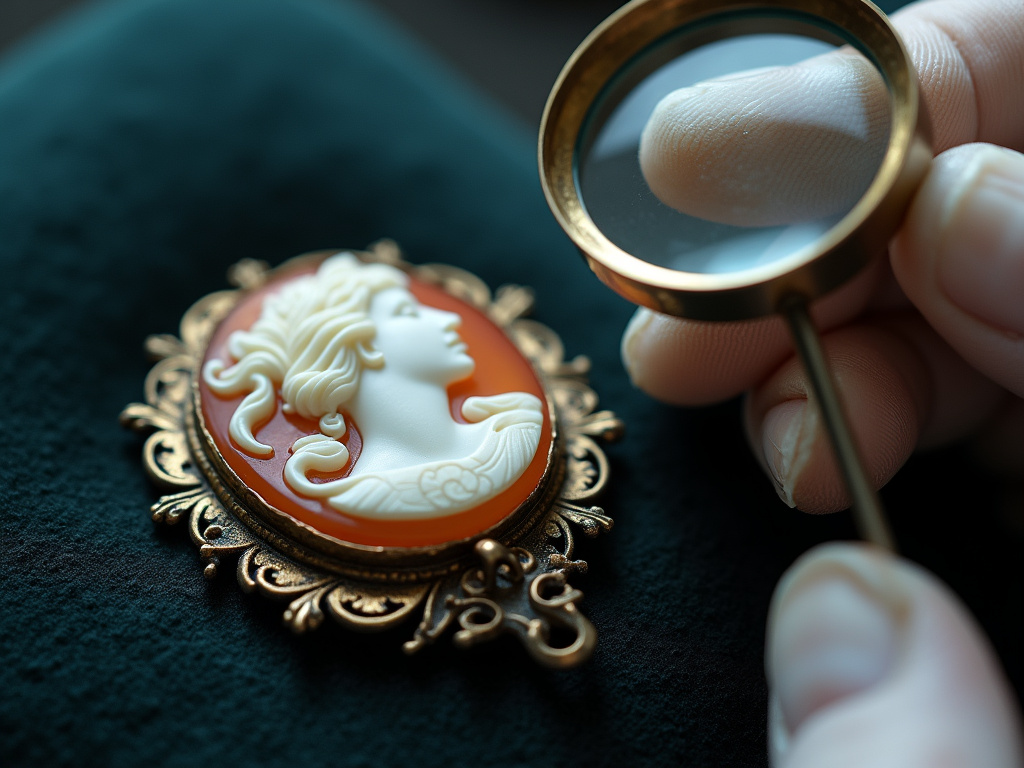
You can have a perfect 19th-century shell carving, but if it is glued into a broken, base-metal setting, its value plummets. The frame and condition protect, or destroy, the art.
The metal matters. Look for hallmarks on the brooch back or frame band:
* Gold (9K, 14K, 18K, 22K): Adds significant value. The karat weight should be stamped.
* Silver (.925 Sterling): Desirable, especially if intricately worked.
* Rolled Gold or Gold-Filled: A thin layer of gold over base metal. Period-appropriate but adds less value.
* Pinchbeck or Base Metal: Early or costume settings. The value is entirely in the cameo itself.
Condition is non-negotiable. Inspect for:
* Hairline cracks in the stone or shell, especially from the edge inward.
* Chips or nicks on the raised, carved areas (the nose, chin, forehead are vulnerable).
* A worn-down carving where details have softened from over-polishing or abrasive cleaning tarnished items.
* Missing fittings like the pin, clasp, or a connecting link on the frame.
Any major damage cuts value by half or more. A pristine setting with a secure, functioning pin and a crisp, undamaged carving is the goal. Proper storing delicate brooches in a lined box, separate from other jewelry, is the best way to preserve this condition.
Provenance, Signature, and the Market’s Mood
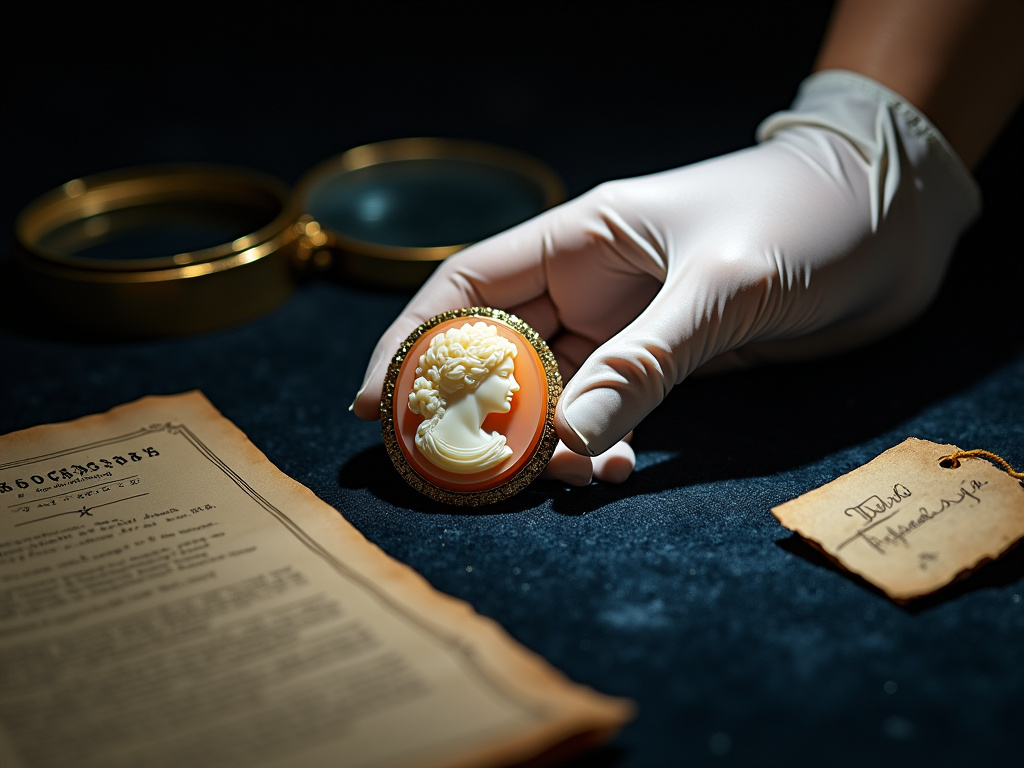
This is the final multiplier. A documented history or a famous name transforms an object.
A signature is gold. “T. Saulini” or “Saulini” engraved on the side of a shell cameo places it in the workshop of the renowned 19th-century Roman engraver Tommaso Saulini. His large, signed shell cameo of Charlotte Susan Campbell sold for £750 in early 2025. Without that signature, it might have been a fraction of that.
Provenance means a paper trail: an old auction tag, a receipt from a known jeweler, a family history linking it to a date or event. It answers the “who, when, where” that reassures a buyer.
Finally, the market has trends. Cameos have been cycling back into fashion, which lifts prices for good pieces. However, the market is nuanced. Collectors currently prize fine detail and unusual subjects over sheer size. A small, exquisite cameo will often outsell a large, clumsy one.
If your research suggests you have a signed or historically important piece, do not rely on guesswork. Invest in a formal appraisal report from a specialist. It is the only way to establish definitive value for insurance or sale.
How to Spot a Fake in 30 Seconds
The market is flooded with reproductions. You need a fast, reliable screening method before you even bother with the loupe.
First, the tooth test. Gently tap the cameo against your front tooth. Real shell or stone has a distinct, hard, almost glass-like click. Plastic feels soft, dull, and warm. It is a visceral difference you will recognize immediately.
Second, look for the seam. Turn the cameo on its side. A cast piece often has a faint but visible line running around the entire edge where the two halves of the mold met. A real carved cameo is one solid piece; its side is uniform.
Third, check the back. Authentic shell cameos often have a slightly rough, natural finish on the back, sometimes showing the curvature of the original shell. Plastic fakes frequently have a perfectly flat, smooth back. For pieces with metal backing, examine how the stone is set. A genuine antique setting will show wear and appropriate aging of the metal, not bright, modern solder.
Never buy a cameo described as “antique style” or “vintage look” if you want an actual antique. Those are code words for new reproductions. The seller is telling you the truth if you listen.
If a piece passes these quick checks, then move on to the detailed examination with a loupe. This process saves you from the most common pitfall in cameo collecting: paying for age that isn’t there. For any genuine piece you acquire, maintaining its value means using only gentle cleaning methods suited to its delicate materials.
Frequently Asked Questions
Are all old cameo brooches valuable?
No. Age alone does not guarantee value. A late 19th-century shell cameo with a worn carving, a common right-facing profile, and a base-metal setting might be worth $75 to $150 as a decorative antique. Value requires a combination of material, carving quality, condition, and rarity.
How can I tell if my cameo is real shell or plastic?
Use the tooth test described above. Under a magnifier, real shell has a fibrous, slightly layered structure and will show minute hand-carving marks. Plastic will appear perfectly smooth, may have tiny trapped air bubbles, and lacks the subtle translucence of shell.
What is the most valuable type of cameo?
The top tier includes ancient Roman or Hellenistic hardstone cameos, Renaissance-period pieces, and 19th-century cameos signed by master engravers like Tommaso Saulini or his contemporaries. A multi-layered sardonyx cameo with a documented imperial subject or exceptional provenance can reach into the tens of thousands.
Is a cracked cameo worth anything?
crack significantly diminishes value, often by 50% or more. It compromises the structural integrity and is considered major damage. The piece retains value only as a “for parts or repair” item for collectors or as a decorative piece at a much lower price. Cracks also make the cameo vulnerable during any tarnish removal methods, as liquids can seep in.
Should I clean my antique cameo brooch?
Clean it only if necessary, and with extreme caution. Never use ultrasonic cleaners, steam, harsh chemicals, or abrasive pastes. Dust it with a soft, dry brush. For light grime, a barely damp cotton swab can be used, but avoid getting moisture near any hairline cracks. When in doubt, consult a professional who understands caring for vintage brooches.
The Bottom Line
Value in a cameo brooch is not a mystery. It is a stack of verifiable facts. Start with the material, shell or stone, not plastic. Judge the carving under magnification; hand-cut detail beats machine-made blur. Notice if the face looks left, a simple clue that adds a rarity premium. Weigh the evidence of the setting and any damage honestly.
Then, research. Compare your piece to auction records for similar material, period, and style. If the numbers start looking serious, that is the moment to stop guessing and pay for a definitive valuation of jewelry from an expert. The right cameo, understood and preserved, is a wearable piece of art that holds its story and its worth for generations.
